

Audio By Carbonatix
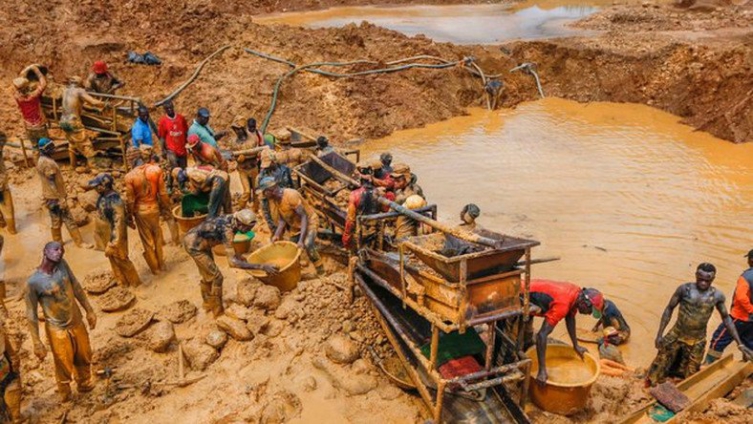
The Artisanal and Small-Scale Mining (ASM) problems in Ghana are very challenging, especially as they become intensified and difficult to solve by the day.
Currently, ASM activities have seriously affected the lands and waterbodies in fourteen (14) out of the sixteen (16) regions in Ghana.
Surprisingly, the actual causes of the menace are poorly understood by the government, hence focusing on unnecessary expenditures that do not yield any significant outcome since 2017.
Lots of the country’s farmlands have been destroyed by illegal mining operations and waterbodies silted, polluted and contaminated with dangerous chemicals like mercury, cyanide, lead and arsenic.
These have led to skyrocketing costs of water treatments for human consumption. Also, there are lots of water-borne and grievous diseases such as typhoid, hepatitis, trachoma, ulcer, cancer, kidney diseases, lung diseases, liver damage, polio, among others.
Ghana is dominated by two main mining sectors, including the Large-Scale Mining (LSM) and Artisanal and Small-Scale Mining (ASM).
The operations involved in the ASM sector include (i) Legal or Licensed Small-Scale Mining (ii) Illegal or Unregulated Mining, popularly known in the local parlance as “Galamsey” and (iii) Newly Established Community Mining. The only two regions without ASM operations are Greater Accra and Volta.
Unfortunately, all the three categories of ASM activities lead to uncontrolled land degradations and water pollutions. Although a number of research works have been completed and published, none of them have detailed the number of regions affected by ASM operations.
The regions in Ghana with some major cities that ASM operations are prevalent are the following:
- Ashanti Region: Obuasi, Adansi Akrokerri, Adansi Akrofuom, Amansie, Manso Nkwanta, Manso Adubia, Agroyesum, Esaase Bontefufuom, Ntobroso, Diewuoso, Aduaneyede, Gyimiso, Mampamhwe, Patakro, Fomena, etc.
- Western Region: Tarkwa, Prestea, Bogoso, Asankragua, Wassa Akropong, Wassa Japa, Mpohor, Damang, Nkroful, Teleku Bukazo, Anhwiaa, Axim, Ewereko, Daboase, Atieku-Akyempim, etc.
- Western North Region: Aowin, Bibiani, Enchi, Sefwi Bekwai, Sefwi Wiawso, Sefwi Akontombra, Suaman, etc.
- Eastern Region: Adeiso, Akwatia, Anyinam, Akyem Asunafo, Akwaboaso, Akroful, Awerenare, Kwabeng, Kyebi, Kibi, Oda, Ofoase-Ayirebi, Osino, New Abirem, Nkatieso, etc.
- Central Region: Dunkwa, Ayanfuri, Assin Asaman, Assin Fosu, etc.
- Ahafo Region: Duayaw Nkwanta, Kenyasi, Ntotroso, Yamfo, etc.
- Bono Region: Dormaa, Kyeremasu, Wamfie, etc.
- Bono East Region: Donkoro Nkwanta, Kintampo, Nkoranza, etc.
- Savannah Region: Banada Nkwanta, Dollar Power (Border town), Ntereso, etc.
- Upper West Region: Lawra, Cherikpong, Tanchara, Sissala East, etc.
- Upper East Region: Talensi, Bolga, etc.
- North East Region: Nanguma, Mamprugu, etc.
- Northern Region: Bole, Bamboi, Dakurpe, Tinga, etc
- Oti Region: Worawora (Alluvial mining)
Ghana is an undisputed mining hub, ranked first (1st) in gold production across Africa and sixth (6th) in the world. The ASM operations contribute to 30% to 40% of gold produced in Ghana. It is a lucrative venture that has provided millions of jobs for the youth and supported the local economics of the respective communities.
The high unemployment rate and the continuous global demand for minerals, particularly precious metals have led to the massive youth participation in the sector.
Presently, the detrimental effects of ASM operations far outweigh the economic and social justifications provided by the sector.
However, the problems can be resolved and ASM can become a critical state revenue generation sector, if the government engages the services of mining professionals with the requisite knowledge and experience to systematically and comprehensively tackle the real problems from technical point of view. Pragmatic measures need to be put in place immediately to address this issue of national concern.
The fight against galamsey has become the usual political rhetoric with no reasonable action taken. Referring to the Minerals and Mining Act 2006, Act 703, Section 83 (a), only Ghanaian citizens can acquire licence to operate ASM.
The big question is; why are foreign nationals currently engaging in ASM activities in the country?
Amazingly, some of the traditional leaders release lands to foreigners to operate illegal mining, including nationals from China, India, Turkey, Senegal, Nigeria, Niger, Mali, Cote D’Ivoire, Burkina Faso, Guinea, Sierra Leone, etc.
In order to solve the problem, the fundamental mining engineering procedures applied in the large-scale mining sector to extract minerals from the ground, need to be integrated into the ASM sector to bridge the gap between the two sectors, in terms of minimal degradations.
Politicization of the fight against galamsey will continuously urge the problem to remain standstill without any obvious positive outcome but practical guidance from a strong mining team can help in addressing the issues.
To address the challenges, the following outlined holistic approach can be considered and executed correctly: (1) Strategizing to avoid concession encroachment (2) Proper land acquisition (3) Rightful registration plan (4) Legitimate, expedited and decentralized permitting process (5) Development of standard operating procedures (6) Establishment of standardized mining regulations (7) Introduction of pollution-free mining strategy (8) Development of corruption-free tax collection system (9) Effective monitoring and (10) Indiscriminate law enforcement.
Implementation of these suggestions can help ensure environmentally-friendly small-scale mining operations.
Also, it can yield significant results in sustained economic growth, lucrative employment opportunities, poverty alleviation and an important source of tax revenue generation across the mineral wealth regions in Ghana.
The onus lies on the government to act, as the nation loses a minimum of $250 million each year from the ASM sector.
-
Solomon Owusu, PhD is a Mining Consultant in Colorado, USA
Email: oaksolo@yahoo.com
Latest Stories
-
Airlines cut flights and hike fares as fuel prices surge
13 minutes -
Kane inspires Bayern to first-leg advantage over Real Madrid at Bernabéu
24 minutes -
Wireless Festival cancelled after Kanye West blocked from coming to UK
31 minutes -
Wa West MP commissions five boreholes for the benefit of his constituents
32 minutes -
Havertz’s late strike hands Arsenal narrow first-leg advantage over Sporting
34 minutes -
Damang mine award: Minority not against Ghanaian participation; we’re asking for fair process – Konadu
56 minutes -
NPA to enforce stricter registration rules for petroleum tankers
1 hour -
Manhyia South MP laments decline in hospitality operations in his constituency
2 hours -
How a simple clean charcoal innovation could benefit Ghana’s climate future
2 hours -
NPA, COMAC launch Safety Week 2026 to promote risk management in petroleum sector
2 hours -
Stakeholder engagement resolves onion trade impasse
2 hours -
Gender Ministry holds staff durbar, welcomes new Chief Director
2 hours -
Unexpected illness sparked my radio career – Tommy Annan-Forson
2 hours -
Bolt Ghana awards GH¢50,000 to women entrepreneurs through “She Moves to Win” campaign
2 hours -
NRGI Country Manager questions speed of ministerial approval in Damang mining deal
2 hours