

Audio By Carbonatix
Representatives from 174 countries are expected to convene in Ottawa in Canada, for the fourth session of the Intergovernmental Negotiating Committee (INC-4) on plastic pollution.
Scheduled from April 23 to 29, the meeting marks a significant step in the negotiation process, with only one more session expected to follow before finalizing negotiations later this year.
Executive Secretary of the INC, Jyoti Mathur-Filipp, emphasized that both humanity and the environment are experiencing significant challenges due to plastic pollution, highlighting the critical importance of the negotiating session.
“It is an opportunity to make significant progress for a robust agreement that would allow future generations to live in a world free of plastic pollution,” Jyoti said.
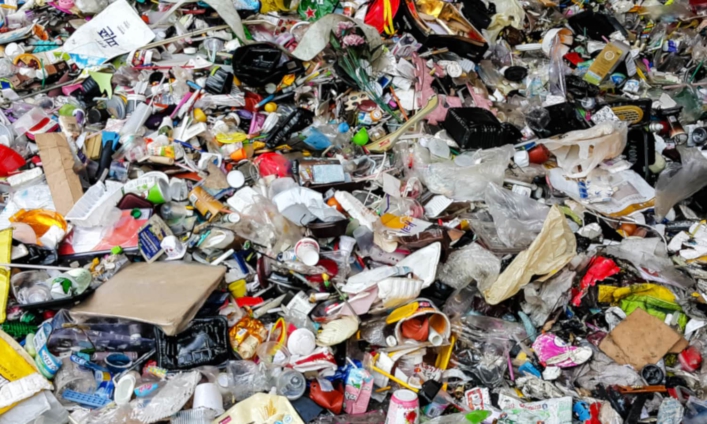
The negotiations come against the backdrop of what experts have labeled a growing plastic crisis. Since the 1950s, the world has generated 9.2 billion tonnes of plastic, with 7 billion tonnes ending up as waste, contributing to overflowing landfills and contaminating bodies of water, soil, and oceans.
Current data indicates that humanity now produces 430 million tonnes of plastic annually, with two-thirds of it comprising short-lived products that quickly turn into waste. Some of this plastic finds its way into the food chain, posing potential risks to human health.
During INC-4, the objective is to progress a preliminary version of the global agreement for finalization in Busan in the Republic of Korea, in December. The discussions thus far have centered on mitigating pollution throughout the entire lifespan of plastics, from their production to their disposal.
The negotiation process commenced officially in 2022 at the fifth session of the United Nations Environment Assembly, a significant milestone in global environmental governance.
Following two years of deliberation, the Intergovernmental Negotiating Committee reports transitioning from broad perspectives to a refined draft text.
This year's World Environment Day, marking its fiftieth anniversary, is dedicated to addressing the crisis of plastic pollution. Head of the United Nations Environment Programme's (UNEP's) Life Cycle Initiative, Llorenç Milà i Canals, emphasized that many people underestimate the significant impacts of a material deeply ingrained in their daily lives, affecting not only wildlife but also climate and human health.
“Many people aren’t aware that a material that is embedded in our daily life can have significant impacts not just on wildlife, but on the climate and on human health,” said Llorenç.
The production of plastic stands as one of the most energy-intensive manufacturing processes globally. Derived from fossil fuels like crude oil, plastics undergo transformation through heat and additives into polymers. In 2019 alone, plastics contributed 1.8 billion metric tonnes of greenhouse gas emissions, amounting to 3.4% of the global total.
Latest Stories
-
Angola appoint Aliou Cissé as new head coach
10 minutes -
Virtual Security Africa showcases digital security vision at Kwahu Business Forum
15 minutes -
EBID strengthens regional integration role amid global economic uncertainty
40 minutes -
Two assault rifles, ammunition retrieved in Police probe of Tamale gang attack
47 minutes -
EBID records strong financial growth with $722m disbursements in 2025 – President, Dr George Donkor
49 minutes -
EBID to mobilise $2.69bn under new 2026–2030 growth strategy – Dr George Donkor
53 minutes -
An open letter to telcos, regulators and security agencies on mobile money fraud in Ghana
53 minutes -
Mobile Money Merchants are driving fraud
1 hour -
Alban Bagbin declines minority’s motion to investigate sale of gold reserves at BoG
1 hour -
NACOC leadership tours drug testing centres in Accra
1 hour -
OSP’s power to prosecute without AG’s authorisation unconstitutional – AG files at Supreme Court
1 hour -
Seven African referees selected for World Cup 2026 as Ndala, Issa Sy miss out
2 hours -
Why diaspora investors are using Accra real estate to hedge against global uncertainty in 2026
2 hours -
GWL urges public support to stem water thefts
2 hours -
Fire guts 2-storey apartment at Ashaley Botwe
2 hours