

Audio By Carbonatix
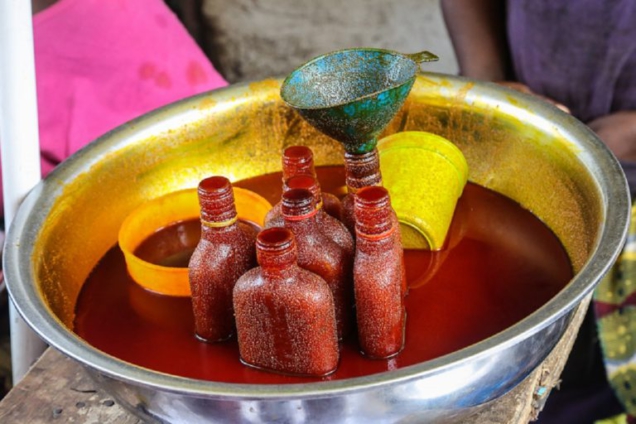
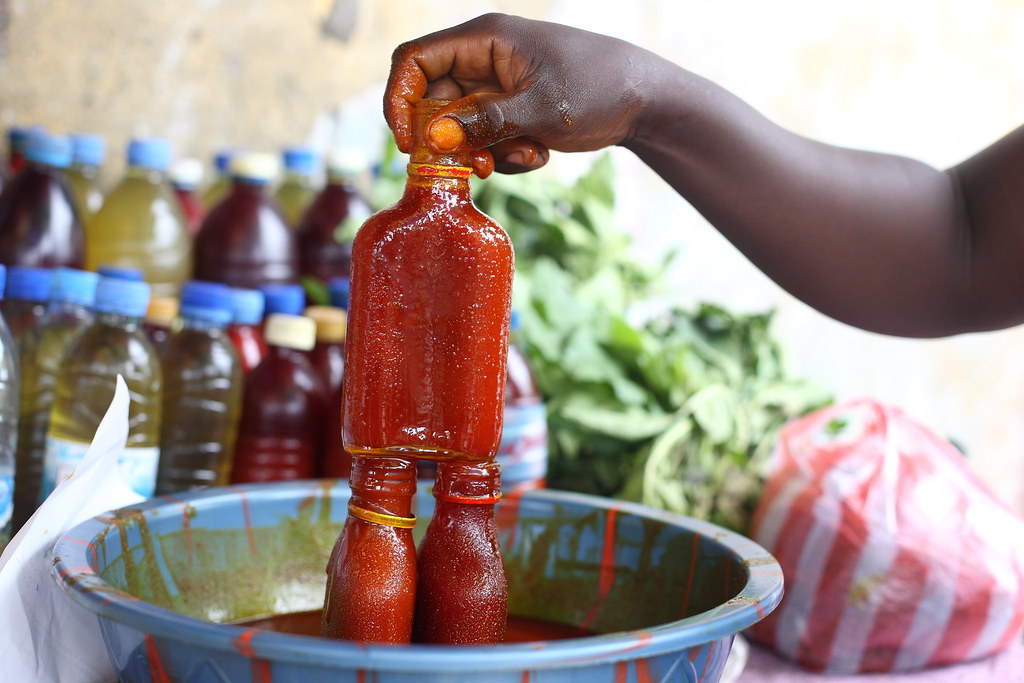
About 30% of palm oils found on the Ghanaian Market have failed the Food and Drugs Authority (FDA)’s nationwide Zero Sudan IV dye test, an increase from 7.3% in 2018.
This came to the fore as part of the Authority’s routine market surveillance activities on food safety conducted last year.
In October last year, the Authority sampled palm oils from major markets across the country including 10 major markets in Greater Accra to test for the presence of Sudan IV dye leading to several arrests.
The Laboratory analysis indicated that out of the 306 samples analysed, 70 representing failed the test for Sudan IV dye.
Except for the Upper West Region, all the regions had one or more samples from their markets testing positive for the presence of Sudan IV dye with Greater Accra recording the highest of failure rate (60.8%).
Some markets like Dome and the Mallam Attah Market in the Greater Accra Region had 100% failure for their samples analysed.
Sudan IV dye is a chemical used for in the production of textiles, leather, plastics, papers, hair, mineral oils, waxes, and cosmetics and not to be ingested.
The toxicity and illegal use of Sudan IV as food additives are strongly banned by the Food and Drugs Authority and other international bodies in the FAO/WHO Codex Alimentarius.
Despite the enormous public education and sensitization activities on the health implications of adding Sudan IV dye in foods especially palm oils, such as hyperactivity in children, severe allergies, hives, migraine, and diseases such as cancer, producers and Ghanaian traders continue to use this chemical as an enhancer in palm oil due to consumers preference and demand for “redness” in their palm oil products.
The FDA has initiated a rigorous public education campaign in major markets like Mallam Atta Market, Dome Market in Accra as well as other Satellite Markets across the country.
As part of this campaign, more samples are continuously being sampled across the markets and traders whose palm oil products fail the test will be made to face the full rigours of the law.
Additionally, the FDA is in the process of introducing a traceability system for AgroProducts in the country which would help in enhancing food safety issues as far as Agroproducts are concerned and safeguard the health and safety of the consuming public.
Latest Stories
-
Brandon Asante and Coventry all but promoted to Premier League despite Sheffield Wednesday draw
18 minutes -
GPL 2025/26: Late Kwartemaa strike downs Hearts in Tema
24 minutes -
Ghana Faces Sierra Leone Moment as Prosecutorial Powers come under strain
34 minutes -
Don’t consume fish or seafood from Tema Shipyard until further notice – FDA warns
38 minutes -
Why volunteering might be Africa’s most underrated career accelerator
45 minutes -
ActionAid Ghana raises concern over gender gaps in Feed Ghana Programme
47 minutes -
Windstorm wreaks havoc in Gushegu, displacing nearly 2,000 residents and damaging schools
49 minutes -
Friends of Bridget Bonnie Marks her 35th birthday with donation to Kasseh Model Health Centre
2 hours -
From Ekumfi Kokodo to the Pulpit Stage: Essi Donkor’s gospel journey takes shape
2 hours -
Landfilling waste management creates no value, it’s an economic waste
2 hours -
Photos: Speaker Bagbin Commissions MPs constituency office under parliamentary decentralisation programme
2 hours -
Black Stars technical advisor Winfried Schäfer sacked as GFA shakes up backroom staff
2 hours -
Wenchi water project almost complete, critical to gov’t agenda – GWL MD
3 hours -
Anti-LGBTQ+ bill not part of government’s legislative agenda – Inusah Fuseini
3 hours -
Anti-LGBTQ Bill: Forget the rumour mongers, I’m a man of action, and will pass the bill – Speaker
3 hours