

Audio By Carbonatix
A groundbreaking study has unveiled an alarming mental health crisis among adolescent mothers in Ghana, revealing that over two-fifths of teenage clients seeking primary care are experiencing significant psychological distress.
These urgent findings, presented at a national policy dialogue on Tuesday, November 27, underscore the critical need to integrate mental health support into routine maternal care services.
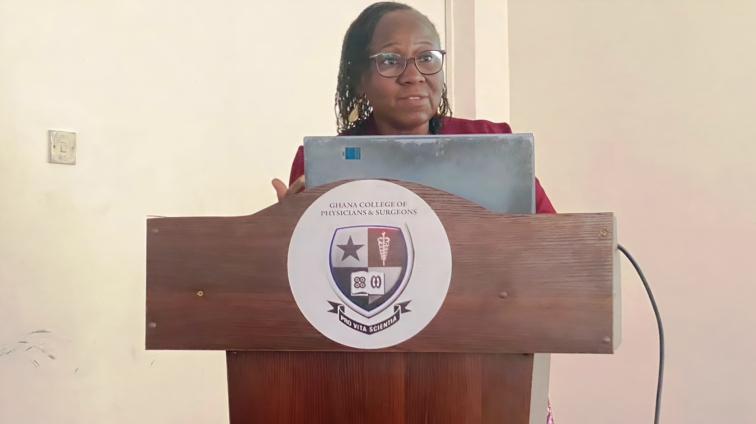
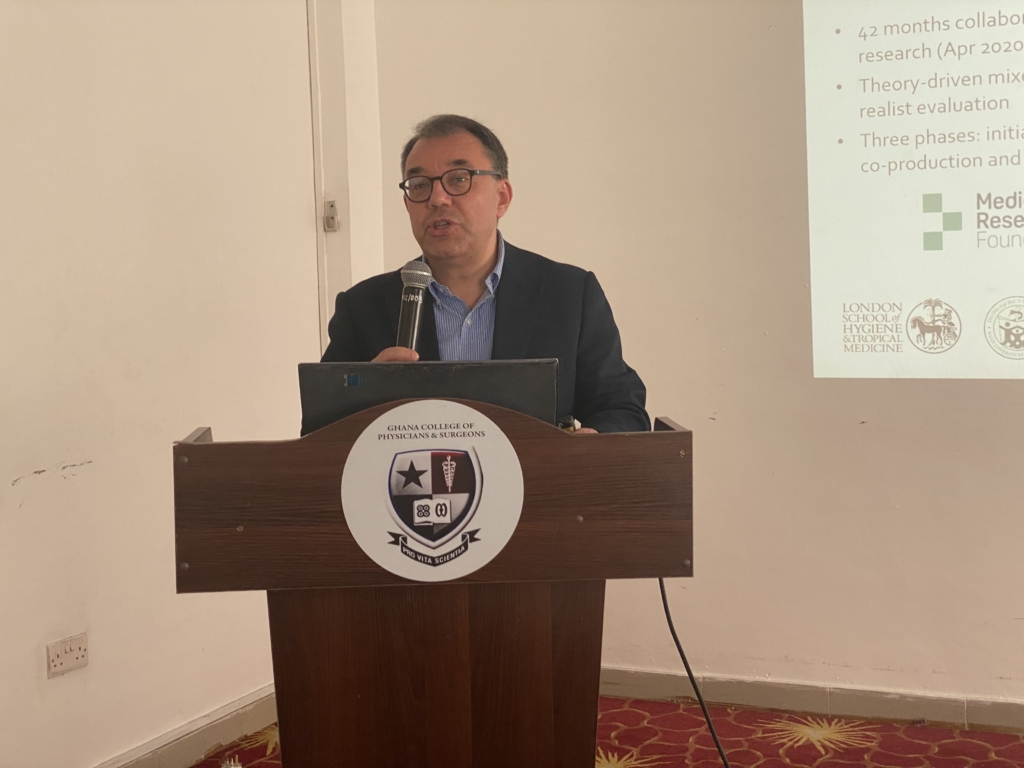
The findings, disseminated at the Ghana College of Physicians and Surgeons (GCPS), come from the four-year RESPONSE research project, which examined the mental health burden on both mothers and the healthcare workers who treat them.
The Vulnerable: Adolescent Mothers at Double the Risk
The study, conducted by the London School of Hygiene & Tropical Medicine (LSHTM) and the GHS Research and Development Division (RDD) in collaboration with other institutions, focused on scalable mental health solutions across six primary health facilities in the Prampram-Ningo and Shai-Osudoku districts of the Greater Accra Region.
Using the World Health Organization’s Self-Reporting Questionnaire (SRQ-20) to screen over 2,000 women, the research provided a clear statistical measure of the psychological distress endured by young mothers:
- 43% of the 172 teenage clients (aged 14–19) screened scored ≥6 on the SRQ-20, the clinical threshold for mental distress.
- This rate is significantly higher than the 27% distress rate observed in adult women aged 20 and above, meaning adolescent mothers are nearly 1.6 times more likely to be in distress.
- Overall, 28% of the total women screened showed signs of mental distress. Furthermore, 5% of all women admitted to experiencing suicidal thoughts in the month prior to screening.
Professor Irene Agyepong, Co-Principal Investigator and Ghana Team Lead, emphasized that the distress often begins before birth: “Traditionally, we focus only on postpartum depression, but our data shows the problem often starts during pregnancy.”

The data showed 36% of pregnant women were in distress, compared to 25% of postnatal clients.
Dr. Bertha Garshong, a researcher on the project, stressed that women who had suffered pregnancy loss were also highly vulnerable, with 50% showing signs of distress. She urged policymakers to ensure these vulnerable groups receive targeted attention in any national scale-up.
The Dual Crisis: Strained Caregivers
The mental health burden is not confined to the patients. The study also revealed that the frontline health workers who screen these vulnerable mothers are themselves under intense psychological strain, creating a dual crisis in the primary healthcare system.
- Researchers screened 172 health workers using the Depression, Anxiety, and Stress Scale (DASS-21) via a mobile app.
- 51% experienced moderate to extremely severe anxiety.
- 40% reported moderate to extremely severe stress.
- 37% struggled with moderate to extremely severe depression.
Prof. Agyepong highlighted the crucial connection between provider and patient wellbeing:
“Health workers told us clearly: ‘If you want us to care for patients’ mental health, you must first care for ours,’” she stated, noting that the health of the caregiver is foundational to achieving good maternal health outcomes.
The findings spurred stakeholders, including the GHS, the Mental Health Authority, and civil society, to commit to developing new policies.
Policy Demands and Sustainable Solutions
Prof. Tolib Mirzoev, Principal Investigator, stressed that addressing mental health is central to healthcare performance: “Health systems’ responsiveness is a critical aspect of performance. Prioritizing responsiveness to both patients and staff, particularly in mental health, is essential.”
Dr. Frank Atuguba, Director of the Dodowa Health Research Centre, delivered the chairperson’s remarks, urging the Ministry of Health to:
- Revise the National Reproductive Health Guidelines to formally include mental health screening.
- Allocate dedicated budgetary support for frontline health worker mental health programs.
The dialogue concluded with the commitment to forming a Technical Working Group to explore the sustainable financing of these services, including the crucial step of integrating the RESPONSE project's pilot-tested tools—which include SRQ-20 screening and referral to WHO mhGAP-trained mental health nurses—into the National Health Insurance Scheme (NHIS).
Prof. Agyepong wrapped up the session with a strong mandate for action:
“Maternal and health worker mental health is not a luxury—it is foundational to achieving universal health coverage and the Sustainable Development Goals... The question is no longer ‘if’ but how quickly and how well we act.”
The RESPONSE project, was funded by the UK Medical Research Council, the Foreign Commonwealth and Development Office (FCDO), and the Wellcome Trust.
Latest Stories
-
We can tackle multiple priorities – Sam George defends Anti-LGBTQ Bill push
13 minutes -
Statement: Ghana Chamber of Mines’ Response to Claims in Joe Jackson’s “Ananse Stories about the Economy of Ghana”
14 minutes -
GES opens 2026 teacher recruitment for licensed B.Ed graduates
16 minutes -
Ghana must value skilled trades, build resilient learners — Ibn Chambas
24 minutes -
Ghana must rethink education around relevance, resilience and responsibility — Ibn Chambas
27 minutes -
Prince Harry faces defamation lawsuit from charity he co-founded
29 minutes -
South Korea deploys thermal cameras to track escaped zoo wolf
31 minutes -
Calls for royal meeting with Epstein survivors grow ahead of US visit
34 minutes -
Ibn Chambas advocates blend of technology and human values in education
36 minutes -
UMA improves healthcare access in Asutifi North with GH₵700k ‘Kim Taylor Legacy’ Walkway
41 minutes -
Scholarships Authority and Fanaka University offer sponsorship for procurement and supply chain studies
44 minutes -
Bisa Kdei drops new single ‘Go N Look’ featuring Medikal
50 minutes -
Benin facing rising terrorism in north as French military presence faces growing criticism
51 minutes -
UEW Public Lecture Series 2026: Education debate ‘about the soul of Ghana’s future’ — Dr Ibn Chambas
52 minutes -
EU fingerprint and photo travel rules come into force from today
1 hour