

Audio By Carbonatix
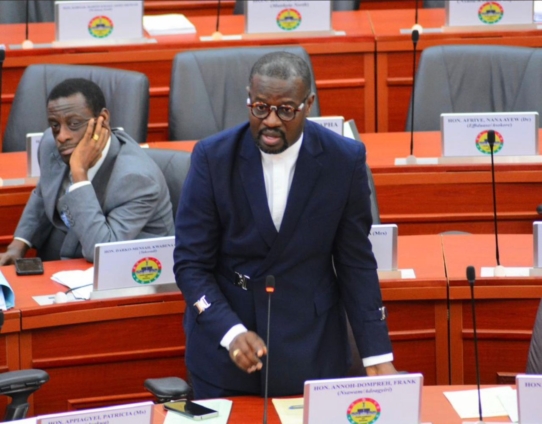
Minority Chief Whip and Nsawam-Adoagyiri MP Frank Annoh-Dompreh has called for urgent legislation to criminalise ecocide in Ghana, warning that environmental destruction is reaching alarming levels.
Raising the issue in Parliament on Monday, he said the scale of environmental degradation, particularly from illegal mining, demands decisive legal action.
“Honourable Speaker, I rise today with a profound sense of urgency and responsibility to speak on a matter that transcends partisan politics, economic growth, and short-term development agenda.”
“I speak to the need for legislative action against ecocide — the mass destruction of ecosystems — and for Ghana to align itself with a growing global movement to make environmental devastation a punishable crime both domestically and internationally.”

He explained that ecocide has a clear legal meaning under emerging international frameworks.
“Ecocide, as defined by an independent expert panel convened by Stop Ecocide International, refers to ‘unlawful or wanton acts committed with knowledge that there is a substantial likelihood of severe and either widespread or long-term damage to the environment’.”
“This is not abstract rhetoric; it is a legal concept with measurable criteria — damage that is severe, widespread, or long-term.”
According to him, existing international law does not yet recognise ecocide as a standalone crime during peacetime.
“The current legal framework in international law — notably the Rome Statute of the International Criminal Court — lists genocide, crimes against humanity, war crimes, and aggression.”
“Ecocide is not yet recognised as a standalone international crime during peacetime.”
He said the absence of such recognition has created a legal vacuum that allows large-scale environmental destruction to occur with limited accountability.
“This absence in international law creates a legal vacuum: corporations, state actors, and individuals can commit ecological destruction — deforestation, industrial pollution, oil spills, and climate-amplifying activities — with limited criminal liability.”
Mr Annoh-Dompreh pointed to the Niger Delta as a stark example of ecological devastation.
“The Nigerian Niger Delta, for example, has suffered over 7,000 oil spills from 1970 to 2000, devastating water, soil, and human health, with full environmental restoration estimated to take decades.”
He said momentum is building globally to criminalise ecocide.
“At least 11 countries have already incorporated ecocide into domestic law, including Armenia, Belarus, Kazakhstan, Russia, Ukraine, Moldova, Georgia, Ecuador, Chile, France and Belgium.”
“In 2023, Belgium became the first European Union country to criminalise ecocide as part of its penal code revisions.”
He argued that criminalising ecocide would send a powerful moral and legal signal.
“This is not merely environmental law — it is justice law.”
“Criminalisation signals a societal consensus that destroying ecosystems is morally and legally unacceptable.”
Turning to Ghana’s situation, the Minority Chief Whip warned that the country’s ecosystems are under severe pressure.
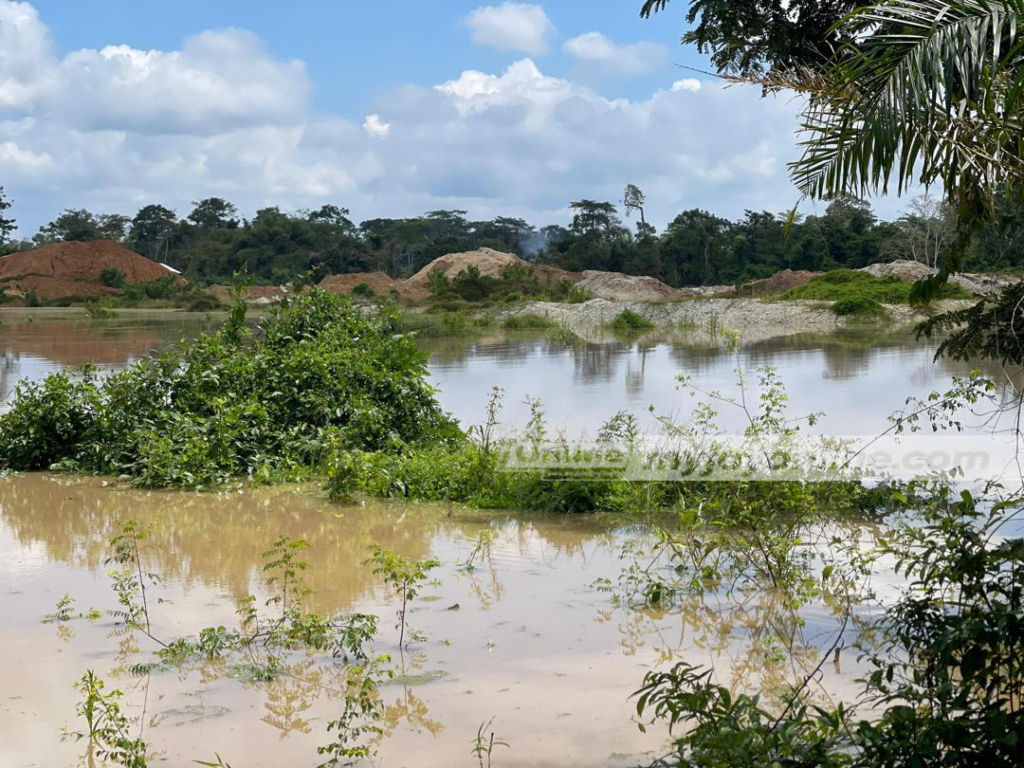
“As a country affected by deforestation, illegal mining (galamsey), and water pollution, Ghana’s ecosystems are under severe stress.”
“Recent reports indicate that up to 60% of our water bodies have suffered pollution due to illegal mining.”

He stressed that environmental destruction threatens public health, agriculture and long-term prosperity.
“The consequences of ecological damage are intergenerational — they affect our children, their livelihoods, and their right to a healthy environment.”
Mr Annoh-Dompreh urged Parliament to introduce legislation that clearly defines and criminalises ecocide in Ghana.
“Introduce a standalone legal provision defining and criminalising ecocide with clear thresholds for severity, duration, and impact.”
He also called on Ghana to champion the recognition of ecocide as an international crime.
“Advocate at the Assembly of States Parties of the International Criminal Court to include ecocide as the fifth international crime.”
“Ghana has an opportunity to be a regional and continental leader championing ecocide law.”
He said enforcement agencies must also be strengthened to ensure accountability.
“Empower Ghana’s environmental protection agencies and judiciary with investigative authority, evidence standards, and prosecutorial capacity to ensure accountability.”
Mr Annoh-Dompreh concluded by urging swift action to protect Ghana’s ecosystems and future prosperity.
“Protecting our ecosystems is not an optional policy. It is a fundamental commitment to future generations.”
“Let us give meaning to that commitment by making ecocide a crime under Ghanaian law.”
Latest Stories
-
We can tackle multiple priorities – Sam George defends Anti-LGBTQ Bill push
13 minutes -
Statement: Ghana Chamber of Mines’ Response to Claims in Joe Jackson’s “Ananse Stories about the Economy of Ghana”
14 minutes -
GES opens 2026 teacher recruitment for licensed B.Ed graduates
16 minutes -
Ghana must value skilled trades, build resilient learners — Ibn Chambas
25 minutes -
Ghana must rethink education around relevance, resilience and responsibility — Ibn Chambas
27 minutes -
Prince Harry faces defamation lawsuit from charity he co-founded
29 minutes -
South Korea deploys thermal cameras to track escaped zoo wolf
31 minutes -
Calls for royal meeting with Epstein survivors grow ahead of US visit
34 minutes -
Ibn Chambas advocates blend of technology and human values in education
36 minutes -
UMA improves healthcare access in Asutifi North with GH₵700k ‘Kim Taylor Legacy’ Walkway
41 minutes -
Scholarships Authority and Fanaka University offer sponsorship for procurement and supply chain studies
44 minutes -
Bisa Kdei drops new single ‘Go N Look’ featuring Medikal
50 minutes -
Benin facing rising terrorism in north as French military presence faces growing criticism
51 minutes -
UEW Public Lecture Series 2026: Education debate ‘about the soul of Ghana’s future’ — Dr Ibn Chambas
52 minutes -
EU fingerprint and photo travel rules come into force from today
1 hour