

Audio By Carbonatix
A survey by the Private Enterprise Federation (PEF) in collaboration with OSIWA-Project has revealed that 69.7% of Micro, Small, and Medium-scale Enterprises (MSMEs) operating in urban centers are not aware of the laws guiding taxation of businesses.
This is compared with 91.3% in the rural areas.
However, 70.8% of smaller businesses in the urban areas are registered with the Ghana Revenue Authority (GRA) and are therefore deemed to pay tax.
But, only 49.4% in the rural areas have registered with the GRA.
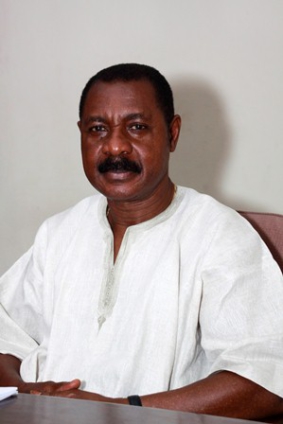
Chief Executive of PEF, Nana Osei Bonsu said the findings calls for reduction in taxes as well as massive tax education by the GRA for taxpayers.
He told Joy Business that government must adopt a tiered tax system or a flat rate scheme for smaller businesses if it wants to generate adequate revenue.
“Our tax rate compared to our neighbours is very low. We’re generating 13.9% tax revenue of Gross Domestic Product to government. If we want to be able to make sure that government revenues go up to enable government do whatever we ask from government, then we have to vary the tax rate instead of charging the same 25% we charge on small potatoes sellers as same as we charge giant businesses,” he said.
Mr. Bonsu stated that his conclusion is based on research and analysis of the research findings.
The survey also revealed that 42.7% of business owners sampled in the urban centers were educated to the secondary or basic level whilst 39.9% had degrees.
Also, 92% of businesses in Ghana are MSMEs but they contribute only four percent of the total tax.
Recommendations of research
PEF called for reforms in the taxation of MSMEs, adding, the current tax regime for smaller businesses is cumbersome and preventing many smaller business from paying tax.
It therefore wants the adoption of a Tiered Tax system – linked to business turnover – or flat rate scheme which it believes will help reduce the tax burden on businesses, particularly MSMEs.
It also wants policy makers to consider a system which is in line with international best practices and also provide a good opportunity for government to raise revenue as well as ease the compliance burden on businesses.
Latest Stories
-
Nearly 2,000 displaced, schools damaged as windstorm wreaks havoc in Gushegu
2 minutes -
Ghana’s Derrick Kohn to work under Marie-Louise Eta as she becomes first woman to coach men’s Bundesliga team
6 minutes -
Accra Open Championships conclude with strong performances ahead of African Championships
13 minutes -
Ghana to begin camping with 12 athletes after Accra Open Championships – Bawa Fuseni
35 minutes -
Anthony Joshua declines showdown with Tyson Fury but admits they ‘probably’ clash next
48 minutes -
Tyson Fury dominates Makhmudov, calls out Joshua next
1 hour -
I have supported highway authority financially to fix roads in my constituency – A Plus
2 hours -
US, Iran fail to reach peace agreement after marathon talks in Pakistan
3 hours -
ECG kicks off Phase Two of transformer upgrades at Lashibi; brief outages expected
3 hours -
Port crises loom as 11,000 drivers threaten four-day strike
4 hours -
A source of excellence across generations – Vice President Opoku-Agyemang lauds Mfantsipim
5 hours -
(Photos) Mfantsipim School launches historic 150th anniversary
5 hours -
Knights and Ladies of Marshall group backs Catholic Bishops’ stance on anti-LGBTQ+
6 hours -
Bright Simons: All the Filla in the Ibrahim Mahama/E&P – Gold Fields Saga
7 hours -
Monetise Idiocy In Ghana
7 hours