

Audio By Carbonatix
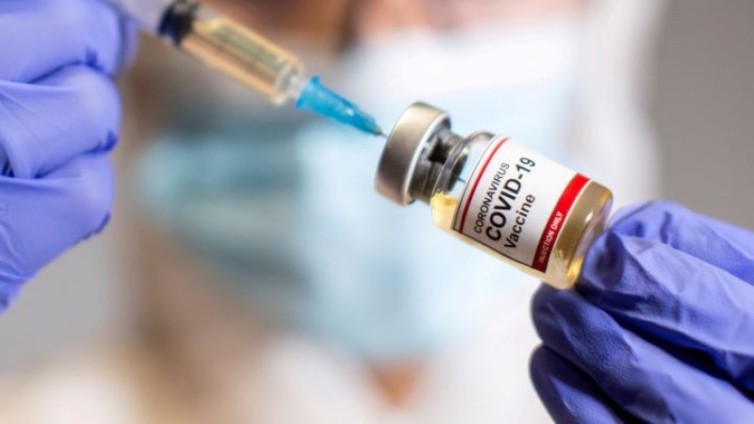
Ghana Health Service (GHS) has vaccinated about 800,000 Ghanaians against Covid-19 since the roll out of the mass vaccination exercise across the country on March 2, 2021.
Director-General of the Service, Dr Patrick Kuma Aboagye, who announced this in Kumasi, said nearly all health workers, both public and private, had been vaccinated.
He was speaking during the 2021 first senior managers’ meeting of the Service being held in Kumasi on the theme: “Strengthening Service Delivery and Sustainable System for Health: Amidst COVID-19 and Beyond to Achieve UHC.”
The three-day meeting brought together senior managers from all 16 regions to assess the 2020 performance and strategize for effective health delivery.
Dr Aboagye paid glowing tribute to the thousands of health workers for the relentless efforts and strong support provided over the past year.
“As a service, we have demonstrated our resilience in delivering primary and secondary care services to the entire population of Ghana and this has attracted positive national and global attention,” he said.
He, however, reminded Ghanaians that the country was still in unprecedented times and could not revert to doing things the old way.
He said the meeting offered an opportunity for a situation assessment and determination of priority issues in the health sector to feed into the annual planning and at the same time serve as the basis for choosing focal issues for cooperation and dialogue between the Service and partners.
The theme for the meeting, he said, was a call to take stock of achievements, lessons learnt from the pandemic to sustain the gains and apply them to existing systems to enhance the journey to achieve targets of the Universal Health Coverage.
He charged health workers to redouble their efforts, saying it was the only way to strengthen the foundation for a more resilient, healthier and prosperous society for all.
Nana Prof. Oheneba Boachie Adjei Woahene, Asantehene’s Hiahene, who chaired the meeting, said the country was way behind in most basic indicators for sustainable healthcare delivery.
He said there was a severe imbalance in doctor to patient ratio, describing the current situation of 1: 7500 instead of the World Health Organisation (WHO) standard of 1: 1320 as worrying.
Structural investments in healthcare delivery post-independence, according to him, were not comprehensive or integrated and that it was contributing to the lack of access to quality healthcare by most Ghanaians, particularly the poor and rural dwellers.
He called on the government and all stakeholders to tackle critical areas such as human resource, infrastructure, healthcare financing and effective management of communicable and non-communicable diseases.
Latest Stories
-
Two assault rifles, ammunition retrieved in Police probe of Tamale gang attack
26 seconds -
EBID records strong financial growth with $722m disbursements in 2025 – President, Dr George Donkor
3 minutes -
EBID to mobilise $2.69bn under new 2026–2030 growth strategy – Dr George Donkor
7 minutes -
An open letter to telcos, regulators and security agencies on mobile money fraud in Ghana
7 minutes -
Mobile Money Merchants are driving fraud
22 minutes -
Alban Bagbin declines minority’s motion to investigate sale of gold reserves at BoG
22 minutes -
NACOC leadership tours drug testing centres in Accra
24 minutes -
OSP’s power to prosecute without AG’s authorisation unconstitutional – AG files at Supreme Court
26 minutes -
Seven African referees selected for World Cup 2026 as Ndala, Issa Sy miss out
44 minutes -
Why diaspora investors are using Accra real estate to hedge against global uncertainty in 2026
1 hour -
GWL urges public support to stem water thefts
1 hour -
Fire guts 2-storey apartment at Ashaley Botwe
1 hour -
Come down and account, it’s a constitutional requirement – Martin Kpebu to Ofori-Atta
1 hour -
The power of the private courtyard: How regalia is redefining resort-style living in Accra
2 hours -
Beyond roads and bridges: Understanding the true role of your MP
2 hours