


Audio By Carbonatix
The US's top diplomat for Africa is going to Sudan this week amid unrest, the state department said on Monday.
Tibor Nagy, the US assistant secretary for Africa, will "call for a cessation of attacks against civilians".
Workers have staged a national strike, which began on Sunday, to pressurise the ruling military government to make way for civilian rule.
Four people were killed on the first day of the strike after security forces fired tear gas and live ammunition.
The state department said Mr Nagy would "urge parties to work towards creating an enabling environment" for talks between the two sides to resume.
He will also discuss the situation with the Ethiopian Prime Minister, Abiy Ahmed, who has been trying to mediate between the military council and the opposition in Sudan, before later travelling to Mozambique and South Africa.
What happened during the strike?
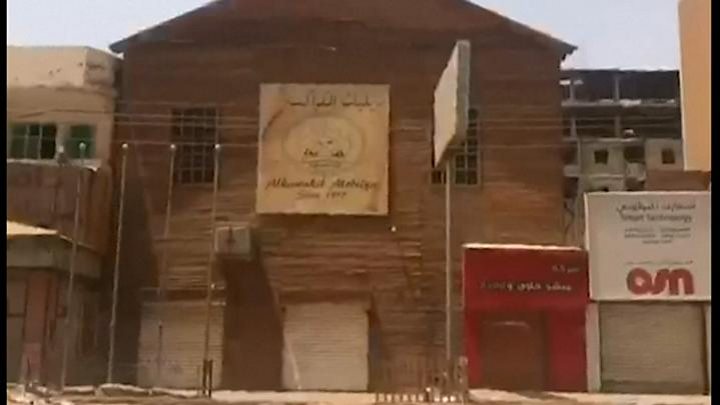
Monday remained quiet in Khartoum, although some businesses started to reopen and a few buses were running.
Most shops, markets and banks in the capital, as well as in several other cities, remained closed on Monday as staff followed instructions from the Sudanese Professionals Association (SPA), the pro-democracy opposition, to not attend work.
The SPA called the strike after more than 100 peaceful protesters were killed by a paramilitary group, the Rapid Support Forces (RSF), on 3 June.
"The civil disobedience movement will begin Sunday and end only when a civilian government announces itself in power on state television," the SPA said in a statement.
"Disobedience is a peaceful act capable of bringing to its knees the most powerful weapons arsenal in the world."
Protesters have set up roadblocks across the capital. Social media users with access to a connection reported that the country's internet was blocked by the ruling military government.
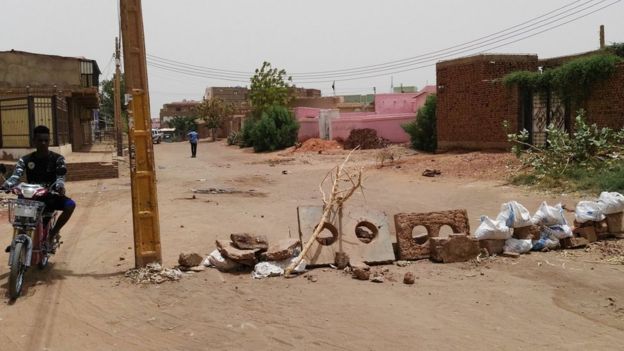
Image caption: A man navigates around a makeshift roadblock
In another development, three rebel leaders were deported from the city to South Sudan.
One of the three, Yasir Arman, had only returned to Sudan last month after years in exile after he was sentenced to death in absentia.
What's the background?
The military ousted long-time President Omar al-Bashir in April following months of protests against him. A military council promised a transition to civilian rule.
But pro-democracy campaigners say the military council cannot be trusted after Monday's crackdown against a sit-in demonstration in Khartoum - and they have rejected an offer of talks.
Latest Stories
-
Mission schools have the right to remain 100% Christian – Christian Apologetic Alliance
1 hour -
UG reopens portal for applicants to review entries after WASSCE results
2 hours -
Ampem Darkoa Ladies miss out on CAF Champions League qualification after penalty shootout loss
4 hours -
Herbal Medicine: Less than 15% practitioners registered
6 hours -
Road inspections not a witch-hunt against contractors — Agbodza
7 hours -
HTU clinic upgraded to primary hospital after HeFRA inspection
7 hours -
“When I am gone, just like Kwame Nkrumah people will appreciate me” – Kurt Okraku
7 hours -
“I love people who are not only critical but constructive” – Kurt Okraku
7 hours -
TECNO’s Modular Phone and TAURUS win gold at IFA 2026, recognising breakthroughs in mobile and gaming technology
7 hours -
Youth Forum in Accra calls for debt cancellation, reparations and African economic independence
7 hours -
Dr Abu Sakara urges African youth to seize global upheaval for economic emancipation
8 hours -
Fulham booed off after third defeat in a row
8 hours -
Joy FM Back-to-School Fair 2026 ends in massive success after two days of discounts and one-stop shopping
8 hours -
Man City maintain 100% start with win over Coventry
8 hours -
Kwesi Pratt urges African youth to reject ‘Gen Z revolution’, reclaim Africa’s resources
8 hours