


Audio By Carbonatix
A series of seemingly normal photographs have gone viral over the internet, but is there more than meets the eye?
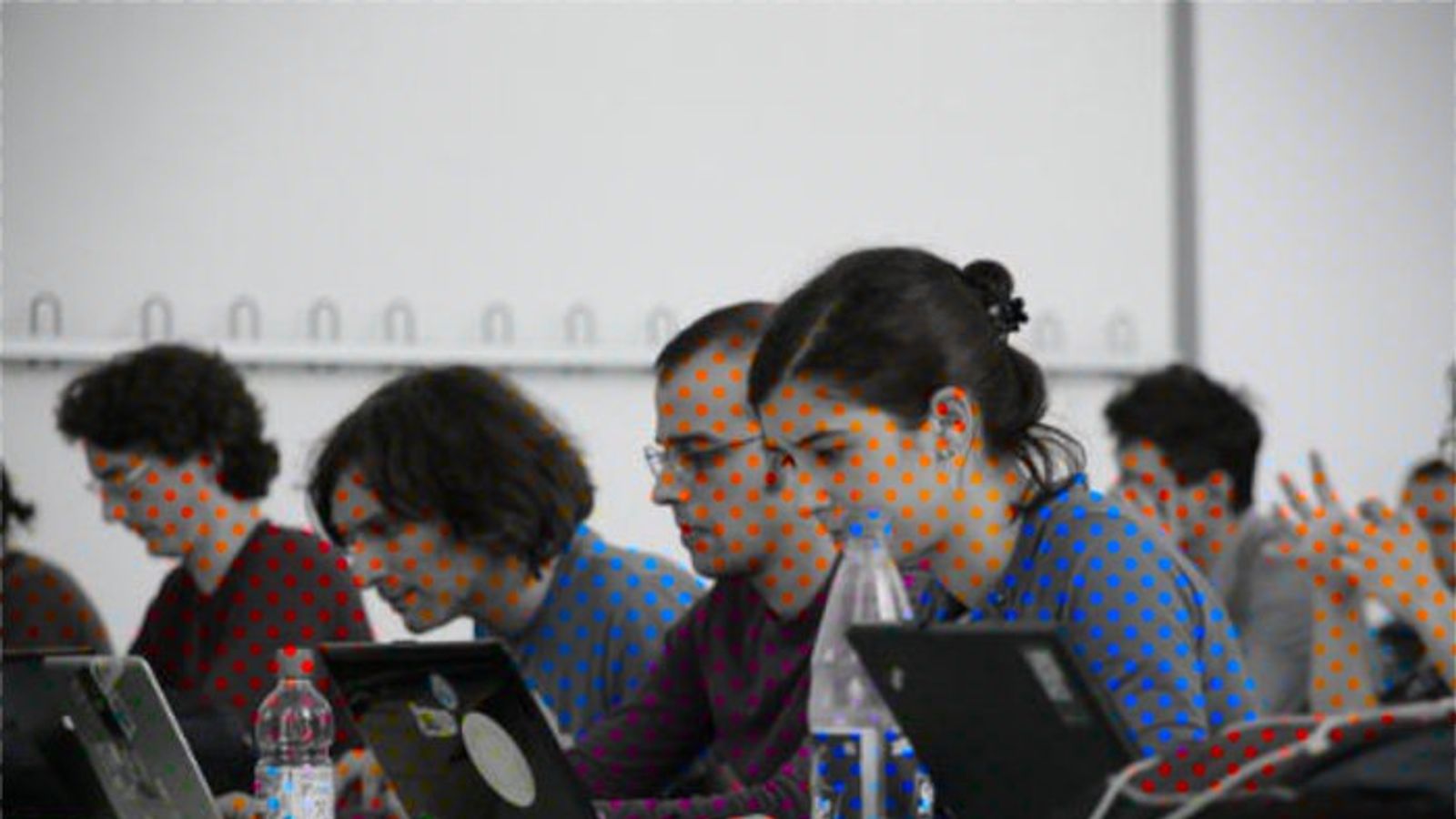
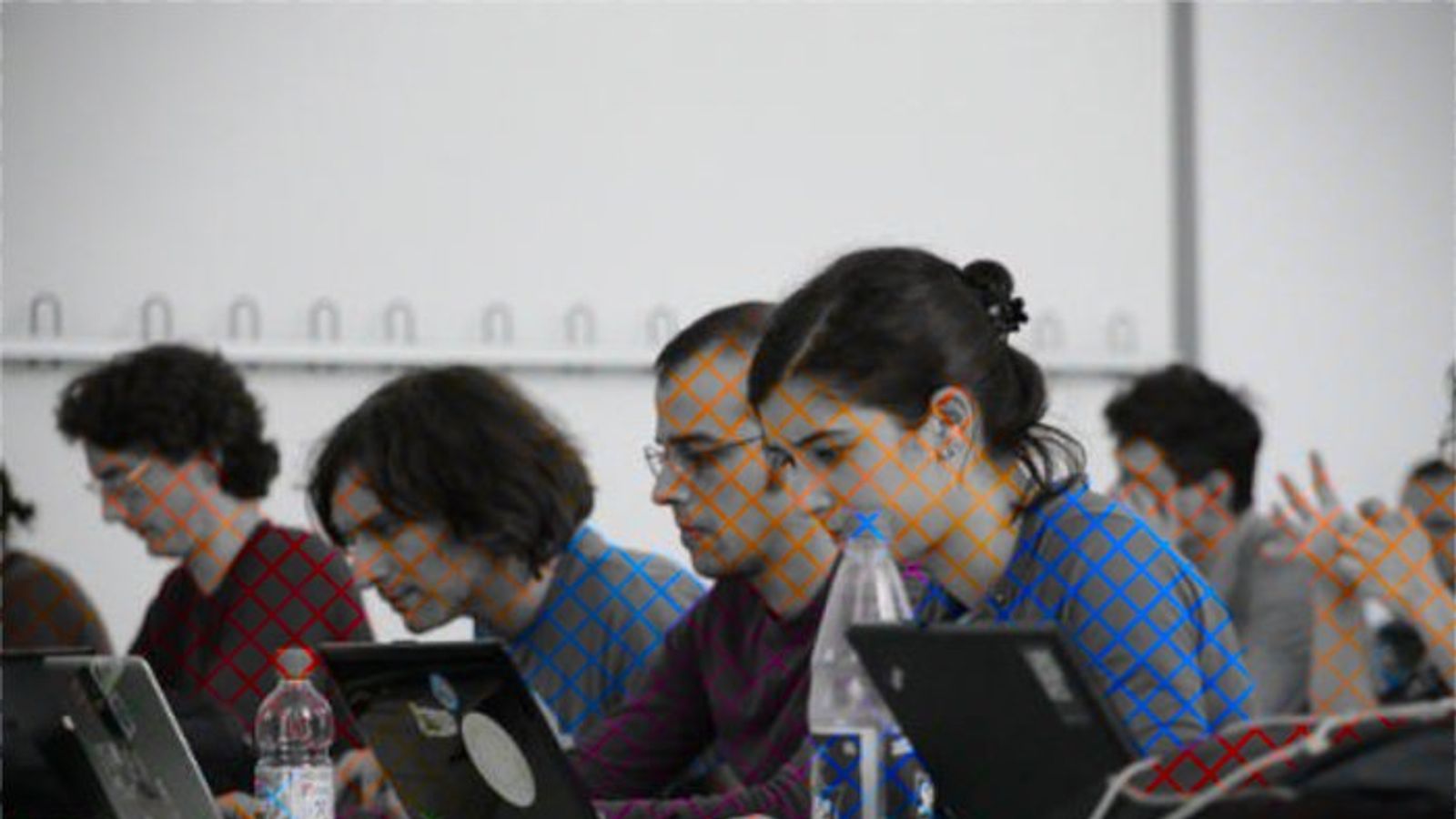
Oyvind Kolas has produced a number of images in which he uses a "colour assimilation grid illusion" over black and white photographs to trick the brain into seeing a full-colour picture.
In a number of experiments, he has used a grid of lines, dots and lines at differing angles across the original image to produce the illusion.
The software developer and digital media artist has developed the technique, which is interpreted as colour as the brain tries to average out the colour against the grayscale background.
Mr Kolas explained on his website that it can be compared to the way printers use colours. The colour mix seen by the eye and interpreted by our brains works to create the final image in our mind.
 His work is not just limited to photographs and still images. He has created a video where the colour grid is laid over moving characters.
 Objects have colours because they reflect those particular wavelengths of light and absorb other wavelengths - for example a red car reflects red wavelengths and absorbs the remaining colours.
These wavelengths of light then travel to the eye, which works using photoreceptor cells called rods and cones.
There are 120 million rods which detect mainly black and white information, while there are up to seven million cones which identify different wavelengths of light roughly corresponding to red, green and blue.
We see colour because the brain pieces together all of the information that the rods and cones collect, and it often fills in "missing" parts in order to interpret the world around us.
These monochrome images appear to have colour because the brain is filling in the missing information.
Around 8% of men and 1% of women have difficulties seeing some colours, commonly known as colour blindness, and therefore they may perceive these pictures differently.
Objects have colours because they reflect those particular wavelengths of light and absorb other wavelengths - for example a red car reflects red wavelengths and absorbs the remaining colours.
These wavelengths of light then travel to the eye, which works using photoreceptor cells called rods and cones.
There are 120 million rods which detect mainly black and white information, while there are up to seven million cones which identify different wavelengths of light roughly corresponding to red, green and blue.
We see colour because the brain pieces together all of the information that the rods and cones collect, and it often fills in "missing" parts in order to interpret the world around us.
These monochrome images appear to have colour because the brain is filling in the missing information.
Around 8% of men and 1% of women have difficulties seeing some colours, commonly known as colour blindness, and therefore they may perceive these pictures differently.
His work is not just limited to photographs and still images. He has created a video where the colour grid is laid over moving characters.
So how does it work?
The human brain and eyes work together to see colours, which are all different wavelengths of light.
Objects have colours because they reflect those particular wavelengths of light and absorb other wavelengths - for example a red car reflects red wavelengths and absorbs the remaining colours.
These wavelengths of light then travel to the eye, which works using photoreceptor cells called rods and cones.
There are 120 million rods which detect mainly black and white information, while there are up to seven million cones which identify different wavelengths of light roughly corresponding to red, green and blue.
We see colour because the brain pieces together all of the information that the rods and cones collect, and it often fills in "missing" parts in order to interpret the world around us.
These monochrome images appear to have colour because the brain is filling in the missing information.
Around 8% of men and 1% of women have difficulties seeing some colours, commonly known as colour blindness, and therefore they may perceive these pictures differently.DISCLAIMER: The Views, Comments, Opinions, Contributions and Statements made by Readers and Contributors on this platform do not necessarily represent the views or policy of Multimedia Group Limited.
Tags:
DISCLAIMER: The Views, Comments, Opinions, Contributions and Statements made by Readers and Contributors on this platform do not necessarily represent the views or policy of Multimedia Group Limited.
Latest Stories
-
Ronaldinho seeks 300th goal with comeback aged 46
4 hours -
Your voice, your future – Opare Addo opens National Youth Forum 2026
5 hours -
GRA pushes data-driven tax administration to boost revenue mobilisation
5 hours -
NSMQ 2026: Presby SHS, Bompata crushes Sacred Heart’s hopes of reaching one-eighth stage
5 hours -
Africa Golf Tourism Convention opens in South Africa to unlock opportunities
5 hours -
BOGISS alleged sexual assault: Dr Apaak demands protection for autism victim
5 hours -
GTEC trains tertiary officials on new affiliation quality assurance framework
5 hours -
Luv FM High School Debate: OKESS, OSASS silence K’Wey Gey and KASS in fierce round of 16
5 hours -
Alcaraz to play US Open after four months out
5 hours -
Even if all foreigners leave, South Africa’s problems will remain – Dr Yamson blames state failure
5 hours -
Mahama announces GH¢500m district housing programme; rollout to begin this year
5 hours -
Energy Committee yet to receive July 29 blackout report – Adomako-Mensah
6 hours -
Five in six Ghana health facilities fall short of basic sanitation standard – WHO/UNICEF
6 hours -
Mohammed Fuseini in talks over Troyes move from Union SG
6 hours -
‘Bear with the system’ – Energy Ministry says temporary power control room to be ready by September
6 hours