

Audio By Carbonatix
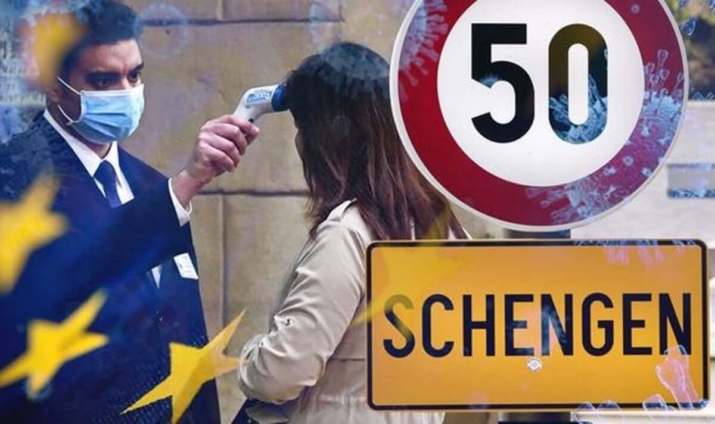
A recent warning by the French President Emanuel Macron that the external borders of the Schengen Area and the Associated Member states may remain closed until September has extinguished the hopes of those intending to apply for a Schengen visa throughout this period.
If the European Commission, which has already called for the prolongation of the border closure until mid-May, decides to extend external borders until September, this means non-EEA nationals and residence permit holders will not be able to travel to these countries
It is a sure thing that once the risks from the pandemic are reduced, and the Schengen Area starts going back to normality, the member states will start asking for additional documents regarding applicant’s health conditions.
In an exchange of emails with SchengenVisaInfo.com, an EU official has confirmed that those wishing to travel to the Schengen Area after the Member States start to gradually go back to normal,
“When the Schengen Borders open up in September, if they do, Schengen Visa applicants will need to submit a Coronavirus test that has resulted negative, taken within the last two weeks prior to the visa application. The traveller may be required to take a new test before travelling to the Schengen area, as to make sure that he/she has not been infected in the meantime,” the source said.
The official also noted that once the COVID-19 vaccine is confirmed and available for all, visa applicants may also be required to be vaccinated in the future, in particular, if the virus remains active.
While the requirement may seem that Schengen countries are going to extra lengths pushed by the Coronavirus pandemic, the official states that in the past there have been similar requirements imposed by some of the Schengen Member states, towards countries worst hit with the Swine Flu and the Ebola virus.
While the number of Coronavirus cases in the world is nearing two million, the worst-hit country in the world remains the United States with 588,465 cases detected, followed by four Schengen members, Spain, Italy, France, and Germany.
The Schengen country with the highest number of deaths remains Italy, while the highest number of deaths per one million people has been San Marino, a country of 33,785 citizens where 371 have died.
Latest Stories
-
Scrap 15% priority placement quota for SHS admissions – GNAPS
6 hours -
IFC Managing Director Makhtar Diop to visit Ghana for investment talks
6 hours -
GPRTU opposes auctioning broken-down vehicles after 21 days
6 hours -
Nigerian Goodnews Aina crowned J30 Accra champion as Ghana’s Gwendolyn Duvor Klu retires in final
8 hours -
WACCE urges gov’t to declare state of emergency in galamsey-prone areas
8 hours -
NACOC boss calls for practical cross-border action against drug trafficking
9 hours -
Ghana calls for stronger regional cooperation to combat drug trafficking
9 hours -
Ablakwa presents bicycles to 100 North Tongu day students
9 hours -
Ablakwa supports 2,269 North Tongu SHS students with essential items
9 hours -
Dr Bawumia expresses sympathy with farmers over their inability to sell their produce even at reduced prices
9 hours -
Constitutional review: Govt must keep discussions open – Dr Tandoh
10 hours -
GPL 2026/27: David Gyamfi hat-trick fires Ashantigold to historic first victory
10 hours -
Ericsson celebrates 150 years of global innovation, 30 years of partnership and digital transformation in Ghana
10 hours -
Ghana’s Ambassador to Serbia hosts African ambassadors’ September meeting in Belgrade
10 hours -
Ghana closer to terrorism threat than ever before – WACCE
11 hours