

Audio By Carbonatix
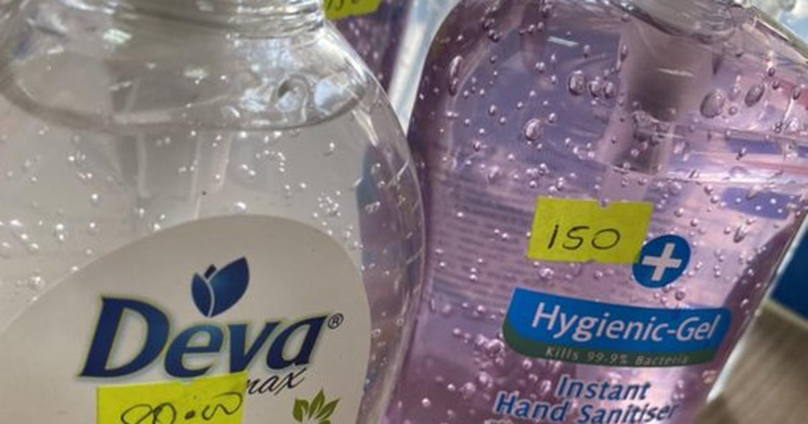
Prices of hand sanitizers have come down drastically in the Kumasi metropolis, following a boost in production by local companies and instituteions.
Currently, almost all local alcoholic beverage distillery companies in Kumasi as well as institutions such as the Kwame Nkrumah University of Science and Technology (KNUST), Kumasi Technical University and the Komfo Anokye Teaching Hospital (KATH), are producing hand sanitizers.
This mass production seems to have flooded the local market, forcing the prices of personal hygiene and protective medical disinfectant, down to the reach of the majority of the people.
A survey conducted by the Ghana News Agency (GNA) Business Desk in Kumasi to sample prices of hand sanitizers, barely forty (40) days after Ghana recorded its first two cases of coronavirus, saw a drastic reduction in prices of the product.
A medium-size standard hand sanitizer produced per the required standards of the World Health Organization (WHO), Food and Drugs Authority (FDA) and Ghana Standard Authority (GSA), is now selling between GH¢10.00 - GH¢15.00, about half the price, when the product gained instant prominence, following the recording of the first COVID-19 case in the country.
The small sizes could also be purchased for GH¢7.00 or GH¢8.00.
The Food and Drugs Authority (FDA) has however, cautioned the public against the purchase and use of fake and unapproved hand sanitizers.
The GNA gathered that a standard hand sanitizer must have an ethanol content of about 65 percent, to be able to kill harmful bacteria.
Dr. Ernest Kwarko, a Technical Member of the Kumasi Metropolitan Emergency Health Committee, the body mandated to coordinate the campaign against COVID-19, told the GNA in an interview that, the use of hand sanitizers, face masks and other personal protective items should not be compromised at this critical time.
Ghana has over the last one month, recorded more than one thousand (1,000) confirmed cases of COVID-19 and nine deaths.
Dr. Kwarko advised the public to make the use of protective items and personal hygiene such as regular washing of hands under running water, a regular feature in their daily lives to help prevent infections
They should also adhere to all health guidelines and protocols, such as social distancing instituted by the government for their safety
Latest Stories
-
Shell to sell its Nigeria gas business to Vaaris Energy
43 minutes -
Judge extends White House access for CNN, MS NOW, Politico amid legal fight
51 minutes -
EU expands migration cooperation with eastern Libya through new funding
59 minutes -
Actress Selma Blair faces charges for kicking nurse and officer after plane incident
1 hour -
Private political loyalties deserve scrutiny too in EC appointments – Osae-Kwapong
1 hour -
EC safeguards must check partisan bias among commissioners – Osae-Kwapong
2 hours -
Oil prices climb as traders weigh Saudi supply risk, Russian diesel flow
2 hours -
Zimbabwean author denies using AI to write award-winning story
2 hours -
Bank of America hit with $1.2bn fine for money laundering failings
2 hours -
Robot seized by German police after allegedly groping teenage girl
2 hours -
Subject EC appointment to ‘Akufo-Addo test’ – Kwapong
3 hours -
English football’s independent regulator would quit over Man City interference
3 hours -
Anthropic seeks rehearing of case over Pentagon’s security risk branding
3 hours -
Torrential rains in Libya’s Tripoli kill two
3 hours -
Guinea-Bissau says it has not approved hepatitis B vaccine trial in newborns
3 hours