

Audio By Carbonatix
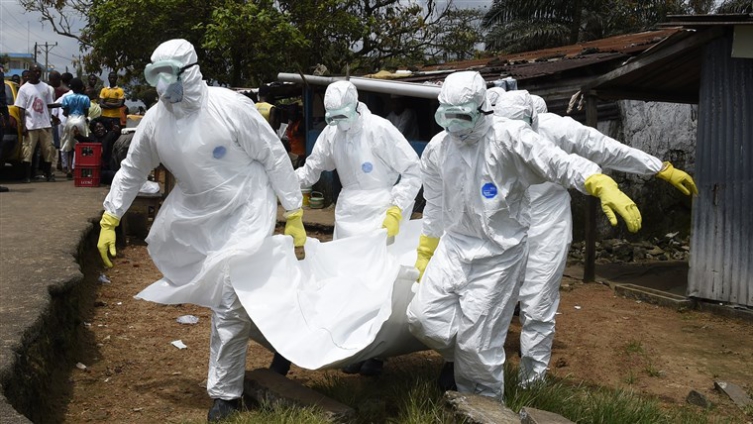
The Ebola outbreak in the Democratic Republic of the Congo’s (DRC) Equateur Province continues to grow, causing major concern as the World Health Organization (WHO) and partners face critical funding gaps.
Confirmed cases have now surpassed the total number recorded during the province’s last outbreak in 2018.
The latest outbreak, DRC’s 11th, was declared on 1 June 2020 after a cluster of cases was detected in Mbandaka area of Equateur Province.
The outbreak has since spread to six health zones, with 56 cases recorded.
The city of Mbandaka and its surroundings were also the sites of the country’s 9th Ebola outbreak which lasted from May to July 2018 and in which 54 cases were confirmed.
Of the 56 cases reported so far, 53 are confirmed and three are probable. In the last three weeks alone, 28 cases have been confirmed.
“Responding to Ebola in the midst of the ongoing COVID-19 pandemic is complex, but we must not let COVID-19 distract us from tackling other pressing health threats,” said Dr Matshidiso Moeti, WHO Regional Director for Africa.
“The current Ebola outbreak is running into headwinds because cases are scattered across remote areas in dense rain forests. This makes for a costly response as ensuring that responders and supplies reach affected populations is extremely challenging.”
The ongoing Ebola response is also facing funding shortfalls. So far WHO has mobilized $1.75 million, which will last only a few more weeks.
Additional support is needed to rapidly scale up the efforts by WHO, the DRC health authorities and partners to ensure all the affected communities receive key services including health education and community engagement, vaccination, testing, contact tracing and treatment.
Significant achievements have been made since the outbreak began. In six weeks, more than 12 000 people have been vaccinated.
During the 2018 outbreak in Equateur, it took two weeks to start vaccinations. This time around vaccinations started within four days of the outbreak being declared.
The current response builds on lessons learned from the country’s previous Ebola outbreaks, which underscored the importance of working closely with communities.
Around 90% of the vaccinators in the ongoing outbreak are from the local communities.
The response has also been able to tap into the expertise of laboratory technicians trained during the 2018 outbreak, with 26 laboratory technicians currently supporting diagnostics.
Working with local responders is inspiring trust between communities and health workers and making the emergency response more effective.
WHO, along with the Ministry of Health and partners, has been engaging with communities to increase understanding of the virus and local support for response activities.
More than 40 000 households have been visited by community health workers and more than 273 000 people have been provided with health and safety information.
Latest Stories
-
Access Bank, Visa launch ‘Visa Accept’ in Ghana
10 minutes -
‘Our young people must inherit story of what Africa created, not lost’ – Mahama
11 minutes -
Afreximbank, GIIF and 24-Hour Economy Authority pact marks real progress toward 24-hour economy agenda
41 minutes -
IMANI, Local Government Ministry discuss reforms on sanitation, local revenue and urban infrastructure
52 minutes -
Ghana’s international reserves drop to US$11.04 billion in August as BoG pushes for significant build-ups in coming months
53 minutes -
Four years enough for any government to deliver – IEA rejects five-year term
56 minutes -
‘The most important players are here’ – Queiroz shrugs off Ghana’s injury crisis
1 hour -
Ayariga pledges stakeholder-led approach to Nzema, Kokomba Market redevelopment
1 hour -
Professional collaboration is key to Ghana’s land and property development – Western Regional Minister
1 hour -
‘When you play Ghana, it’s a derby’ – Kessié sets tone for AFCON qualifying showdown
1 hour -
Mahama urges global institutions to invest in Africa’s cultural infrastructure
1 hour -
Kuami Eugene joins UNICEF Ghana to promote universal birth registration
2 hours -
Renard warns Côte d’Ivoire against complacency Ahead of Ghana clash
2 hours -
‘Can the patient feel the difference?’ – GMTF boss challenges health leaders
2 hours -
Office of the Registrar of Companies marks Risk Awareness Week with push for risk-smart, resilient institution
2 hours