

Audio By Carbonatix
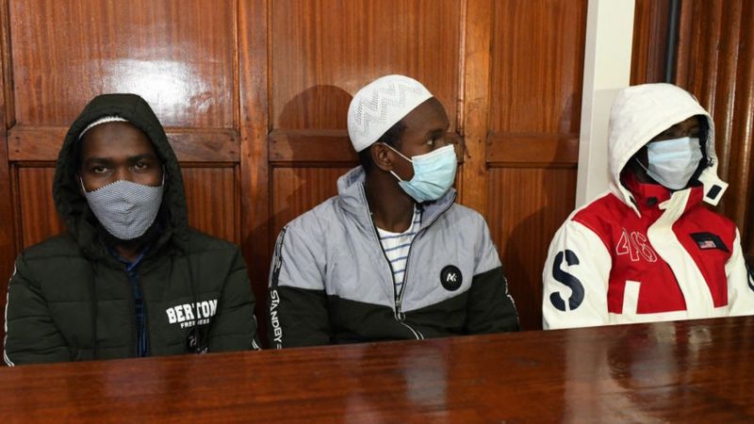
A court in Kenya has found two men guilty of helping Islamist militants to attack an upmarket shopping mall in 2013.
At least 67 people died in the assault by al-Shabab on the Westgate shopping complex in the capital, Nairobi.
The state said the four militants who carried out the attack were found dead in the shopping centre's rubble.
The militants occupied the mall for four days, in one of the deadliest jihadi attacks in Kenya.
A third man was found not guilty on all counts of conspiracy to commit a terrorist act.
The trial is the only one so far over the Westgate shopping mall attack.
More than 140 witnesses testified in the case. The accused denied conspiring to commit terrorism.
The presiding judge ruled that the two suspects, both Kenyan citizens, will be sentenced on 22 October.
The BBC's Ferdinand Omondi in Nairobi says their convictions will be welcomed in a country that remains on high alert over possible attacks by al-Shabab.
The al-Qaeda affiliate is based in neighbouring Somalia, and has carried out a series of attacks in Kenya.
Kenya has troops in Somalia to help fight the militants.
Who are the convicted men?
Mohammed Ahmed Abdi and Hussein Hassan Mustafa were charged with planning and committing acts of terror, as well as supporting and helping a terrorist group.
The third suspect, Liban Abdullahi, was found not guilty. The Somali refugee was also acquitted of the charge of being in Kenya illegally and possessing identification documents by false presences.
What happened at Westgate?
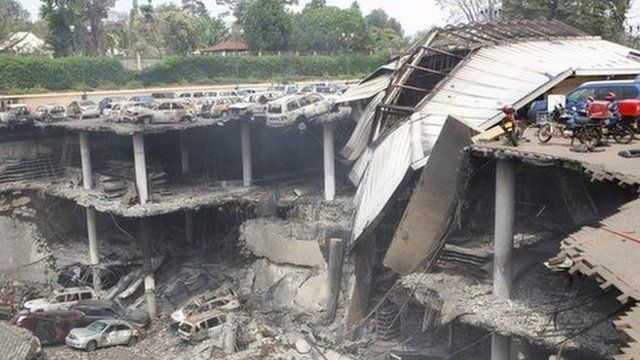
On a Saturday afternoon in September 2013, gunmen entered the mall and opened fired on shoppers, leading to a four-day siege.
"People were panicking, children were crying," survivor Surajit Borkakyoty told the BBC that day.
"We were trying to calm people and tell them not to use their phones, or to keep them on silent. All the time we could hear gunfire. It was a war-like situation."
Live television broadcasts showed smoke billowing from the complex, as armed police and military vehicles surrounded the site and dozens of terrified people escaped.
When it was over days later, at least 67 people had been killed - 62 civilians, five security officers and the four attackers.
Al-Shabab said it carried out the attack in response to Kenyan military operations in Somalia.
Initially the authorities said there had been 10 attackers, but then revised the figure down to four. They said all of them had been killed but forensic tests on their remains have never been released.
Were lessons learnt from the attack?
Rivalry between police and military forces has previously been pointed out as a factor that hindered the response.
Since the attack there has been better co-ordination, correspondents say.
This helped in the response to the nearby DusitD2 hotel and office complex attack in January 2019, where 21 people died.
Police and military counter-terror units, foreign security personnel, ambulance and fire brigade co-ordinated to end the assault.
Latest Stories
-
Deputy AG accuses GBA of selective criticism over Chief Justice’s comments
5 minutes -
Africa must remove visa restrictions to unlock jobs, opportunities – Gabby Otchere-Darko
9 minutes -
87-year-old man remanded over alleged defilement of 9-year-old girl at Ofankor
27 minutes -
Visa restrictions costing African businesses opportunities – Gabby Otchere-Darko
27 minutes -
Body of missing runner found in South Africa
27 minutes -
CANAL+ and LaLiga sign landmark anti-piracy agreement
34 minutes -
AshantiGold’s David Gyamfi Junior shines as 8 outstanding performers win GPL Matchweek 2 NASCO awards
42 minutes -
The small lessons changing how Ghana’s restoration champions plant trees
1 hour -
Government must not perpetrate galamsey, it campaigned against – GBA President
1 hour -
PRIMER must ensure women return home safely with their babies – Vice President
1 hour -
LEAP payments begin nationwide as government targets 450,000 households
1 hour -
Results before style: Why sticking with Carlos Queiroz is a great decision
1 hour -
Mahama convenes high-level meeting to strengthen border security and narcotics control
2 hours -
Thara Mills Simmonds named 2026 Forty Under 40 Achiever in Education
2 hours -
Ghana deepens diaspora diplomacy: Embassy pledges enhanced consular support for Ohio communities in Columbus
2 hours