

Audio By Carbonatix
A survey by the Private Enterprise Federation (PEF) in collaboration with OSIWA-Project has revealed that 69.7% of Micro, Small, and Medium-scale Enterprises (MSMEs) operating in urban centers are not aware of the laws guiding taxation of businesses.
This is compared with 91.3% in the rural areas.
However, 70.8% of smaller businesses in the urban areas are registered with the Ghana Revenue Authority (GRA) and are therefore deemed to pay tax.
But, only 49.4% in the rural areas have registered with the GRA.
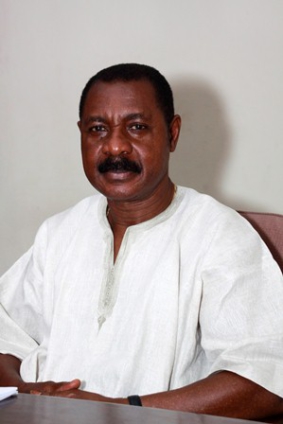
Chief Executive of PEF, Nana Osei Bonsu said the findings calls for reduction in taxes as well as massive tax education by the GRA for taxpayers.
He told Joy Business that government must adopt a tiered tax system or a flat rate scheme for smaller businesses if it wants to generate adequate revenue.
“Our tax rate compared to our neighbours is very low. We’re generating 13.9% tax revenue of Gross Domestic Product to government. If we want to be able to make sure that government revenues go up to enable government do whatever we ask from government, then we have to vary the tax rate instead of charging the same 25% we charge on small potatoes sellers as same as we charge giant businesses,” he said.
Mr. Bonsu stated that his conclusion is based on research and analysis of the research findings.
The survey also revealed that 42.7% of business owners sampled in the urban centers were educated to the secondary or basic level whilst 39.9% had degrees.
Also, 92% of businesses in Ghana are MSMEs but they contribute only four percent of the total tax.
Recommendations of research
PEF called for reforms in the taxation of MSMEs, adding, the current tax regime for smaller businesses is cumbersome and preventing many smaller business from paying tax.
It therefore wants the adoption of a Tiered Tax system – linked to business turnover – or flat rate scheme which it believes will help reduce the tax burden on businesses, particularly MSMEs.
It also wants policy makers to consider a system which is in line with international best practices and also provide a good opportunity for government to raise revenue as well as ease the compliance burden on businesses.
Latest Stories
-
Imagination Africa, Mentors Chess Academy to host second African Genius Chess Championship at Ghud Park
2 hours -
Nana B passport claims a diversionary tactic — Abu Jinapor
3 hours -
Pope Leo diagnosed with cancer as doctors remove lobe of lung, Vatican says
3 hours -
Legal Aid Commission takes free legal services to Techiman main lorry terminal
3 hours -
Nana B denies seeking passport favour, accuses Ablakwa of failing to account for GH¢16.4m
3 hours -
Young girls demand climate action, stronger protection against child marriage
3 hours -
Ex-gang boss sentenced to 40 years for orchestrating Tupac Shakur’s murder
3 hours -
From near-deferral to three awards: UMaT graduate’s academic journey
3 hours -
Atta Akyea denies seeking presidential pardon for Wontumi in galamsey case
4 hours -
Photos: Mahama commissions 85-bed Police Hospital ward, donates two ambulances
4 hours -
GTEC directs Ghana’s public universities to reopen by October 16 and begin lectures on October 19
4 hours -
Star Oil donates GH¢1million towards construction of new CID facility
4 hours -
Court hands Adjetey Sowah, two others lifetime bans after Amputee Football legal dispute
4 hours -
NDC appoints Julius Kwame Anthony as a Deputy Communications Director
4 hours -
Ghana repatriates 120 Nigerians rescued from suspected cybercrime centres
4 hours