

Audio By Carbonatix
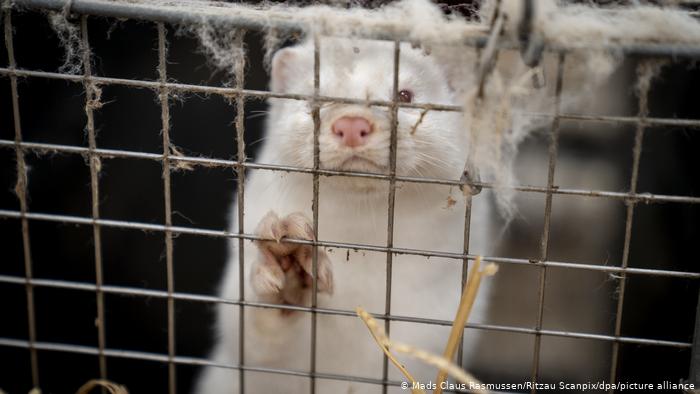
All non-residents coming from Denmark will no longer be allowed into the UK, the government announced. Denmark ordered a nationwide mink cull after a mutated version of the coronavirus was transmitted to humans.
The United Kingdom issued an immediate travel ban for all non-residents traveling from Denmark following outbreaks of a mutated version of the coronavirus at Danish mink farms.
The new measures, announced early Saturday morning, went into effect at 0400 GMT/UTC.
"This decision to act quickly follows on from health authorities in Denmark reporting widespread outbreaks of coronavirus in mink farms," Transport Secretary Grant Shapps said on Twitter.
"Keeping the UK public safe remains our top priority," he added.
DENMARK update:
— Rt Hon Grant Shapps MP (@grantshapps) November 7, 2020
From 4am on 7 November, British Nationals or residents who are returning to the UK directly or indirectly from Denmark will need to self-isolate with other members of their household until two weeks have passed since they were last in Denmark.
Under the new rules, British citizens and permanent residents returning from Denmark — either directly or indirectly — will need to quarantine with others in their household for 14 days.
The ban does not apply to freight drivers and other transporters. The restrictions will be reviewed after a week.
The UK initially responded to the news on Thursday by announcing that all travelers would be required to self-isolate
Denmark defends measures
On Wednesday, Denmark announced that a mutated version of the coronavirus had been transmitted from minks to humans, infecting 12 people in the north of the country.
The government ordered a nationwide cull of the country's roughly 17 million farmed minks. They also announced strict new lockdown rules to contain the spread.
Danish officials warned that the mutated strain could threaten the effectiveness of any future COVID-19 vaccine.
The World Health Organization (WHO) has said there is currently no evidence that any of the known coronavirus mutations pose an increased threat to humans.
The Danish government, however, defended the strict order to slaughter the country's farmed minks, saying it would not take any risk.
Denmark's infections diseases institute has identified five variants of the virus stemming from mink, but only one, known as cluster 5, showed "reduced sensitivity" towards antibodies.
There have been several cases of coronavirus outbreaks at mink farms in the Netherlands as well, which prompted 100 farms to temporarily shut in late August.
Latest Stories
-
Black Princesses Coach Charles Sampson confident ahead of World Cup opener against Ecuador
9 minutes -
TV presenter among 12 sentenced to death in Egypt drugs case
12 minutes -
Accra Airport VIP Lounge project to be completed this year without taxpayer funds – Ablakwa
45 minutes -
NPP clears all 47 aspirants for 2026 national officers’ election
58 minutes -
Domelevo backs OSP probe into GH¢70k allegation
2 hours -
CAF Confederation Cup: Dennis Korsah confident Nations FC can overturn Mali defeat
2 hours -
Chief Justice should stop commenting on some political issues – Domelevo
3 hours -
‘I don’t trust OSP’ to probe GH¢70k ‘bribe’ allegation – Kwasi Kwarteng
3 hours -
Road inspections not to witch-hunt contractors – Kwame Agbodza
3 hours -
Inter Milan mount stunning comeback to beat Napoli
3 hours -
Modric plans to play for Croatia past 41st birthday
4 hours -
Bayern fail to score for first time in 59 games
4 hours -
Bawumia preparing new cocoa policy package for farmers – Annoh-Dompreh
4 hours -
Wa-Tumu-Bolga road upgrade will unlock agriculture, trade – Agbodza
4 hours -
Ghana Maritime Authority readies oil-spill response vessel for deployment
4 hours