

Audio By Carbonatix
The Food and Drugs Authority (FDA) through its Progressive Licensing Scheme (PLS) initiative has built the capacity of 56 small-scale and cottage food processing facilities.
The innovation launched in July this year has enabled the beneficiaries to generate employment, earn income and thrive their businesses.
The PLS is a certification mechanism aimed at supporting the cottage industry in Ghana to meet the FDA’s required standards.
The certification is a testament that products meet the required health, safety and hygienic standards of major international and local retail shops in the country.
Such products include local spices, fruit juice, peanut products, pepper sauce (shito) among several others.
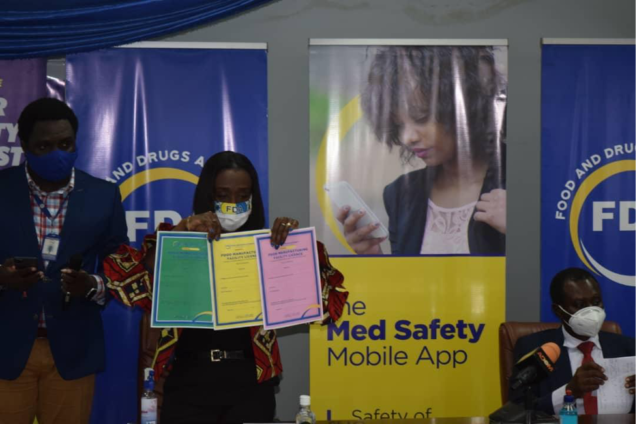
The PLS, which has three licensing stages categorized as Pink, Yellow and Green, seeks to support the local food industry to retail their products in major grocery shops and supermarkets in Ghana.
A key PLS goal is to have major grocery shops and supermarkets retailing at least 60 per cent of made in Ghana food products in their shops.
The FDA, through the PLS initiative, is certain that the fortunes of cottage food industries will improve in the coming years.
Following the launch of PLS initiative, six retail centres - Economic Distribution (ECODI), Koala Shopping Center, Melcom Limited, Shoprite Ghana Limited, Marina Retail Center Limited and Palace Mall - have all endorsed the initiative and pledged their support and readiness to stock their shops with Made in Ghana products manufactured by PSL license holders.
While the cottage food industry plays an important role in the country’s economy, the FDA recognises that it is important for the industry to be offered greater opportunities to market their products and share in the benefits of economic growth.
It is instructive to note that the 2019 statistics from FDA market surveillance showed that 661 locally manufactured products in the Greater Accra Region alone were not registered as per the Public Health Act 851 (2012) but were on the market.
This is primarily because a majority of cottage and small scale units, according to the FDA, have limited resources for effective technological inputs and are ill-equipped to deal with food safety and quality in a sustained manner, and therefore are unlikely to succeed with registering their products.
This is evidenced by statistics from FDA which indicates that out of 600 facility license applications received between 2017 and 2019, 300 of the facilities representing 50 per cent were unsuccessful in their registration processes.
Some key reasons for the unsuccessful applications by these facilities include the cost of laboratory testing of products which most of these facilities cannot afford, inadequate knowledge of required processes and documentation and the inability of many cottages/small scale to meet facility establishment requirements.
The PLS was launched to help the cottage industry to overcome these challenges and expand their market share.
“This is why government through the FDA has developed a new system of Progressive Licensing to support these small units, as they provide employment and generate income for their operators.
"These cottage and small scale food processors need to be offered greater opportunities to market their products and share in the benefits of economic growth.
"Similarly, they also serve as hubs for thriving local industries, which would drive broad-based economic growth and structural transformation of the economy as a whole,” Delese Mimi Darko, Chief Executive of the FDA explained.
"I had started product registration but it got to a point where getting financial aid for the registration had become difficult. I registered with the Ghana Enterprising Agency (GEA) and got a call from the FDA.
"My facility and products were registered without me having to pay anything. The FDA Officers were very professional in their work and refused the token of appreciation that I offered to them," a beneficiary of the initiative, Annes Perfections, said.
Background
The Progressive Licensing Scheme (PLS) is a certification mechanism introduced by the FDA to endorse and validate products of cottage and small enterprises in Ghana.
The initiative is to enable such products that meet the FDA’s required standards.
The certification is a testament that products of such facilities meet the required health, safety and hygienic standards of major international and local retail shops in the country.
Some of these products include local spices, fruit juice, peanut products, pepper sauce (shito) among others.
Latest Stories
-
Lidl banned from selling copycat Birkenstock sandals, Dutch court rules
1 hour -
I’ve never come across a woman that strong – Baffour Awuah recounts botched EOCO arrest
1 hour -
Netherlands to return to Eurovision after 2026 boycott
2 hours -
Alan Kyerematen calls for more leaner government
2 hours -
I will go when EOCO is ready to do the right thing – Baffour Awuah on disputed invitation
2 hours -
Uproar in France over award-winning author accused of using AI
2 hours -
Mauritius backs Moroccan sovereignty as most credible solution to regional dispute over Moroccan Sahara
2 hours -
Trump’s Board of Peace unveils $2.45bn plan to begin Gaza’s reconstruction
2 hours -
I thought it was a kidnapping – Baffour Awuah explains dramatic escape from EOCO officers
3 hours -
Cedi depreciates by 9.5% in nine months of 2026 – BoG
3 hours -
Harvey Weinstein sentenced to 15 years in prison for sexual assault
3 hours -
Ghana’s public debt hit GH¢733.9 billion in July 2026
3 hours -
Dolly Parton’s manager accuses her nephew of ‘threats and intimidation’
3 hours -
“I don’t see any rational basis” – Inusah Fuseini rejects proposed five-year term
3 hours -
Constitution shouldn’t be amended simply because years have passed – IEA
3 hours