

Audio By Carbonatix
Huawei hosted its second annual TrustInTech Summit, which was attended by ICT industry experts, academia, and economists from around the world.
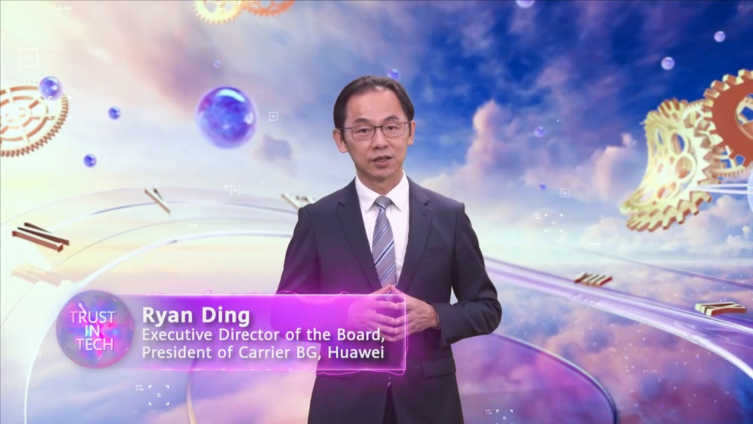
Speakers included Huawei's Executive Director of the Board and President of the Carrier Business Group, Ryan Ding, international investor Jim Rogers, GSMA CMO Stephanie Lynch-Habib, and others.
Focusing on the new challenges the world faced in 2020, the Summit highlighted ICT's critical role as the key digital infrastructure to support societal wellbeing and economic recovery.
Given the rising trend of technology decoupling, the Summit emphasized the need to embrace open collaboration, as well as the call to defeat the unnecessary fear of adopting new technologies.
In 2020, ICT played a vital role in resuming work and production during the pandemic. Meanwhile, 2020 has witnessed the exponential growth of 5G business applications.
Global consultancy firm STL Partners estimated that 5G-enabled scenarios will raise the global GDP by US$1.4 trillion by 2030.
At the Summit, STL Partners co-founder Chris Barraclough stressed the transformative role of 5G in the manufacturing, energy, and healthcare sectors.
Huawei Enterprise’s digital transformation expert Edwin Diender also concurred, explaining the role of how 5G, AI, big data, and cloud computing pushed for faster drug screening and diagnosis, intelligent monitoring, and remote working and education during the pandemic.
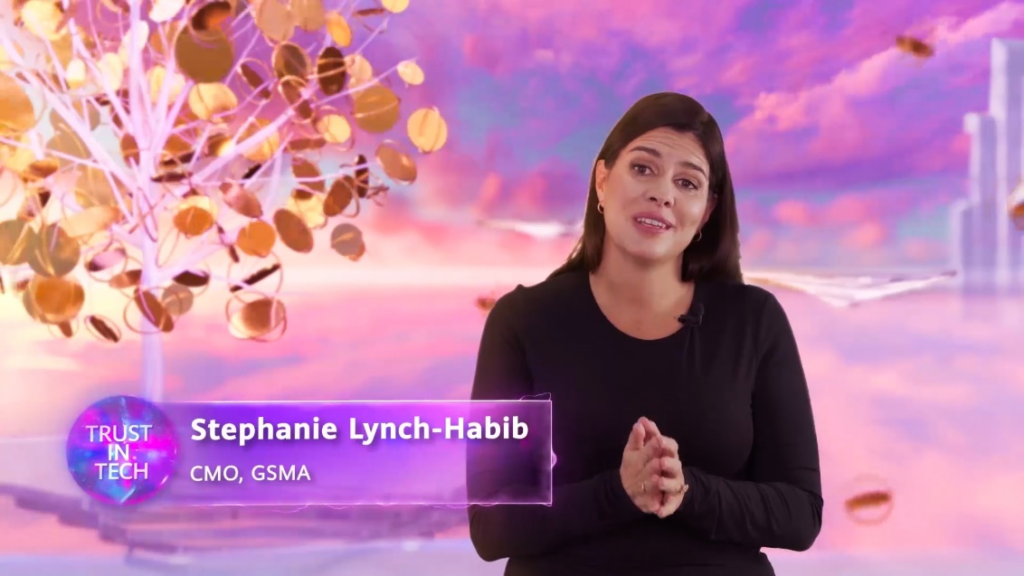
GSMA CMO Stephanie Lynch-Habib shared that 5G's rollout in 2020 brought over 100 5G networks in 47 countries, and some regions are leading in making 5G a mature application.
5G will influence consumer-oriented industries such as e-commerce, as well as boosting innovative services like virtual reality and augmented reality.
Standard network slicing models and edge computing will provide high reliability, low latency, high throughput, and service customization.
"Our working groups are continually supporting and enhancing global standards," stressed Lynch-Habib.
During the virtual, live streamed event, Huawei Carrier Business Group CTO Paul Scanlan called 2020 a ‘Sputnik’ moment.
"Similar to how the first man-made satellite Sputnik was successfully launched in 1957, bringing humanity into the age of space exploration, as 5G matured in 2020, everything changed," said Scanlan.
"The industry began to accelerate 5G adoption, offering spectrum discounts, innovating business models, and driving industry transformation. That's never happened in the last 10 years."
Several guests at the event commented on early adoption and major technological breakthroughs by saying there has always been a mistrust and fear of new things.
For example, during the Industrial Revolution in the 19th century, as there was fear for automated production, factories were destroyed.
As the events in 2020 led to more isolation and nationalism, there’s been a rise against transnational cooperation, and more countries are closing their doors and decoupling from each other over technology.
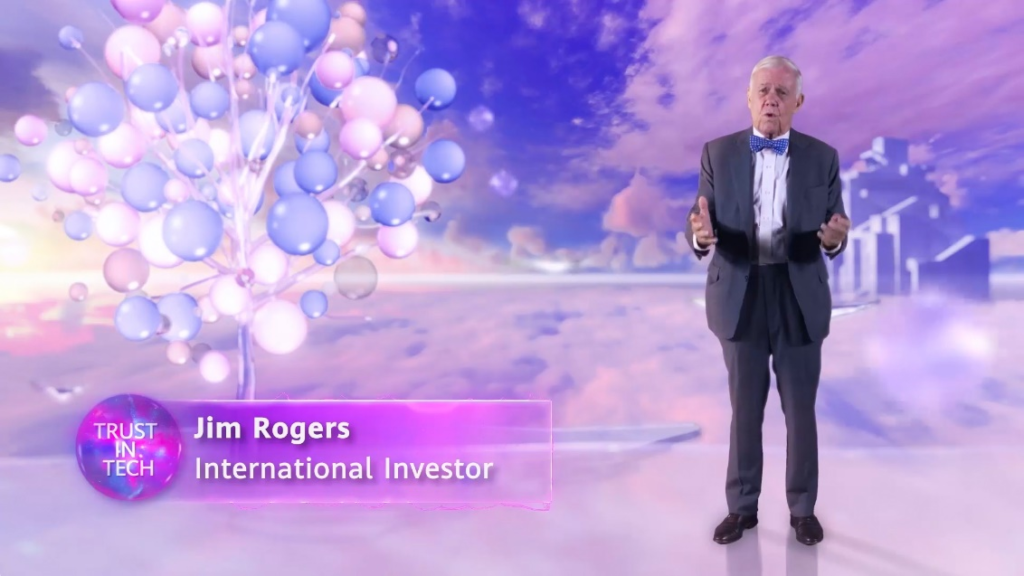
"Anybody taking a unilateral approach to anything, certainly to technology and economics, are going to have problems," said international investor Jim Rogers.
"Foreign policy should be around the opening. We need to avoid protectionism, especially in technology." He also said that protectionism was bad for the world as seen throughout history.
Professor Jin Keyu of the London School of Economics also echoed during the Summit, "[In today's world], it's less about competition, rivalry, and substitution, and more about collaboration, complementarity, and cooperation."
At the end of the summit, Ryan Ding, Huawei's Executive Director of the Board and President of the Carrier Business Group, emphasized that an open and trusted ecosystem is required for everyone to share the prosperity brought by technology.
To do so, the ICT industry needs to continue adopting unified technical and security standards. Given the current complex geopolitical environment, he stressed, “Politics should stay away from technical issues. We need to remain fair and open to drive technological cooperation. Industry cooperation is not a zero-sum game.
"If an isolated approach is adopted now, while new technology is unlocking social and business value at a faster rate, the victim will not be one company.”
Latest Stories
-
Asiedu Nketiah urges political parties to rebuild public trust at inter-continental dialogue in South Korea
10 minutes -
Heavy pitch, intense heat made Kotoko draw physically demanding – Eric Tinkler
18 minutes -
Pregnancy School initiative lauded for reducing maternal mortality in Kwabre East
19 minutes -
Emergency nature of South Africa evacuation justifies GH¢49.7m cost — International relations expert
20 minutes -
Hearts coach Kapor tips Alex Banso for Ghana football stardom
28 minutes -
“Antoine Semenyo can play nine” – Maresca backs Semenyo to deputise for Haaland
41 minutes -
Semenyo becomes second Ghanaian to hit 50 Premier League goal contributions
42 minutes -
King makes clear Harry and Meghan remain non-working royals
43 minutes -
Former GPHA Director-General Edward K. Osei receives Honorary Doctorate, Excellence Award
46 minutes -
Beres Owusu named Man of the Match after impressive Grazer AK display
51 minutes -
29 Players to commence Black Starlets preparations ahead of 2026 WAFU U-17 Championship
1 hour -
U-20 Women’s World Cup: Sampson demands response after ‘cheap’ goals cost Ghana
1 hour -
Ghana had no budget for South Africa evacuation but had to act – Ablakwa
1 hour -
Here’s the breakdown of the GH¢49.7m spent on evacuating Ghanaians from South Africa
1 hour -
GIGS commends Armed Forces for Accra-Kumasi Expressway progress
1 hour