

Audio By Carbonatix
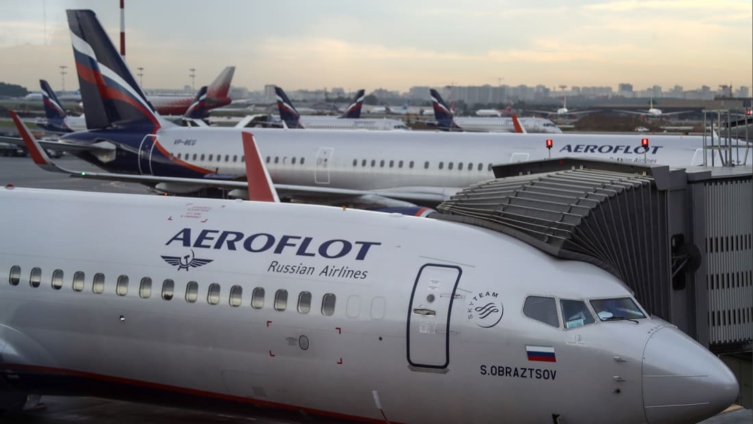
Russian airline Aeroflot has announced it will designate specific seats onboard its planes for passengers who refuse to wear masks.
"It is critically important for us to ensure the safety of all passengers," Yulia Spivakova, a spokeswoman for the airline, said in a statement.
Aeroflot, which is Russia's largest airline and national flag carrier, has a policy that travellers must wear masks while boarding and while on the plane unless they are eating, drinking or changing masks.
However, it seems that some passengers are not obeying these guidelines.
And because a plane can't just stop in midair and kick out an offending passenger, Aeroflot has designated certain seats on each flight for travelers who cannot or will not follow the mask policy.
"[This] does not exclude the application of other measures of liability for violation of the rules for the use of personal protective equipment on board," Spivakova added.
Mask wearing policies on planes vary throughout the world and individual carriers often make their own rules. Much of the burden on enforcing these policies is passed onto flight attendants.
Russia is not the only country where mask regulations on board airplanes has become an issue.In the United States, several high-profile incidents have occurred on flights where passengers refused to wear masks.
In July 2020, a Southwest Airlines flight returned to the gate at Denver International Airport when a scuffle took place between several passengers, one of whom claimed it was their "Constitutional right" not to wear one.
As of August of this year, Delta Air Lines announced that it had instituted nearly 250 lifetime bans on travellers who had refused to mask up.
The following month, two passengers on board two different domestic flights in Japan were removed from planes before takeoff, both for failure to wear masks. Aeroflot has not announced whether it will implement long-term bans or other punishments for passengers who refuse to keep their masks on throughout the flight.
But isolating them to a specific section of the plane may somewhat reduce the likelihood that an un-masked traveler could pass the coronavirus on to one of their seatmates.
Latest Stories
-
The goal is to win 2028 polls – Bawumia
7 seconds -
GoldBod secures 30% of large-scale gold output for Ghana’s strategic reserves
34 seconds -
FDA warns against unauthorised chemicals for ripening plantain
2 minutes -
‘If you sell gold at a loss, you’re not a good trader’ – Afenyo-Markin jabs Sammy Gyamfi
5 minutes -
Dr. Bawumia meets new Greater Accra NPP executives; charges them to bring all talents on board
8 minutes -
Before the Next Jason: When seniority becomes a weapon against young academics
21 minutes -
For President Mahama, every mother must live. What about you?
30 minutes -
OMCs commence fuel price reviews; Star Oil sells petrol at GH¢14.97, diesel kept at GH¢16.97
1 hour -
Residents of Brekusu-Kwabenya-Kitase protest over deplorable roads
1 hour -
Genser Energy secures 456m euros to accelerate next phase of growth across West Africa
1 hour -
COKA visits Kokofu after Ashanti NPP win, calls for unity ahead of 2028
1 hour -
Bono East crowns Kintampo SHS, Gyarko Community Day SHS for national public speaking finals
2 hours -
GRIDCo completes initial repair works on Ashaiman transmission line
2 hours -
Egyapa Mercer donates hairdryers to graduating hairdressers in Sekondi
2 hours -
Health Ministry hands over 30 ambulances to National Security for refurbishment
2 hours