

Audio By Carbonatix
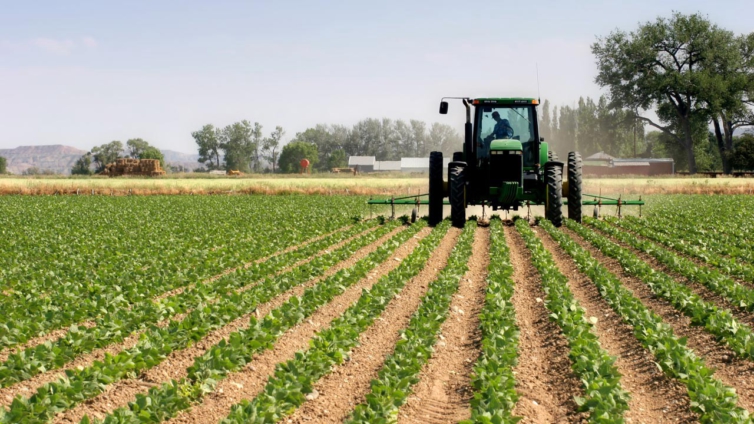
Farmers in five regions in Northern Ghana have appealed to government and other stakeholders to design more effective interventions to enable them to improve on crop yields.
The farmers further called for ban on tomato importation and revisit initial plans to revamp tomato factories in the country, subsidise cost of farm inputs and extend the Planting for food and jobs programme to cover all year round.
The farmers' needs were contained in the Agro Policy Performance Barometer Report (APPBR 2019) of the Ghana Trade and Livelihood Coalition (GTLC), and was presented at a policy dialogue on gender responsiveness to the planting for food and job programme in Tamale.
It brought together stakeholders in Agriculture from the Northern, Savannah, North East, Upper East and Upper West Regions. The farmers further called for direct government consultancy, for proper implementation of Agriculture policies, including; investments in the Agriculture sector and the early release of subsidised fertilizers.
Mr Ibrahim Akalbila, Coordinator of Ghana Trade and Livelihood Coalition (GTLC), said the report showed that women farmers had little access to information about government's Agricultural policies as well as the use of improved seeds and subsidised fertilizers.
He reiterated that, there was significant disparities between women and men in accessing information on improved seeds, and it was important to advocate gender responsiveness in the Planting for Food and Jobs policy.
Mr Akalbila said there was improvement in the delivery of fertilizer to farmers, however, there was the need to do more to improve on the PFJ system to make it more impactful.Hajia Hawa Musah, the Northern Regional Director of Agriculture, advocated collaboration from Non-Governmental Organisations, Civic Society Organisations and the media in changing the attitude of peasant farmers to appreciate the effects of climate change and the need for them to consider including; practices that would improve on the environment as well as sensitise them to adopt strategies to avoid the practice of defaulting in loan payments.
The GTLC since 2012 has conducted surveys annually on the implementation of Agriculture policies in Ghana, assessing their implementation and effects on beneficiaries.
Latest Stories
-
He entered at eight. He is now 16: Ghana’s children growing up in prayer camps
4 hours -
‘Development must not always begin from Accra’ — Anwelle Foundation launched in Jirapa
4 hours -
PKO trio eye victories at Odwira Festival
6 hours -
346 Ghana Navy recruits pass out after 26 weeks of intensive training
6 hours -
Newsfile to discuss EOCO-MP arrest, drug trafficking, speech arrests and $235m water debt
7 hours -
JoyNews gets results as listeners raise GH¢40,000 to help 17-year-old student with cerebral palsy attend SHS
7 hours -
Vice President calls for stronger local pharmaceutical production to reduce medicine imports
8 hours -
The brewing tension at KNUST; Beware the Ides of October….
8 hours -
Health Ministry moves to integrate traditional medicine into mainstream healthcare
8 hours -
550 pupils in Kintampo South get educational lifeline as ‘Seeds of Hope’ reaches farming communities
9 hours -
Opoku Mensah urges Christian Council, House of Chiefs to speak up on democratic freedoms
9 hours -
Teacher unions’ strike: Minority demands immediate payment of teacher arrears, 20% deprived area allowance
9 hours -
The Accra-Kumasi Expressway: Building it right
9 hours -
Beyond gold exports: Building value and economic resilience from Ghana’s gold
9 hours -
2027 AFCONQ: Ghana under pressure as Gambia beat Somalia 2-1
10 hours