

Audio By Carbonatix
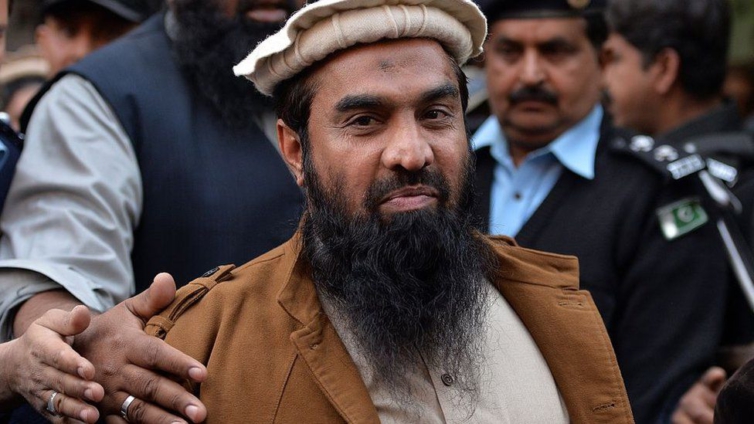
A Pakistan court has sentenced Zakiur Rehman Lakhvi, a senior leader of the militant group Lashkar-e-Taiba, to five years in prison for terror financing.
Lakhvi has been accused by India and the US of orchestrating the 2008 Mumbai terror attacks, in which at least 160 people were killed.
Zakiur Rehman Lakhvi, suspected Mumbai attack leader, jailed in Pakistan https://t.co/QALbq3HjpP
— BBC Asia (@BBCNewsAsia) January 8, 2021
He was sentenced on Friday to three concurrent five-year sentences.
The court found Lakhvi guilty of collecting and dispersing money for terrorist attacks by Lashkar-e-Taiba.
He was arrested on Saturday in Pakistan's Punjab province where he was running a medical dispensary, which the state's counter-terrorism team said he used to collect funds.
The US welcomed Lakhvi's arrest last weekend, calling it "an important step in holding him responsible for his role in supporting terrorism and its financing".
"We will follow his prosecution and sentencing closely and urge that he be held accountable for his involvement in the Mumbai attacks," the US state department said on Twitter.
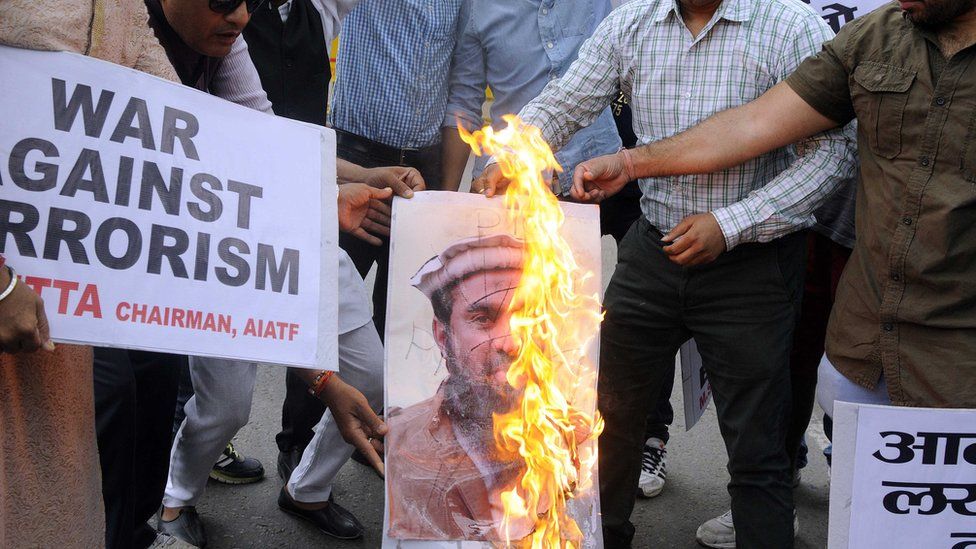
Ten gunmen attacked Mumbai in 2008, carrying out assaults on two luxury hotels, a train station, a hospital, a Jewish cultural centre and some other targets in Mumbai.
Lakhvi was quickly named by India as one of the major suspects in the attacks. Indian officials said Lakhvi had spoken to the attackers during their journey and may have been in touch during the attacks. They said he was identified by the sole surviving gunman, who said Lakhvi helped to "indoctrinate all the attackers".
He was arrested in Pakistan, reportedly at a training camp for Lashkar-e-Taiba, on 7 December 2008.
Six years later he hit the headlines again when an anti-terrorism court in Pakistan trying him for the Mumbai killings ordered his release on bail, and in April 2015 he walked free from prison.
During his more than five years in prison, Lakhvi reportedly had special treatment including uninterrupted access to guests, mobile phone use and internet access, keeping him in effective contact with the rank and file of Lashkar-e-Taiba.
Last year, the founder of Lashkar-e-Taiba, Hafiz Saeed, was also sentenced to jail in Pakistan.
Indian officials have accused Pakistan of secretly supporting the militants, and have suggested the verdicts are linked to pressure on Pakistan from the international terrorist financing watchdog, the FATF.
Pakistan is hoping to be removed from the organisation's "grey list" at a meeting in February.
Latest Stories
-
Northern Births and Deaths Director to face PAC over GH¢71k withdrawals
8 minutes -
Djokovic claims 102nd title of career with China Open win
12 minutes -
Desire FC teams up with Hellas Verona to develop emerging talent in Ghana
16 minutes -
Labone robbery case adjourned to October 22 as prosecution prepares supplementary statements
18 minutes -
BoG must come again on Cedi bouquets; people can use their money as gifts once they don’t deface it – Ayariga
19 minutes -
Mahama Cares administrator calls for stronger financial support for chronic illness patients
22 minutes -
Wontumi not yet confirmed among Mahama’s pardoned convicts – Palgrave
24 minutes -
6 Ghanaian victims of human trafficking arrested in Zambia cybercrime raid – Foreign Affairs Ministry
27 minutes -
Big Dawood leads clean-up, tree-planting campaign to tackle Accra’s sanitation challenges
28 minutes -
Government to launch new legal frameworks on social protection and gender equity
41 minutes -
CSA Ghana opens NCSAM 2026 with call for stronger cybersecurity collaboration
48 minutes -
Yellow Fever deaths in Sissala East worrying – MP
49 minutes -
PAC flags GH¢5.2bn financial irregularities in 2025 audit report
53 minutes -
PAC steps down 2 special audit reports into Ghana’s US Embassy, 13th All African Games
59 minutes -
Yellow Fever outbreak kills 7 in Sissala East
1 hour