

Audio By Carbonatix
The Monetary Policy Committee of the Bank of Ghana has begun its review of the Ghanaian economy with all eyes on the policy rate to stimulate spending and growth amid the spike in covid-19 cases.
For the first time since March 2020, there are high hopes that the base lending rate will go down albeit slightly to enhance consumer and business spending.
And that’s the anticipations by many economists, analysts and market watchers.
The four days meeting is decisive because of the recent spike in coronavirus cases which could have rippling effect on consumers, businesses and the economy.
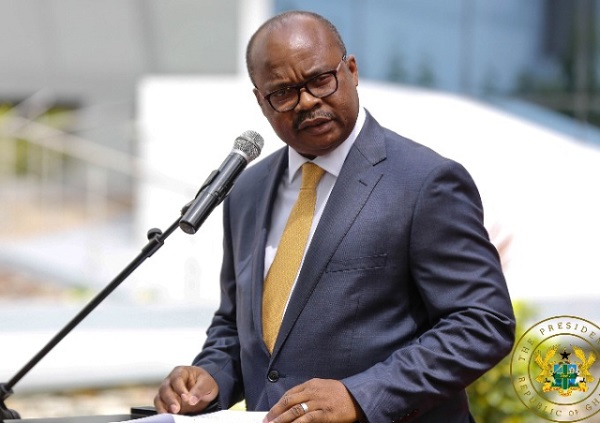
As such, the MPC chaired by the Governor, Dr. Ernest Addison will have to make critical decisions that will ease the financial pressures on businesses and consumers in the face of the second wave of Covid-19 pandemic.
The Bank of Ghana lowered the regulatory limits and the prudential rates for banks in March last year to enable them release more money into the system.
The Primary Reserve Requirement of banks was reduced from 10 to 8 percent, to provide more liquidity to banks to support critical sectors of the economy.
Business School Lecturer and a Financial Analyst, Dr. Laud Mensah wants the Policy Rate to be reduced further from the present 14.5 percent.
“If you look at the happenings around, clearly you could see that the system lacks liquidity. So for me if you ask me the adaption by the Monetary Policy Committee should be the expansionary approach where the policy rate will be reduced to give some confident and funds can easily flow into the system.”
“If they adopt the expansionary approach and the monetary policy is reduced consistently to the next two or three quarters, I think we will gradually see the policy rate to feed into our lending on our market”, he added.
Policy rate kept same for 4th consecutive
The Policy rate was kept for the fourth consecutive time in November 2020, a decision which triggered a relatively unchanged lending rate.
Governor Dr. Ernest Addison attributed the decision to some risks on the fiscal front that is lower revenue but high expenditure.
“The key risks are the evolution of the budget deficit and the financing needs to support budget implementation and the uncertainty surrounding the pandemic.”
Latest Stories
-
Trump administration accuses banned media outlets of ‘falsehoods’ ahead of court hearing
15 minutes -
US and Iran hold first talks since June after Trump’s ‘annihilation’ threat at UN
16 minutes -
More than 170,000 respiratory cases recorded in haze-choked Indonesia
21 minutes -
UK to review Chagos Islands deal over lack of US support, Streeting tells BBC
26 minutes -
BoG weighs on rising inflation risks as inflation climbs to 5%
28 minutes -
AFCON 2027Q: Kurt Okraku backs ‘good enough’ Black Stars to fight for Ghana
37 minutes -
Debt financing, expenditure are key risks to liquidity, exchange rate – BoG
40 minutes -
BoG warns of pressure on reserves as GoldBod pauses exports
46 minutes -
No player will intentionally decline national team call-up – Kurt Okraku
54 minutes -
AFCON 2027Q: ‘No player deliberately turned down Ghana’ – Kurt defends injury withdrawals
1 hour -
The Luckiest launches 4th edition of annual promotion with nationwide activations
2 hours -
Ecobank calls for wider access and stronger collaboration on agricultural finance
2 hours -
Agribusinesses need more than loans to reach their full potential – Ecobank
2 hours -
Green finance must deliver measurable benefits to Ghanaian farmers – Ecobank
2 hours -
Today’s front pages: Wednesday, September 23, 2026
3 hours