

Audio By Carbonatix
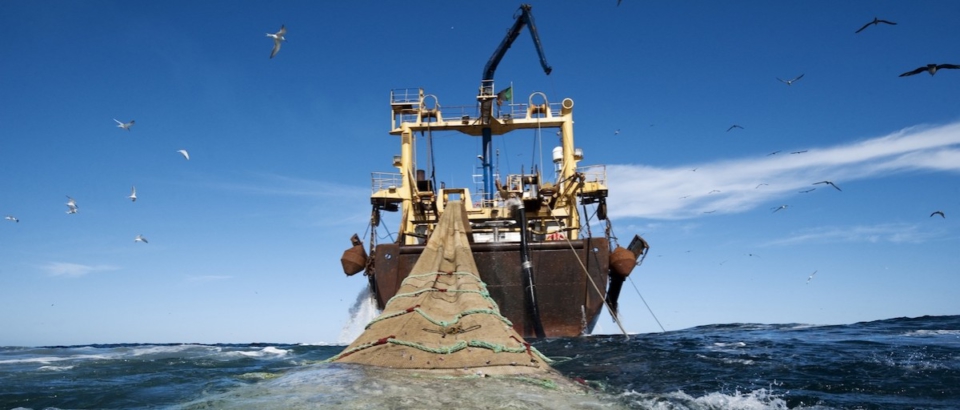
The Environmental Justice Foundation has revealed that an estimated 90 per cent of trawlers operating in the country are owned by Chinese corporations.
The Foundation in a new report stated that Ghana is substantially undervaluing its fisheries resources in arrangements with Chinese fishing companies to license vessels under the Ghanaian flag.
This, according to the report, is apparently causing a loss of an estimated ¢82.5 million annually in potential fishing revenue to the state.
“Overall, it is estimated conservatively that Ghana could be generating an additional $14.4 to 23.7 million annually from its trawl sector by way of fishing licence fees and enforcement revenue for fisheries-related infringements.
“The concealment of beneficial ownership behind local front companies may serve to justify the application of low licence fees and the imposition of financial penalties at well below the statutory minimum,” the report read.
The study identified eight Chinese companies that are currently or in the recent past, have beneficially owned industrial trawlers operating under the Ghanaian flag.
These companies, the Foundation report said it accounted for 75 per cent of trawlers that were licensed to fish in Ghana at the end of 2019.
“Two companies were found to be particularly dominant in the sector: Dalian Mengxin Ocean Fishery Co. Ltd and Rongcheng Marine Fishery Co. Ltd. Together these companies accounted for 44% of licensed vessels at the end of 2019, each with a fleet of 15-20 bottom trawlers operating,” the statement read.
To solve the distant but worrying menace, the report recommended an urgent reforms in Ghana’s trawl sector that first and foremost improve transparency.
It stated that this will clarify who is benefiting from fishing access, what and how much they are fishing, how much they are paying and what these funds are used for.
“There is a need to enhance accountability through parliamentary oversight of industrial fishing licences, as required by the 1992 Constitution13, and to effectively enforce the law governing the nationality of vessel ownership in the 2002 Fisheries Act.”
Other solutions included, the collaboration between the governments of Ghana and to ensure the perpetrators and beneficiaries of illegal fishing are identified and held to account for their acts, through implementation of an enforcement regime.
Latest Stories
-
Tarkwa court jails labourer for three years over GH¢123,000 theft
27 minutes -
GAEC must retain nuclear scientists for Ghana’s nuclear ambitions – Minister
59 minutes -
Man reportedly mistaken for game and shot by hunter dead in forest
1 hour -
19-year-old mason jailed 15 years for defiling seven-year-old pupil
1 hour -
Ghana’s banking sector assets rise 20.47% to GH¢500.2bn – BoG Governor
1 hour -
22 injured as Sprinter bus overturns at Sege after tyre burst
1 hour -
UN housing expert urges Ghana to strengthen Rent Control Department amid housing affordability concerns
1 hour -
Delta-BCI partnership reaches 166,000 people with breast cancer education
1 hour -
Power restoration fault suspected in Kumasi Central Market fire
7 hours -
The 7-foot giant of Ngleshie Amanfro: Seven-foot Ghanaian Ephraim Saawa dreams of joining the national basketball team
7 hours -
Government promises support for Kumasi Central Market fire victims
7 hours -
Vibes The Movie: Big Ghun’s Ghanaian film earns five nominations at 2026 REFFA
8 hours -
‘I’m a fulfilled man’—Justice Korbieh on missing out on Supreme Court despite two nominations
8 hours -
MamaCare CEO warns unresolved conflicts among health workers could undermine maternal and neonatal care
8 hours -
Health professionals urged to translate medical knowledge into practice to save mothers
8 hours