

Audio By Carbonatix
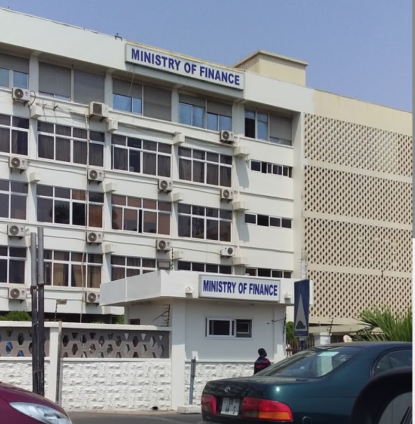
The Ministry of Finance says Ghana continues to be categorized as a ‘Lower-Middle Income Economy’ based on widely-recognized classification of the World Bank and the United Nations.
The Ministry, in a statement by its Public Relations Unit, said publications in the media that Ghana had been downgraded as a low income country by the International Monetary Fund (IMF), in accordance with its latest Fiscal Monitor, was incorrect because the IMF Fiscal Monitor did not classify countries by income levels.
It said the IMF instead analysed latest public finance developments, updated medium-term fiscal projections, and assessed policies to put public finances on a sustainable footing.
The statement said the groupings of economies presented in the Fiscal Monitor's Methodological and Statistical Appendix served an analytical purpose only.
“In this appendix, Ghana is conveniently categorised as a ‘Low-Income Developing Country (LIDC)’ like other lower-middle income economies such as Côte d'ivoire, Kenya, Nigeria and others,” it said.
The statement said Ghana's classification in the recent IMF Fiscal Monitor did not change and there was nothing like the country being downgraded.
Government had put in measures including the GHS100 billion ‘Ghana CARES Obaatanpa’ programme to provide fiscal stimulus to drive growth and economic transformation post Covid-19 pandemic, it said.
The country was projected to maintain a positive economic growth of 0.9 per cent in 2020, representing one of the few "pockets of resilience" on the continent, the statement said.
In 2021 and over the medium term, the Government expected GDP growth to average five percent with the deficit to decline to under five percent by 2024,it said.
The Ministry reassured citizens that Ghana was still classified as a Lower-Middle Income Country and was unfortunate that the media houses, which published the news, did not contact the Ministry for verification, neither did they contact the offices of the World Bank and/or the IMF in Ghana for confirmation.
“Public misinformation of this magnitude has serious implications for the international investor community, especially coming on the heels of a major and successful Eurobond issuance two weeks ago,” it added.
Latest Stories
-
Mobile Money Fintech LTD, UMB train hairdressers and beauticians
3 hours -
Asylum votes show people want help, says Kemi Badenoch
4 hours -
Badenoch welcomes expanded grooming gangs inquiry
4 hours -
GACL MD sues Samuel Buabeng over alleged Facebook defamation
4 hours -
Christa Pike in critical condition after surviving two lethal injections, lawyer says
4 hours -
Kemi Badenoch backs face covering ban at protest
4 hours -
Man City not ‘above the rules’, says No 10 after backlash to Burnham remarks
4 hours -
Real Madrid submit ‘substantial’ dossier in Barca payments case
4 hours -
Messi completes purchase of second Spanish club
4 hours -
Government must engage horticulturists on tomato crisis – GhIH
5 hours -
King Promise’s ‘Can’t Tame Us’ becomes official Chelsea anthem
5 hours -
Afenyo-Markin demands Baffour Awuah’s release from EOCO’s custody, end to alleged political intimidation
5 hours -
Rapper Rick Ross arrested on domestic violence charges
5 hours -
Minority demands security review of Ghana-Colombia visa waiver and port deals
5 hours -
Pursue drug kingpins, not persecute political opponents – Afenyo-Markin tells EOCO
5 hours