


Audio By Carbonatix
Victims of sexual and gender-based violence are often challenged when it comes to footing the bills for their medical reports.
Such bills, costing between GH¢300 and GH¢1,000, are not covered under the National Health Insurance Scheme.
The quest for justice in the prosecution of perpetrators is therefore impeded.
Stakeholders in the fight against sexual and gender-based violence are therefore pushing for the absorption of such costs by the NHIS.
Failure to get signed medical reports in cases of abuse often leave suspected offenders to go scot free.
"The main point of advocacy is about medical reports. We all came to agree that rather than tackle the doctors charging the fee because there is an argument that they also need it for the transport and own expenses, the surest way is getting it added to NHIS so that they can cover the cost", Anthony Boateng Bediako, Director of Abuse Relief Corps told stakeholders at a workshop.
Abuse Relief Corps, a non-governmental organisation, has been providing financial assistance for medical examination of abused victims, and supports police investigations and prosecution of accused persons.
At one of its workshops in Kumasi, stakeholders, including the police, personnel from Social Welfare, judiciary, media, Ghana Education Service and civil society organizations discussed and proposed best case management practices for sexual and gender-based violence.
They called for deeper collaboration to curb such abuses.
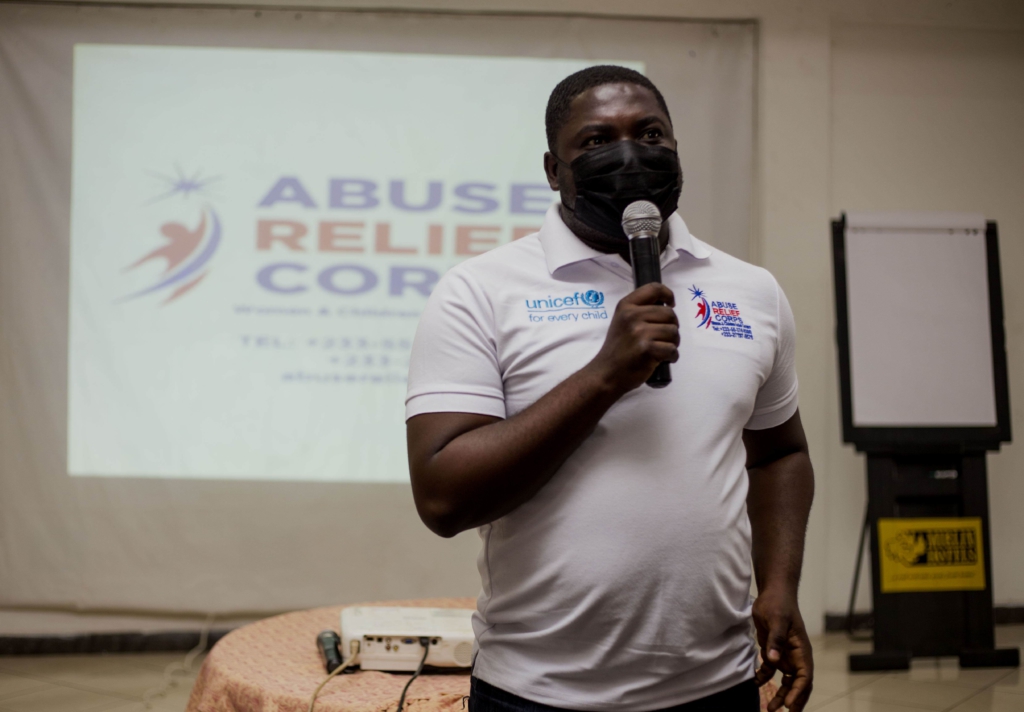
Anthony Boateng Bediako, Director of Abuse Relief Corps, summarized the proposals of stakeholders at the forum.
" As various actors, let's say, with the police, with Social Welfare, with issues of transportation, we looked at how they can coordinate with other NGOs like ourselves so that we can get the cases done.
"And then even with GES, they also advocate to get more guidance and counseling officers and to look at how we can screen teachers that are employed to work or teach children; and Social Welfare too, we are looking at ways that they can improve their coordination, getting the service directory up so that they can be contacted at every point in time whenever the police or any other person is in need of protection.
"And the police also to coordinate to refer cases and ensure that whilst they handle the criminal bit, the other sectors can look at the Social Welfare needs."
The workshop was supported by UNICEF.
Latest Stories
-
“We are one house – let’s settle this at home” – Atomaase Royal family calls for unity, rallies behind Twafohene
2 hours -
The Missing Middle and the Overlooked Small: Why Ghana Must Serve Both the ‘S’ and ‘M’ in MSME’s
2 hours -
Mahama returns from Angola after AU extraordinary summit
3 hours -
Ghana qualifies for quarterfinals of Africa Volleyball Nations Cup after beating Zambia
3 hours -
WAFU B WCLQ: Ampem Darkoa Ladies come from behind to beat Edo Queens
3 hours -
Photos: National Youth Authority Festival
3 hours -
Bawumia commissions St Jude’s Catholic Church he funded to completion at Weija
4 hours -
Government defends new beer exercise rates; sliding scale has not been abolished
4 hours -
Bolgatanga Assembly denies blanket ban on events beyond 8pm
4 hours -
Photos: Ghana Immigration Service removes 1,055 street beggars from Accra, Kumasi streets
4 hours -
‘He always comes to our aid’ – Fr. Campbell recounts Bawumia’s support for Church, poor
4 hours -
Remittances drop marginally year-on-year to US$3.65bn in half-year 2026
4 hours -
T-bills: Government exceeds target by 139%, interest rates tumble
4 hours -
Why Chelsea need more than a new goalkeeper to be title challengers
5 hours -
Outlook of Ghana’s external sector remains positive for second-half of 2026 – BoG
5 hours