

Audio By Carbonatix
Dirty currency notes are reservoirs of germs resistant to antimicrobials, warns scientists at the Kwame Nkrumah University of Science and Technology (KNUST).
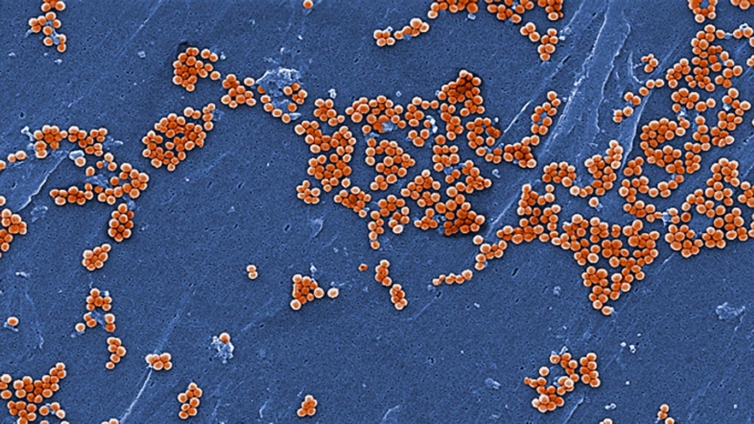
The researchers from the Department of Theoretical and Applied Biology have found species of Methicillin-Resistant Staphylococcus aureus (MRSA), a group of bacteria responsible for diseases ranging from boils to pneumonia on the notes.
Staphylococcus aureus or “Staph” is a type of bacteria commonly found on people’s skin and nose.
Staph bacteria are usually harmless, but they can cause serious infections that can lead to death especially in people with weakened immune system.
Methicillin-resistant Staphylococcus aureus (MRSA) causes staph infection that is difficult to treat because of resistance to key antibiotics.
Staph infection, including those caused by MRSA, can spread in hospitals, healthcare facilities, and especially every part of the community, and has therefore become a public health concern.
The research sought to find the frequency of MRSA on circulating currency notes in the Kumasi metropolis.
“Currency notes become easily dirty a few months after they are released. We wanted to have a look at what these currency notes are carrying,” one of the lead researchers, Dr. Linda Aurelia Ofori explains the aim of the research.

For the study, the researchers obtained 120 banknotes from 10 units, and analyzed them in the laboratory.
“We tried putting the monies in clusters. All monies from commercial drivers in one group, those serving raw meat and fish in one cluster, public toilets, etc. Each note in each cluster was treated as a unit so that we don’t influence the type and number of bacteria we find on one by another, and we used the bank of Ghana mint notes as control,” Dr. Linda explains.
The full study yet to be published, found six MRSA strains out of the "17-coagulase positive Staph on all notes collected and showing resistance to beta-lactam antibiotics such as cefoxitin."
Interestingly, higher loads of the bacteria were identified among lower denominations.
Dr. Linda advises traders especially to desist from counting money using saliva.
She says keeping monies clean and dry and disinfecting the hands are likely to ward off these infections.
“Microorganisms generally love lots of moisture. Counting monies with saliva is not a good practice.
“We should try to keep our money well in dry places to make sure these organisms can’t grow on them.
“We should find a way of constantly washing and disinfecting our hands when we handle money,” she said.
She also wants the bank of Ghana to find ways of disinfecting old and dirty notes before re-circulating.
Latest Stories
-
Jordan Ayew, Yirenkyi feature as Ghanaian trio exit Carabao Cup
29 minutes -
Microsoft says AI rival Anthropic could have ‘disastrous impact’ on humanity
1 hour -
De la Fuente extends Spain contract to 2032
1 hour -
Raphinha hat trick in Barcelona’s 7-goal rout of Santander
1 hour -
Carabao Cup fourth-round draw: Liverpool to host Chelsea as Arsenal drawn away to League Two Fleetwood
1 hour -
Mbappe, Vini and Konate obscure Real’s Ceuta message
1 hour -
Reggie Rockstone named Unichem Ghana brand ambassador
1 hour -
Man United lose to Brighton from 2-0 up to end 50-year record
2 hours -
Man United lose to Brighton from 2-0 up to end 50-year record
2 hours -
Petrol and diesel price rises push UK inflation higher
2 hours -
City of David Foundation donates to Koforidua Hospital, Koforidua Prison
2 hours -
AMA says Konkomba traders were consulted ahead of Agbogbloshie 24-hour market project
2 hours -
Let’s pilot Chinese in public schools before scaling up – EduWatch
2 hours -
Ghanaian tech professionals develop SMS-based AI tool for non-smartphones
3 hours -
MTN@30: Three customers drive away brand-new Land Cruiser Prado in Kumasi
3 hours