

Audio By Carbonatix
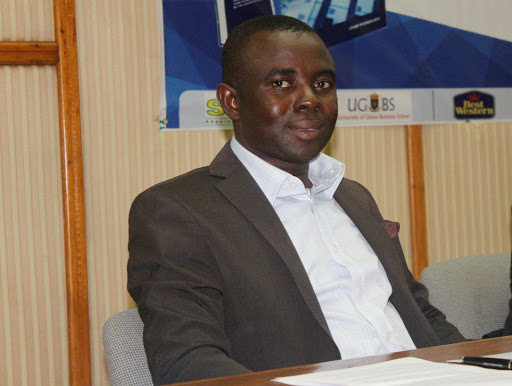
A Financial Economist, Professor Joshua Yindenaba Abor has called on African governments to implement early and ambitious policy responses and reforms in their financial systems to minimise the impact of the Covid-19 pandemic.
“Covid-19 is here to stay and if it is staying, its impact will be with us and the pressure is on to address the ongoing issues in addition to dealing with the existing challenges”
”There is the need to implement early and ambitious policy responses and reforms in the financial system to address the situation or minimise the impact”, he said.
He said though African Governments have provided some monetary and fiscal policy responses to the Covid+-19 pandemic, there is the need for other policy actions to ensure that the continent’s financial systems are able to spur growth in the post-Covid-19 era.
Prof Abor gave the advice when he spoke at a guest lecture organised by the Department of Economics, Faculty of Social Science and Arts of the Simon Diedong Dombo University of Business and Integrated Development Studies on Thursday, May 27, 2021.
He spoke on the topic ‘Covid-19 pandemic and Africa’s financial systems: How do we reform the post-Covid-19 financial systems?’.
According to him, governments play important roles in every financial system and as such they could not stay back completely from participating in the financial market and added that they must be concerned about ensuring stability in the system.
Prof. Abor argued that Development Banks have been used by developed countries to grow their economies especially during crisis.
He, therefore, encouraged African Governments to establish National Development Banks to provide support to underprivileged sectors such as the SMEs that we're unable to access formal financial services.
‘Even in the developed countries, that is how they grew their economies. SMEs are always the engine of growth and they represent about 92 percent of businesses in Ghana and Africa as a whole. So if we do not serve this sector, we will not go anywhere’, he said.
According to him, with the Covid-19 situation, SMEs in Africa could not depend on banks that served only the elites in society and large corporates, and indicated that the best way to go was to set up specialised banks to support them.
In that regard, Prof. Abor commended the Government of Ghana for taking steps to establish the Development Bank of Ghana and warned that best model must be adopted to ensure that the desired impact was felt at the specific sectors of the economy.
‘The modeling is very important and the idea is fantastic. It is very needed on our markets because there are a number of sectors such as the SMEs that are not able to access formal financial services’.
‘So if you are setting up a National Development Bank to support them, that is fantastic. The modeling must be looked at so that the desired impact will be felt’, he added.
Prof Abor further encouraged African governments to promote macroeconomic stability, implement effective regulatory and supervisory framework and encourage financial market development through effective market infrastructure.
He also advised African governments to encourage institutional investments saying, the financial system thrived when there were many institutional investors such as life insurance companies and pension funds.
He added that banks must also be encouraged to invest long-term and desist from the practice of finding cheap ways of making returns.
Prof Abor admonished African Central Banks not to be only interested in regulations and monetary policies but show interest in financial literacy and support under privileged sectors of the economy to develop.
The Vice-Chancellor of the University, Prof. Philip Duku Osei, who chaired the guest lecture applauded Prof. Abor for his insight into how African governments can reform their financial systems to deal with the ravages of the Covid-19 Pandemic.
He also thanked Prof. Abor for donating books to the Faculty and the University Library.
The Vice-Chancellor further thanked the organisers of the programme and called for more of such events to be organised to stimulate intellectual engagements and enhance the impact of the University on society.
Latest Stories
-
Power restoration fault suspected in Kumasi Central Market fire
41 minutes -
The 7-foot giant of Ngleshie Amanfro: Seven-foot Ghanaian Ephraim Saawa dreams of joining the national basketball team
1 hour -
Government promises support for Kumasi Central Market fire victims
1 hour -
Vibes The Movie: Big Ghun’s Ghanaian film earns five nominations at 2026 REFFA
2 hours -
MamaCare CEO warns unresolved conflicts among health workers could undermine maternal and neonatal care
2 hours -
Health professionals urged to translate medical knowledge into practice to save mothers
2 hours -
Conflicts among care providers linked to maternal, neonatal deaths – Expert
4 hours -
GIS marks 10th TIME conference, champions improved teaching practices
4 hours -
BRICS Or Balance? What Ghana’s bid really means
5 hours -
GPRTU wants full TRAFFITECH-GH implementation to start in 2027
5 hours -
Mahama announces plans to import electric wheelchairs for PWDs
5 hours -
KGL U17 Colts 2026: Western beat Prempeh Elite Academy to set up final final with Greater Accra Region
5 hours -
Late Solanke strike salvages 10-man Spurs draw at Man United
5 hours -
Gender Ministry to monitor welfare of Nana Akua Addo’s children amid domestic violence case
6 hours -
Benedict Okyere Yeboah: Ghana’s football problem goes beyond sacking a coach
6 hours