

Audio By Carbonatix
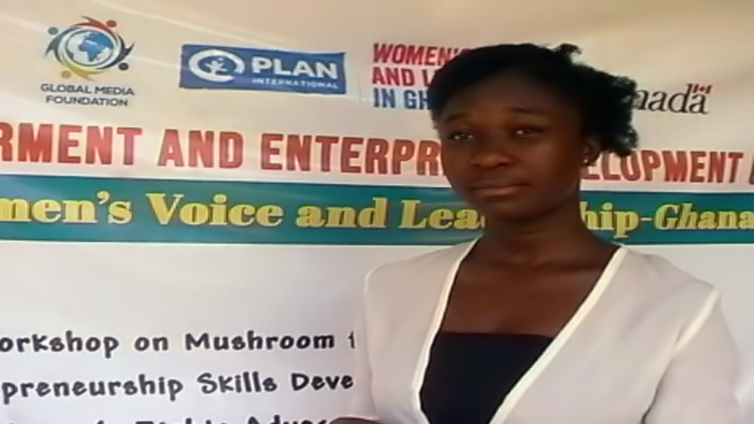
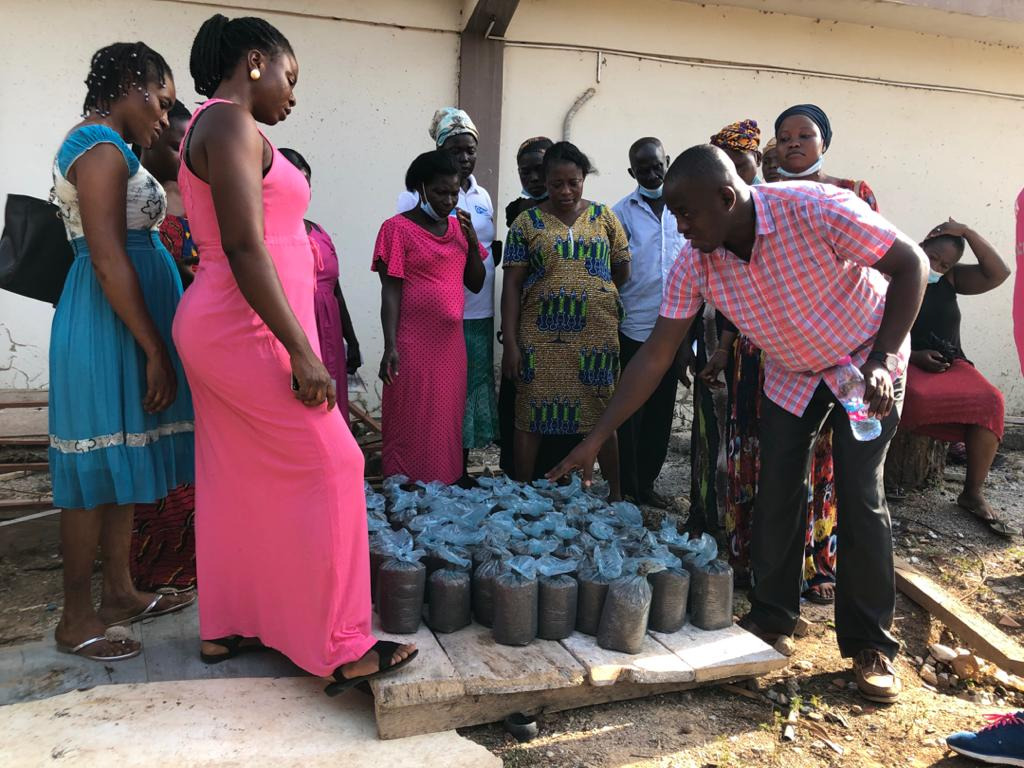
About 150 vulnerable and marginalised women are being trained in mushroom production whilst 200 others are also being trained in soap making in the Sunyani Municipality of the Bono region.
The trainees who include People with Disabilities (PWDs) have been drawn from Sunyani, Abesim, Nwawasua, Atronie, Antwikrom and Banunkwanta within the Sunyani Municipality.
The basic entrepreneurship and vocational training has become necessary to help mitigate the impact of Covid-19 on women-based economic activities.
The skills training is a GH¢40,000 women empowerment initiative is being implemented by Global Media Foundation (GloMeF), a Sunyani based non-governmental organisation with financial support from Plan International, Global Affairs Canada and Women’s Voice and Leadership-Ghana.
A hairdresser from Abesim who is benefiting from of the mushroom production training, Lydia Fosua, expressed delight in generating extra income from mushrooms since Covid-19 has had a devastating effect on her business.
“The Covid-19 pandemic has disrupted economic activities of many women in the Sunyani Municipality and we are still struggling to get back on our feet so this training will heavily be beneficial to me as a hairdresser,” she stressed.
Another beneficiary learning soap making, Agness Twene, stated that Covid-19 has disrupted her table-top sachet water business but the soap making will help, since the pandemic has increased the demand for soap due to frequent hand washing.
the Project Coordinator of the GloMeF, Christiana Korankye, said during the training session that Covid-19 has virtually affected and collapsed economic activities of a number of women entrepreneurs within the Bono region, hence the introduction of the project “Women Empowerment and Enterprise Development” (WEED) to promote women inclusion in decision-making as well as advocate gender-sensitive and equity at workplaces.
She noted that some women in the Sunyani Municipality have lost their capital, savings and businesses to the Covid-19 pandemic.
The consequences Madam Kwakye said have significantly impacted on people’s lives, especially women, girls, underserved and vulnerable groups in the society.
She stated that, women and girls have become the most effected ones facing increased risks of other forms of gender-based violence including sexual exploitation and abuse in times of crisis, adding that “sexual or reproductive health is a significant public health issue that requires high attention during pandemics, which is why we have stepped in to fill the gap”.
Madam Kwakye, however, encouraged vulnerable women and girls to rise above all limitations and surmount the challenges posed by Covid-19.
Latest Stories
-
Police arrest 6 suspected notorious armed robbers in Kumasi
43 seconds -
Opinion: GHS1m is welcome, but Ghana Premier League’s biggest problem remains unsolved
2 minutes -
Stylen Boy’s ‘Adole’ featuring Kurl Songx hits No. 1 on Ghana iTunes
5 minutes -
CBG’s assets rise to GH¢17.86bn as deposits, revenue and equity grow in 2025 – SIGA Report
8 minutes -
KNUST SHS considers slashing admissions over infrastructure deficit
12 minutes -
GEXIM Bank’s capital adequacy ratio rises to 75.3% in 2025 – SIGA Report
16 minutes -
CPC’s revenue plunges 47% as net loss widens to GH¢144m — SIGA
16 minutes -
Ghana Water turns GH¢3.06bn loss into GH¢635.23m profit in 2025 – SIGA Report
18 minutes -
Challenging Heights rescues 25 trafficked children from Lake Volta in weekend operation
32 minutes -
‘Nobody has any video of me embarrassing myself’ – Afenyo-Markin on ‘extortion’ allegation
39 minutes -
Government listening to ordinary Ghanaians with diesel relief – Duncan Amoah
39 minutes -
Photos: Manya Krobo Ngmayem Festival turns 133
50 minutes -
Government must go beyond short-term fuel relief – COPEC
51 minutes -
‘Revive traditional values to fight plastic pollution’ – EPA CEO
55 minutes -
Mahama’s administration is Ghana’s worst ever – Amin Adam
1 hour