


Audio By Carbonatix
Bui Power Authority (BPA) has said their partnership with the Energy Commission and Ghana Education Service (GES) is to help build up the knowledge and bring out talents of students in the renewable energy space.
This was made known at the 2021 Bono Regional Senior High Schools Renewable Energy Challenge at Sunyani Senior High School (SUSEC) in Sunyani.
BPA's Director-General in charge of Services, Wombila Salifu told JoyNews the Greenhouse emissions, mainly due to the production of carbon dioxide from the burning of fossil fuel, continue to harm the environment, resulting in climate change being experienced.
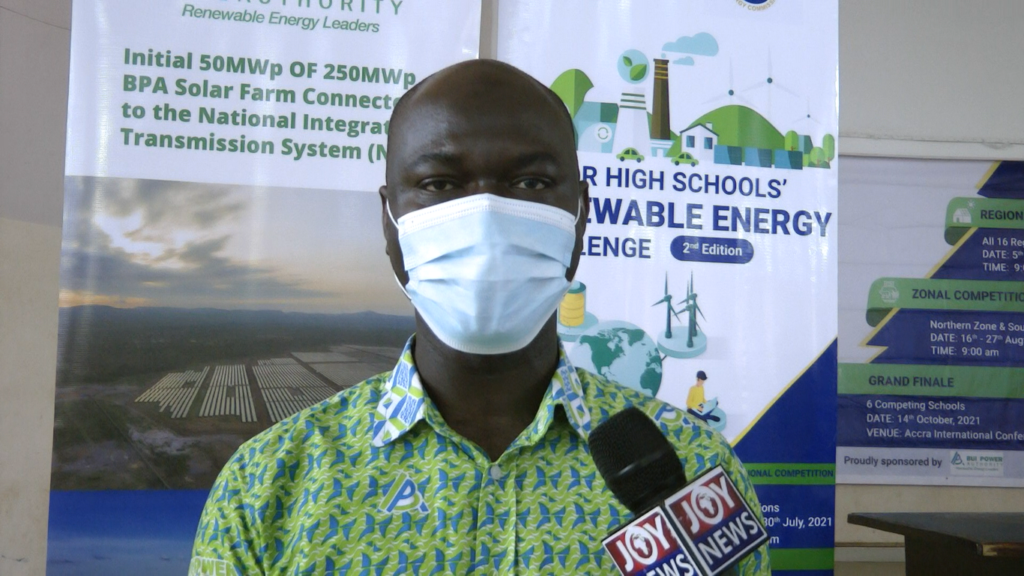
Therefore, turning to renewable energy to meet the growing energy demands remains the best approach to mitigate the effects.
BPA, hence, finds it worthwhile to join forces to explore the talents of students to support the technology available in renewable energy.
"Even though some modest effort to deploy renewable energy technologies have been made, we believe the bulk of the ideas to increase the share of renewable energy in the country are hidden in you, hence the partnership with the Energy Commission for the SHS Renewable Energy Challenge which is aimed at helping uncover the renewable energy talent hidden in you", he told the students.
The Director-General said, “We are particularly excited about the involvement of students as there is the need to inculcate in them the knowledge about renewable energy, excite their interests and help them discover their talents”.
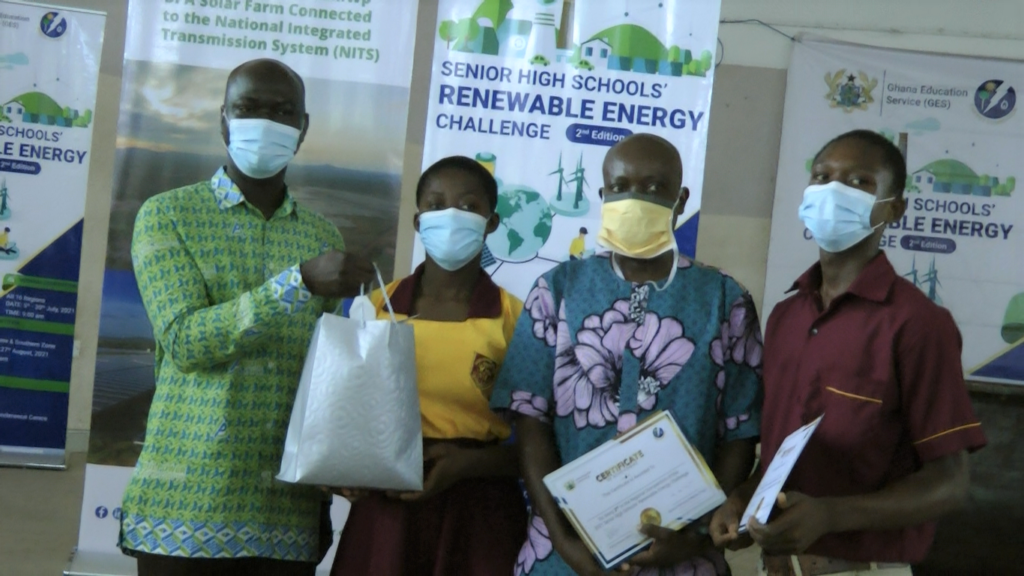
Wombila Salifu said as the leaders of the renewable energy space, BPA will welcome the students to the Bui generating station to observe their solar farm to excite and sustain their interest in pursuing careers in renewable energy.
BPA, as part of its renewable energy mandate, has completed the first phase of a 50MW solar plant (the final phase will shore it to 250MW) in the Bui enclave to hybridize the 400MW hydropower plant.
They have also installed a 1MW floating solar park on the Bui reservoir, which is being expanded to 5MW, and a 45KW mini-hydropower plant in Tsatsadu in the Volta Region.
The Energy Commission has a responsibility, under The Renewable Energy Act, 2011 (Act 832), to promote the efficient use of electricity and renewable energy resources.
In his address, the Chief Programs Officer in-charge-of Bioenergy at the Energy Commission, Julius Nkansah-Nyarko, said the objectives of the SHS Renewable Energy Challenge include developing the research skills of students and promote technological innovation in renewable energy and energy efficiency, and instill in them a passion for solving renewable energy, energy efficiency, and climate change challenges through innovative research.
The Commission, therefore, wants students to be innovative in ideas to help solve the energy challenges and also push the area of renewable energy technology and its use in Ghana.
He said the challenge is also expected to bridge the gap between theory and practical science teachings at schools and help the students to practically advance in science and technology.
The maiden SHS Renewable Energy Challenge in 2019 involved only 29 schools in the Greater Accra Region. The 2nd edition has been expanded to cover schools in all 16 regions with the sponsorship of BPA.
The school with the best project from each region will advance to the zonal competition, with the best 3 schools in each zone competing at the finals in October. The most outstanding projects will be awarded prizes during the 7th Ghana Renewable Energy Fair in Accra.
In the Bono Region, SUSEC won the challenge with an Earth battery project called "Asaase Power", capable of producing about 9 to 12 volts of direct current.

Sacred Heart SHS came second with "Dung Cook Stove", St. James SHS placed 3rd with "Production of electricity from Biomass", while Nafana SHS came 4th with "The Wind Vane Generator".
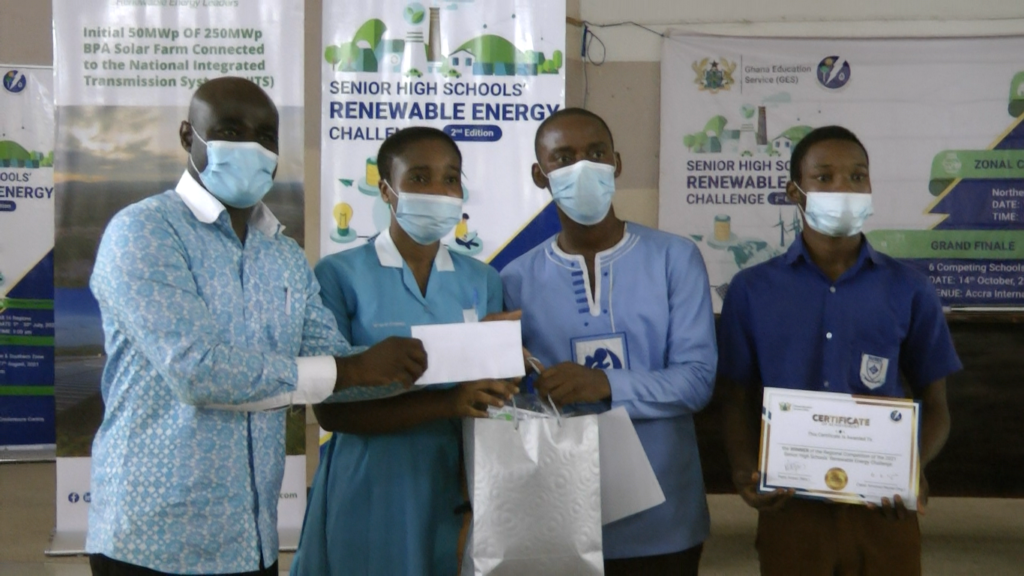
Each student received a certificate, an amount of money, and other valuable items.
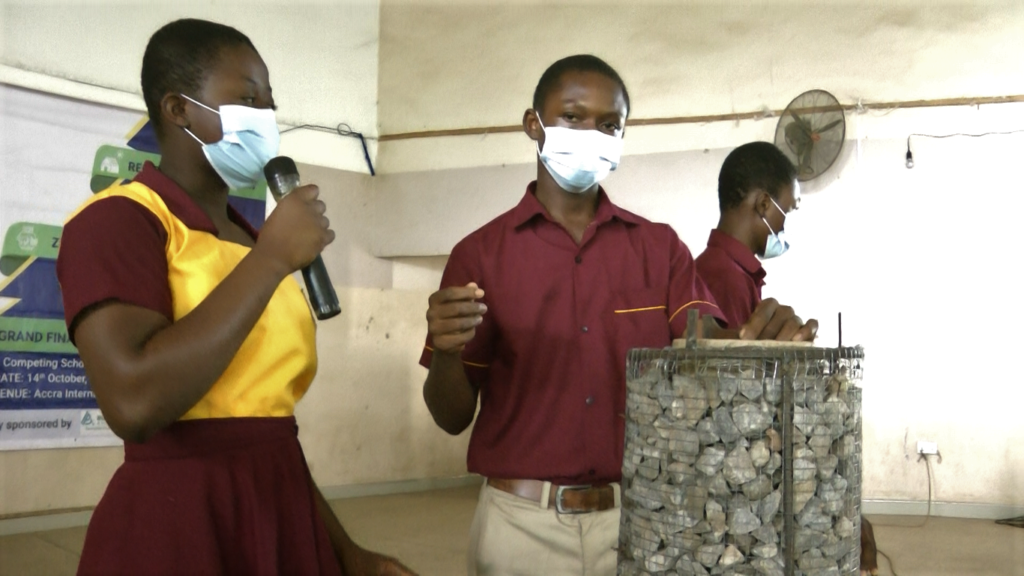
Julius Nkansah-Nyarko, who is also the project coordinator, commended the students for the projects exhibited, derived from great ideas that could be further researched and implemented.
He hinted the winning school will be supported by the Energy Commission's research partners to help improve on the project.
On the dung cookstove project which placed second, Julius Nkansah-Nyarko said when it's well harnessed, it could be used everywhere with the dry cow dung and help reduce the reliance on charcoal and firewood for the traditional cookstoves thereby reduce the depletion of the forest.
Latest Stories
-
Finance Minister advises African governments to strengthen regional tax cooperation
38 minutes -
NPP accuses NDC of master-minding demolition of Ho regional office fence
38 minutes -
Ghana plans stronger regional power trade with Nigeria
39 minutes -
GRA Commissioner-General calls for stronger tax cooperation to boost regional revenue mobilisation
40 minutes -
NACOC needs more personnel to tackle drug trafficking – Toobu
44 minutes -
Railway workers resist KMA eviction order, demand consultation
45 minutes -
Legacy Leadership Africa Institute to host boardroom women’s leadership programme
58 minutes -
Ghana needs a law to sustain constitutional reforms – CDD-Ghana
4 hours -
COVID fumigation audit: Auditor-General has a lot of questions to answer – Akwatia MP
4 hours -
Stranded Ghanaian medical graduates in Cuba appeal to Mahama for immediate return
4 hours -
GNFS contains fire outbreak at Teshie Lekma Road near Lekma Hospital
10 hours -
Samia Nkrumah rejects the narrative that Ghanaians were happy after Nkrumah’s overthrow
12 hours -
A Mother’s pain: Tribute by Ivan Baidoo’s mother
12 hours -
‘Forgive us for staying away’ — Samia Nkrumah leads family back to Nkroful, pledges to preserve Nkrumah’s legacy
12 hours -
Ernest Nuamah scores twice as Lyon beat Rennes
12 hours