

Audio By Carbonatix
About 30,000 household toilet facilities are expected to be provided for people in low-income communities in the Greater Kumasi Metropolitan Area (GKMA).
Additionally, a total of 5,000 households will be supported to connect potable water into their homes, under the Greater Kumasi Sanitation and Water Project.
This is to help ensure increased access to improved toilet and water facilities to the majority of poor and vulnerable people in urban and peri-urban communities.
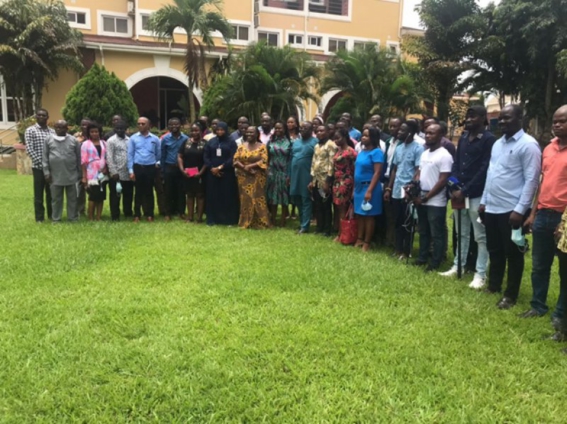
Minister for Sanitation and Water Resources, Cecilia Abena Dapaah said this at a day’s orientation workshop on the Greater Kumasi Sanitation and Water Project for some media personnel in Kumasi.
The workshop was aimed at introducing the project which was launched in November last year to the media in the Ashanti region.
The project, according to the Minister, has four components which were mainly to increase access to sanitation services to people in low-income and deprived areas.
It would also help to support the expansion of the water distribution networks in GKMA to provide water for an estimated 150,000 people.
Again it would strengthen institutions and provide technical assistance to stakeholders in the water and sanitation sector.
The project beneficiaries are the eight Metropolitan and Municipal assemblies in the GKMA, which include the Kumasi Metropolitan Assembly (KMA), Asokwa, Oforikrom, old Tafo, Suame, Kwadaso, and the Asokore Mampong Municipal Assemblies.
Madam Dapaah said the facilities would be maintained and expanded as the population in those areas increased.
The Minister pointed out that the water supply in Kumasi was not good, saying the Owabi headworks in the Atwima Nwabiaqya District would soon be dredged.
The government she said was providing pragmatic measures to find a lasting solution to the water and sanitation problems in Kumasi.
Madam Dapaah called on the media to take an active part in making sure that the agenda of making the country clean was achieved,
The Project Coordinator, Mr George Asiedu said a steering committee had been established to ensure the sustainability of the project to provide a safe sewage system.
Engineer for the project, Kwadwo Gyasi pledged to work to provide sustainable clean, and hygienic toilet facilities for the people.
He said it was Bio-digester technology that degrades faecal matter into smaller particles,
Mr Gyasi called on the media to educate the public on improved water and sanitation practices.
Latest Stories
-
Oranges, sardines and eggs could help protect people exposed to air pollution, Ghana study finds
27 minutes -
Private security firms acting as political militias risk licence revocation, prosecution – National Security Coordinator
1 hour -
Antoine Semenyo makes history as first Ghanaian named in PFA Team of the Year
2 hours -
Mahama calls for responsive healthcare regulation to improve patient safety
2 hours -
IERPP accuses GoldBod of breaching transparency law, says quarterly trading reports removed from website
2 hours -
Future of Energy Conference: Africa cannot industrialise in the dark – ECOWAS Bank President
2 hours -
Help comes to Alajo as DirectAid brings relief items to flood victims
3 hours -
“Somebody created the loss” – Haruna Mohammed backs Minority’s call for GoldBod probe
3 hours -
Hope for agroecological farmers: Scientific Research supports urine-based weed management as safer alternative to glyphosate
3 hours -
Israeli Film Festival returns to Accra with free screenings to boost cultural exchange
3 hours -
SONABEL considers opening Bagré Dam spillway on Friday amid rising water levels
3 hours -
Ghana Maritime Authority, Humanity First commission 4 boreholes in Wa to end water scarcity and keep children in class
3 hours -
In Photos: Day Two of ‘SYPALA 2026’ focuses on governance, economic freedom and youth leadership
3 hours -
Wontumi withdraws from NPP chairmanship race, urges support for Bawumia
4 hours -
UCC-IEPA, CEGRAD launches free digital skills programme to empower 1,000 women in education
4 hours