

Audio By Carbonatix
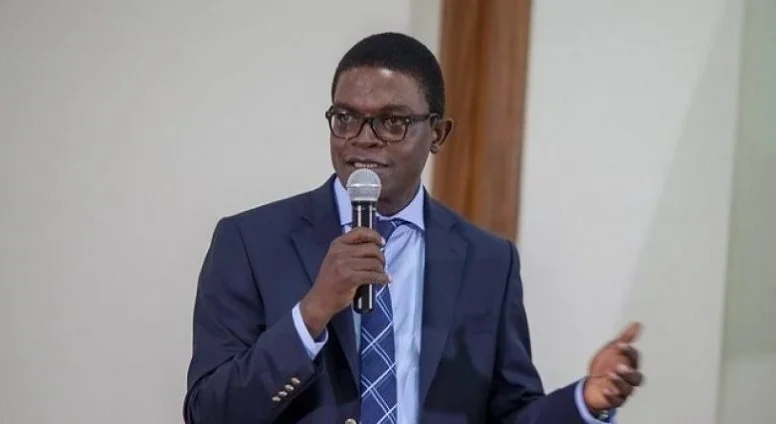
Executive Director of the Institute for Democratic Governance (IDEG), Dr Emmanuel Akwetey, has urged government to adopt more feasible measures to accelerate female participation in governance.
According to him, this move is a sure way of ensuring that a more even representation is achieved in governance.
Out of the 260 nominees listed Metropolitan, Municipal, and District Chief Executives (MMDCEs) positions in Ghana, only 38 are female while 222 are male.
If approved by their respective Assemblies, they will assist President Akufo-Addo at the local government level during his second term.
But this demography has reignited concerns among a section of the populace about the gender demography as far as governance is concerned.
For instance, no female was nominated in the Western and Ahafo regions according to the list. On the other hand, in the Greater Accra Region, eight females were nominated for the MMDCEs role compared to 21 males in the same area.
Experts say this is unfair and will affect the governance system, especially in the absence of an Affirmative action Law.
Speaking on Newsfile on Saturday, IDEG Executive Director suggested that mechanisms such as the Mixed Member Proportional Representation can be adopted to help the process.
In a Mixed-member proportional representation (MMP or MMPR) is a mixed electoral system in which voters get two votes: one to decide the representative for their single-seat constituency and one for a political party.
Making reference to New Zealand's method, Dr Akwetey explained that "It is mandatory that if you present a list as a party big or small, the percentage that ought to go to women and other groups - youth, people with disabilities, minorities in terms of communal identities and all that - will be reflected on that list."
"Once it is stamped and the parties are playing a certain formal role, think they can be held to account, and I think they are going to work harder to help the representation that should be there," he told JoyNews.
He believes the Affirmative Action Bill if passed by now, would have gone a long way to prevent this predicament.
Latest Stories
-
Power restoration fault suspected in Kumasi Central Market fire
41 minutes -
The 7-foot giant of Ngleshie Amanfro: Seven-foot Ghanaian Ephraim Saawa dreams of joining the national basketball team
1 hour -
Government promises support for Kumasi Central Market fire victims
1 hour -
Vibes The Movie: Big Ghun’s Ghanaian film earns five nominations at 2026 REFFA
2 hours -
MamaCare CEO warns unresolved conflicts among health workers could undermine maternal and neonatal care
2 hours -
Health professionals urged to translate medical knowledge into practice to save mothers
2 hours -
Conflicts among care providers linked to maternal, neonatal deaths – Expert
4 hours -
GIS marks 10th TIME conference, champions improved teaching practices
4 hours -
BRICS Or Balance? What Ghana’s bid really means
5 hours -
GPRTU wants full TRAFFITECH-GH implementation to start in 2027
5 hours -
Mahama announces plans to import electric wheelchairs for PWDs
5 hours -
KGL U17 Colts 2026: Western beat Prempeh Elite Academy to set up final final with Greater Accra Region
5 hours -
Late Solanke strike salvages 10-man Spurs draw at Man United
5 hours -
Gender Ministry to monitor welfare of Nana Akua Addo’s children amid domestic violence case
6 hours -
Benedict Okyere Yeboah: Ghana’s football problem goes beyond sacking a coach
6 hours