

Audio By Carbonatix
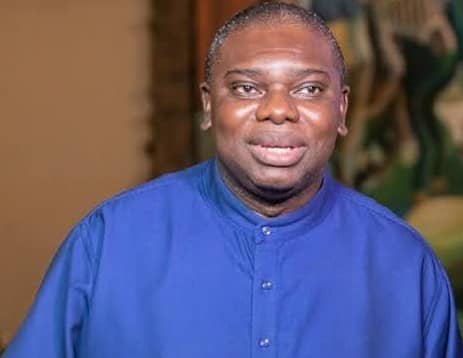
A fellow of Solidaire Ghana, Harry Yamson, has called on all Ghanaians to move from the ‘government to build, government to own’ mantra.
According to him, it is for government to make it possible for the private sector to do business and not for it to be operating businesses.
He stated that all the political parties are guilty of this development, stressing political parties must desist from such acts.
“Every time, we want government to be the one that does it. It’s wrong. It’s not the business of government; it is the business of government to package this country and make it attractive and put in place all the right support. It is not government’s business to go and run factories; that is where we have a problem,” he said.
He cited the instance in South Korea where private entities led the development of the auto industry and thrived because they were aided and protected by the power of the state’s purse at all times during the infancy of the Korean motor vehicle industry.
Relating that to businesses in Ghana, he said, “there is nothing wrong in using the power of the state to protect infant industries, but we must be very clear-minded about how long we will do it and what we will demand as performance to ensure that at some point in time the things we start and nurture will stand on their own.”
He added that Ghana does the opposite of what was done in South Korea. Ghanaians rather makes a demand on government to “baby us, and unfortunately, politicians, [looking] for four and eight years [in office, are willing to] also go along.”
He, therefore, called for a change in the demand made on our politicians. According to him, "we are not looking for shallow thinking, we are looking for depth, and we are looking for strategic thinking, and we are looking for delivery.”
His comments were part of a discussion on the collapse of the Komenda Sugar Factory.
The Komenda Sugar Factory was built from an Indian Exim Bank facility by the erstwhile Mahama government. It has not been in operation since its commissioning in 2016.
The factory, which was projected to create employment for the residents of the Central Region has been a topical issue lately because it has been left to rot for close to five years.
According to former President John Mahama, who has been blamed by the incumbent government for the present condition of the $35 million factory, the Indian government prevailed on his administration to get the factory ready and later apply for funds to support the production of raw materials.
But President Akufo-Addo, in reaction, has stated that this approach goes against every viable business practice.
He further indicated that despite Komenda Sugar Factory being a big albatross around government’s neck, his government would never consider abandoning it.
Meanwhile, the President assured this week that the factory would be operationalised in the first quarter of 2022.
Latest Stories
-
Imagination Africa, Mentors Chess Academy to host second African Genius Chess Championship at Ghud Park
22 minutes -
Nana B passport claims a diversionary tactic — Abu Jinapor
1 hour -
Pope Leo diagnosed with cancer as doctors remove lobe of lung, Vatican says
1 hour -
Legal Aid Commission takes free legal services to Techiman main lorry terminal
1 hour -
Nana B denies seeking passport favour, accuses Ablakwa of failing to account for GH¢16.4m
1 hour -
Young girls demand climate action, stronger protection against child marriage
2 hours -
Ex-gang boss sentenced to 40 years for orchestrating Tupac Shakur’s murder
2 hours -
From near-deferral to three awards: UMaT graduate’s academic journey
2 hours -
Atta Akyea denies seeking presidential pardon for Wontumi in galamsey case
2 hours -
Photos: Mahama commissions 85-bed Police Hospital ward, donates two ambulances
2 hours -
GTEC directs Ghana’s public universities to reopen by October 16 and begin lectures on October 19
2 hours -
Star Oil donates GH¢1million towards construction of new CID facility
3 hours -
Court hands Adjetey Sowah, two others lifetime bans after Amputee Football legal dispute
3 hours -
NDC appoints Julius Kwame Anthony as a Deputy Communications Director
3 hours -
Ghana repatriates 120 Nigerians rescued from suspected cybercrime centres
3 hours