

Audio By Carbonatix
Scientific discoveries and research outcomes with the potential to impact society often do not get to the public space due to a hitch in communication between researchers and the consuming public.
Scientists and researchers in most African countries, including Ghana, are faced with the challenge of communicating their findings for public consumption.
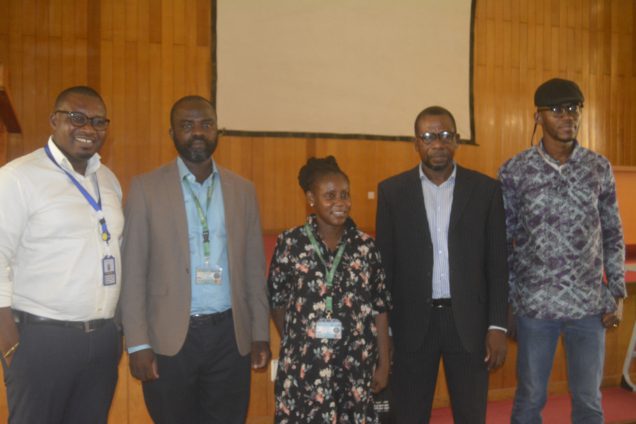
To reverse the trend, the Faculty of Mechanical and Chemical Engineering at the Kwame Nkrumah University of Science and Technology is empowering its lecturers with communications skills in disseminating research.
The Research Communications seminar is aimed at building the capacity of researchers to better communicate their findings to the public.
Dean of the faculty of Mechanical and Chemical Engineering, Prof. George Yaw Obeng, acknowledged some scientists and students of science in Ghana lacked relevant skills and knowledge for effective communication.
“Do ordinary Ghanaians benefit from our research findings? Are our students well trained for interviews? Are our researches visible and accessible to Ghanaians? Sadly, we are not sure our answer is simply yes or no,” Prof. Obeng said.
Professor Obeng indicated “having the skills to communicate research in an effective manner will have a positive impact on both the researchers and the public”.
He is confident the acquisition of effective communication skills would enable researchers to ultimately impact society.
Scientists and researchers in most African countries, including Ghana, are faced with the challenge of communicating their findings for public consumption.
The researchers were equipped with skills in writing for broadcasts, preparing for interviews, media visibility, and importantly how to disseminate their research findings.
Resource persons from the Kumasi unit of The Multimedia Group, Kofi Adu Domfeh and Kwasi Debrah, took participants through practical skills in effective research communication.
Associate Professor at the KNUST’s Brew-Hammond Energy Centre, Professor Francis Kemausuor, acknowledged the training would help scientists to stay relevant in both the public and scientific spaces.
“KNUST as an institution is striving to be one of the best in Africa, this means we researchers must be visible to project the school.
“This exercise is very helpful to us as an institution to help make researchers in the school more visible in both public and scientific spaces.
“Media visibility also promotes the school to be ranked as the best globally,” he said.
Latest Stories
-
The brewing tension at KNUST; Beware the Ides of October….
13 minutes -
Health Ministry moves to integrate traditional medicine into mainstream healthcare
36 minutes -
550 pupils in Kintampo South get educational lifeline as ‘Seeds of Hope’ reaches farming communities
57 minutes -
Opoku Mensah urges Christian Council, House of Chiefs to speak up on democratic freedoms
1 hour -
Teacher unions’ strike: Minority demands immediate payment of teacher arrears, 20% deprived area allowance
1 hour -
The Accra-Kumasi Expressway: Building it right
2 hours -
Beyond gold exports: Building value and economic resilience from Ghana’s gold
2 hours -
2027 AFCONQ: Ghana under pressure as Gambia beat Somalia 2-1
2 hours -
Eastern NPP Women’s Organiser calls on AG, Police to secure bail for Salomey Baffoe
2 hours -
Poverty, illiteracy driving acceptance of vote-buying among women – Damongo Queen Mother
2 hours -
Photos: Democracy Is Not For Sale forum in Savannah region
3 hours -
GNFS launches 2026/27 National Anti-Bushfire campaign in Atebubu, records 62.8% reduction in bushfire cases
3 hours -
I’ll vote for a female president; women are less likely to steal from the state – Okyeame Kwame
3 hours -
More public education needed to stop vote-buying – Savannah Region MP
3 hours -
Absa Bank commissions new head office, commits to strengthening operations in Ghana
3 hours