

Audio By Carbonatix
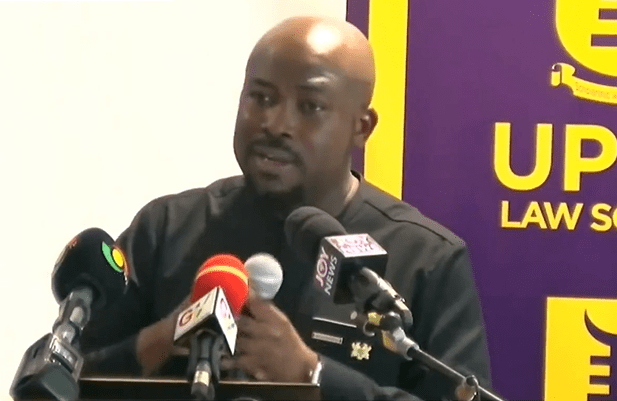
Chief Executive of the Chamber of Bulk Oil Distributors (CBOD) says the huge socioeconomic impact that will be felt following the imminent transport fares hike by 30% is as a result of poor economic policies by successive governments.
According to Senyo Hosi, whereas the government will never be able to control the rise and fall of fuel prices, what it could have done was to provide structures that would have cushioned Ghanaians from the devastating impact.
Speaking on JoyNews’ PM Express, he stated that with the near ₵7billion the government accrued as revenue annually from the petroleum sector alone, the government could have invested it into rail infrastructure among others for the country.
“The monies we have actually spent, the revenue we have generated from petroleum in the last ten years …is been so much but there has been very weak policy planning by successive governments. What we’re suffering today is a function of weak policymaking by successive governments.
“What I would have expected governments to have done for the revenue that we have here, because we know there will definitely be a future problem, what we should rather have been doing was invest in diversifying and deepening our mass exportation sector which would make the implication for these minimal increases very very little,” he said on Monday.
He added that “I was on your set the last time and I said it makes no sense that in this country after 65 years of independence thereabout we can’t boast of a rail that’s connecting Dodowa all the way to Circle, connecting anywhere around Ada through Tema all the way to Kasoa?
“The nexus, we’ve not been able to connect anything. Go to Kumasi, it’s a disaster. We all have to depend on the roads; we all have to depend on our trotros which are more expensive to run.”
He explained an investment in such infrastructure would have placed more power in the hands of government to control how much brunt the Ghanaian people would feel from the fossil fuel price hikes and now the transport fares hike.
“You know the implications are less, they’re minimal, they’re more within the control of government,” he said.
Meanwhile, he revealed that Ghana loses about a billion or more to leakages in the revenue collection process, annually.
“Government today is raising close to ₵7 billion in petroleum taxes. It’s supposed to be more. There’s a lot of leakages that’s going on I think possibly another billion and a half to two billion could be generated.
“Petroleum accounts for around 12% of our total domestic tax revenue. It’s a very important tax-generating feature in our tax or our physical structure. Government sees the revenue side and sometimes loses sight on the social implications for it,” he said.
Latest Stories
-
The 7-foot giant of Ngleshie Amanfro: Seven-foot Ghanaian Ephraim Saawa dreams of joining the national basketball team
13 minutes -
Government promises support for Kumasi Central Market fire victims
19 minutes -
Vibes The Movie: Big Ghun’s Ghanaian film earns five nominations at 2026 REFFA
49 minutes -
MamaCare CEO warns unresolved conflicts among health workers could undermine maternal and neonatal care
1 hour -
Health professionals urged to translate medical knowledge into practice to save mothers
1 hour -
Conflicts among care providers linked to maternal, neonatal deaths – Expert
3 hours -
GIS marks 10th TIME conference, champions improved teaching practices
3 hours -
BRICS Or Balance? What Ghana’s bid really means
3 hours -
GPRTU wants full TRAFFITECH-GH implementation to start in 2027
4 hours -
Mahama announces plans to import electric wheelchairs for PWDs
4 hours -
KGL U17 Colts 2026: Western beat Prempeh Elite Academy to set up final final with Greater Accra Region
4 hours -
Late Solanke strike salvages 10-man Spurs draw at Man United
4 hours -
Gender Ministry to monitor welfare of Nana Akua Addo’s children amid domestic violence case
4 hours -
Benedict Okyere Yeboah: Ghana’s football problem goes beyond sacking a coach
5 hours -
GPL 2026/27: Darkwah Wiafe’s winner sees All Blacks beat Kotoko
5 hours