

Audio By Carbonatix
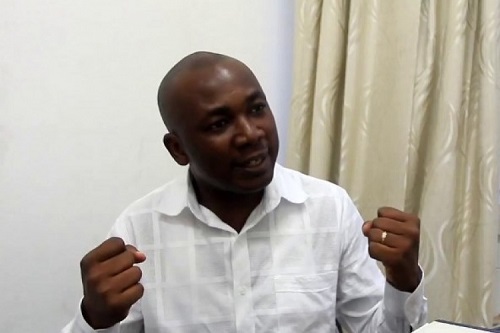
A Senior Finance lecturer at the University of Ghana Business School (UGBS) has bemoaned the abysmal participation of locals when it comes to the economy.
Prof. Godfred Alufar Bokpin said that the dominance of foreign companies and expatriates in the Ghanaian economy has resulted in huge deficit in the Services and Income Balance Account.
The phenomenon according to him, offsets the gains made on the country’s Balance of Trade Account.
Although Ghana has since 2017 recorded a year-on-year trade surplus, the cedi continues to depreciate at an alarming rate.
“We have just been deceiving ourselves that this is a Ghanaian economy. There’s nothing Ghanaian about the Ghanaian economy. We pound just enough fufu to go and eat because the growth is not here; everything is just leaving,” he said.
Prof. Bokpin believes the low local content in the lucrative sectors - Oil and Gas, Banking, Telecommunications as well as Mining - will create pressures on the cedi when the expatriates remit to the country of origin.
He further indicated that the local currency continues to depreciate due to the lack of predictability of the 2022 Budget.
The Finance Expert is of the view that government has failed in outlining a clear fiscal sustainability path in the 2022 financial statement that gives comfort and confidence to investors.
“When you see the foreign dominance in your economy like this, your policy communication must generate confidence. Other than that the mere speculative activities of these foreign interest can collapse your economy because they are the ones driving what is happening here,” he said.
Speaking to host of PM Express, Evans Mensah, Tuesday, the Senior Lecturer insisted that, “there is no Plan B to the 2022 Budget and I believe that government didn’t do well. Everything hinges on e-levy and I think e-levy could still not be passed because that’s not the solution.”
Prof. Bokpin, however, called on the Finance Minister to as a matter of urgency make certain revisions to the 2022 Budget in a bid to give some level of assurance and prevent the economy from a total collapse.
He also called for measures to offshore local participation in the lucrative sectors of the economy in order to lessen the pressure on the local currency as a result of huge capital flight.
Latest Stories
-
Every year, the lawyers come out, and so does the nonsense! – Ace Ankomah writes
55 seconds -
Digital transformation without an ownership culture can digitise poor service
4 minutes -
Fishing communities demand revocation of offshore gold exploration licences over livelihood concerns
7 minutes -
How Ghanaian tycoon Manoj Lakhiani built a water and plastics empire from a $25,000 loan
9 minutes -
GoldBod recovers GH¢38.7m of GH¢55.8m outstanding receivables; remainder subject to legal action – Sammy Gyamfi
15 minutes -
GEXIM Bank donates GH¢200,000 worth of medical equipment to Korle-Bu Child Health Department
18 minutes -
Majority rejects Minority’s claims over GH¢49.7m South Africa evacuation
20 minutes -
GEXIM urges banks to support refurbishment of Korle-Bu Teaching Hospital’s Child Health Department
23 minutes -
Don’t appoint your cheerleader as referee
27 minutes -
Ghana needs stronger international cooperation to fight cybercrime – CSA
30 minutes -
CSA warns of growing cyber threats as Ghana’s digital dependence increases
36 minutes -
USTED dean warns GAUA strike could disrupt Ghana’s restored academic calendar
49 minutes -
Bechem meat processing factory 50% complete, set for March 2027 completion – Kwakye Ofosu
1 hour -
NDC can appoint whoever they want to EC, but Ghanaians will make a decision in 2028 – Titus Glover
1 hour -
GoldBod initiative has created over 1,300 public and private sector jobs – Sammy Gyamfi
1 hour