

Audio By Carbonatix
Education and child rights NGO, Challenging Heights, is calling on government to, as a matter of necessity, pay the GHC315million Capitation Grant Arrears owed basic schools across the country.
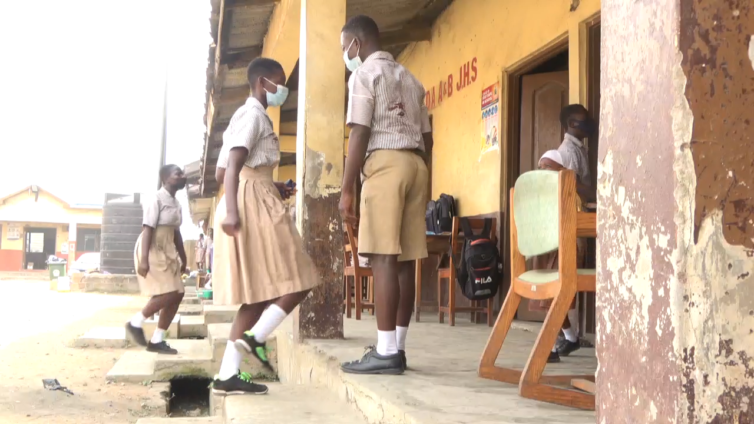
In a just concluded research, the organization reports that it has discovered a worsened and deteriorating fee-paying situation in most public basic schools in Ghana.
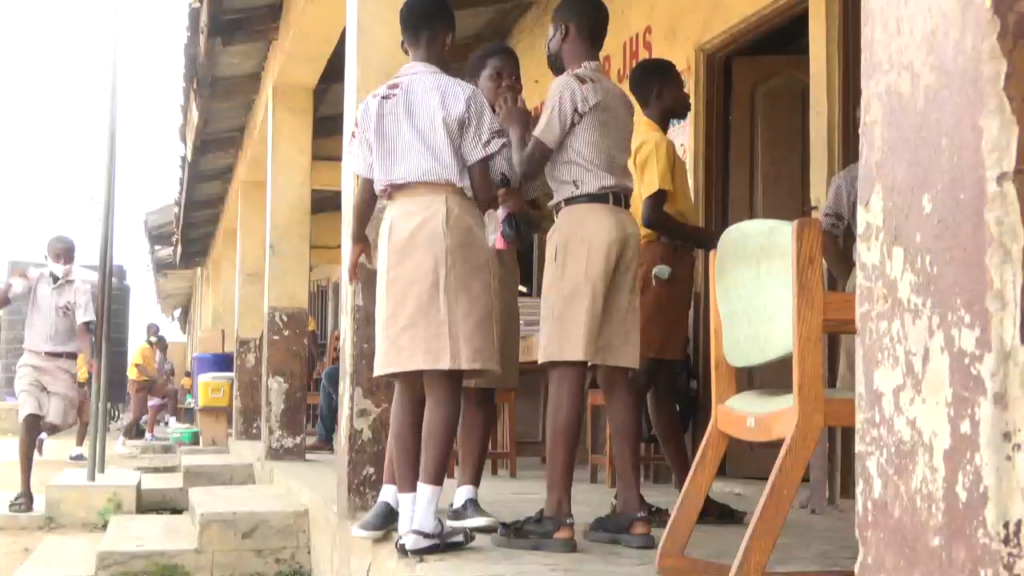
The Challenging Heights’ research team interviewed heads of basic schools in five out of the sixteen regions and 25 districts within the selected regions. The results showed that children in public basic schools are being forced to pay levies to cover desks, teachers’ motivation, admission fees, printing fees, PTA dues, development levy, ICT fees among others.
The Capitation Grant was introduced in the 2003/2004 academic year to offer Free, Compulsory, universal basic education (FCUBE) to all school-going children of Ghana, in fulfilment of Article 25 (1)(a) of the 1992 Constitution.
The said article states that “basic education shall be free, compulsory, and available to all”.
The capitation grant scheme was therefore introduced to replace all fees paid by parents in public basic schools in order to expand access, and to support school performance improvement efforts, by the schools.
In this regard, government paid all the fees which were supposed to have been paid by the children in public basic schools.
CEO of Challenging Heights, James Kofi Annan said while commending the government for increasing the capitation grant from GHC4.5 to GHC10 per child per term, they believe that the delay in the release of the funds, defeats the intended objective of the grant.

The fees paid by the government were to cover general stationery and management, office machinery, first aid, building maintenance, sporting fees, cultural fees, sanitation fees, furniture and tools, textbook user fees, practical fees, and machinery for technical schools and institutions.
The organization said the government is currently reported to be owing basic schools in excess of GHC315million, representing four terms in arrears, and this is affecting quality basic education in the country.
Mr. Kofi Annan indicated that in 2015, the Institute of Statistical, Social and Economic Research (ISSER) conducted research that showed that public basic schools were charging fees far in excess of what was being charged before the introduction of the capitation grant. According to the ISSER report, some of the fees charged were examination fees, extra class fees, PTA dues, collection (offertory), maintenance fees, sports levies, cultural levies, excursions, funerals, and capital development.
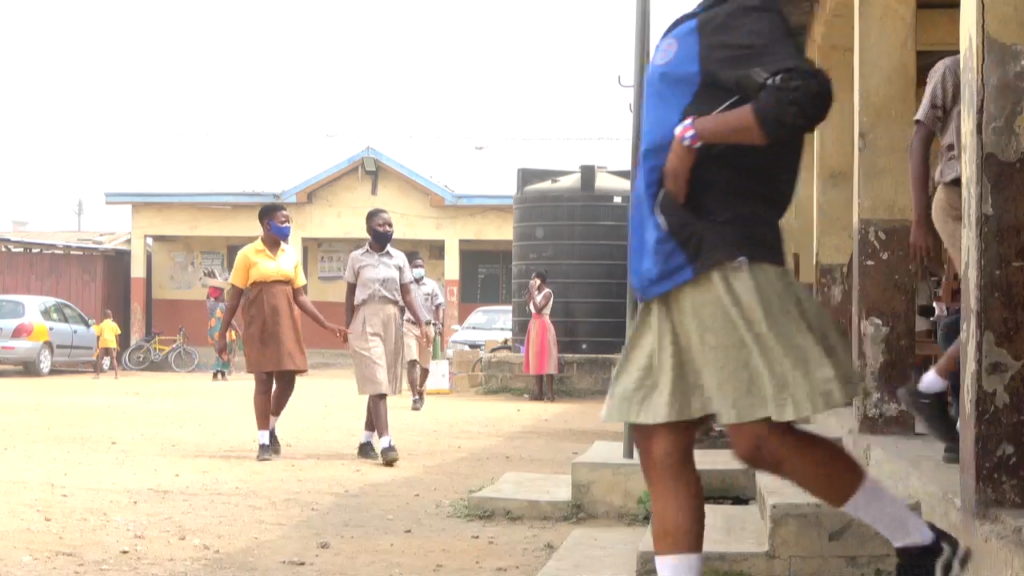
He further revealed that in the organization’s just concluded research, they have discovered a worsened and deteriorating fee-paying situation in most public basic schools in Ghana.
The CEO mentioned other fees charged as , "ICT fees (even when there are no electricity or computers in the schools), sports fees, dettol, toilet rolls, soap/detergents, brooms, bowls, cups, practical fees, cutlasses, hoes, dusters, plastic chairs, mats, electricity, water, security, canteen charges, special mock and midterm examinations.”
He said some public basic school children could be paying as much as GHC2,000 per academic year, which is far in excess of some of the fees charged at some private basic schools in Ghana.
Specifically, Mr. Annan revealed that at the pre-school level, some parents are paying a minimum of GHC459.50 and a maximum amount of GHC1,039.49 per academic year.
"At the lower primary school level, the results show that parents spend a minimum of GHC302.5, and a maximum of GHC1,319.00 per academic year. At the upper primary school level, the results indicate that parents could be paying a minimum amount of GHC295.8 per academic year, and a maximum amount of GHC1,224.5 per academic year for the education of their children. "The JHS level analysis revealed that parents could be paying a minimum of GHC339.5 and a maximum of GHC2,016.00 per academic year,” he revealed.
Mr. James Kofi Annan is thus calling on the government to pay the capitation fees for the heads of the basic schools to run the schools effectively.
He stated that, "It is understandable that when the heads of the basic schools are in financial distress, the only immediate remedy is to fall on the parents of the children to bail them out of the situation." Hence, the charging of these hidden and unapproved fees and levies.
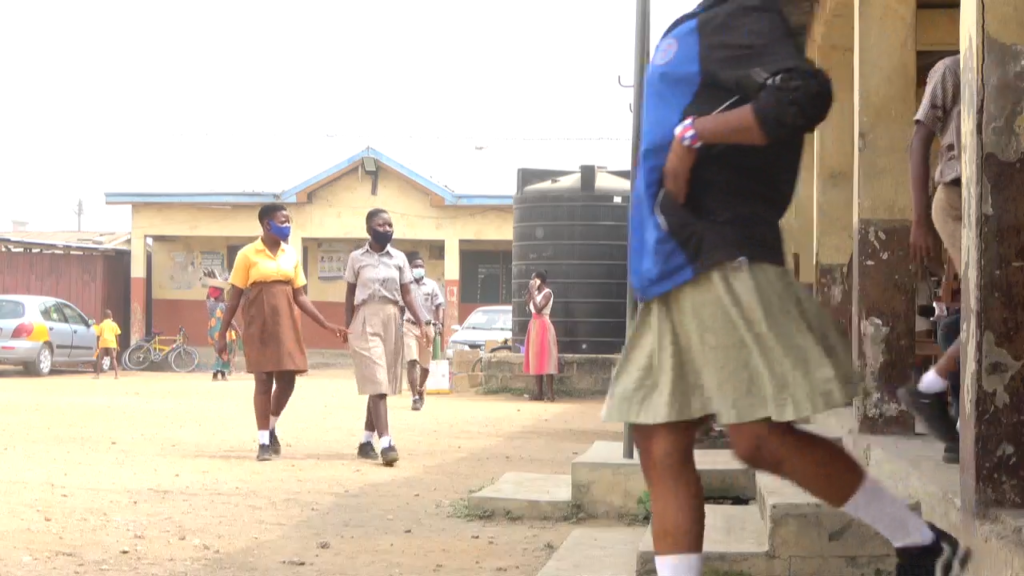
“These completely defeats the original intentions for the introduction of the capitation grant, and we therefore call on government to immediately clear all arrears owed basic schools, to enable the schools operate efficiently,” he averred.
Challenging Height is also asking the government to suspend the introduction of the B-STEM education programme. He said even though they support B-STEM education in principle, the Free, Compulsory, Universal Basic Education (FCUBE) is already suffering financially, and the attention should be directed to dealing with that.
“There is therefore no guarantee that the far more financially demanding B-STEM education can be sustained under our present circumstances,” he added.
Latest Stories
-
Power restoration fault suspected in Kumasi Central Market fire
5 hours -
The 7-foot giant of Ngleshie Amanfro: Seven-foot Ghanaian Ephraim Saawa dreams of joining the national basketball team
5 hours -
Government promises support for Kumasi Central Market fire victims
5 hours -
Vibes The Movie: Big Ghun’s Ghanaian film earns five nominations at 2026 REFFA
6 hours -
MamaCare CEO warns unresolved conflicts among health workers could undermine maternal and neonatal care
6 hours -
Health professionals urged to translate medical knowledge into practice to save mothers
6 hours -
Retired judge Justice Francis Korbieh charges 1,568 new lawyers to uphold integrity
8 hours -
Conflicts among care providers linked to maternal, neonatal deaths – Expert
8 hours -
GIS marks 10th TIME conference, champions improved teaching practices
8 hours -
BRICS Or Balance? What Ghana’s bid really means
9 hours -
GPRTU wants full TRAFFITECH-GH implementation to start in 2027
9 hours -
How 10-mile walks for basic education birthed a 50-year legal career for Justice Korbieh
9 hours -
Mahama announces plans to import electric wheelchairs for PWDs
9 hours -
KGL U17 Colts 2026: Western beat Prempeh Elite Academy to set up final final with Greater Accra Region
9 hours -
Late Solanke strike salvages 10-man Spurs draw at Man United
9 hours