

Audio By Carbonatix
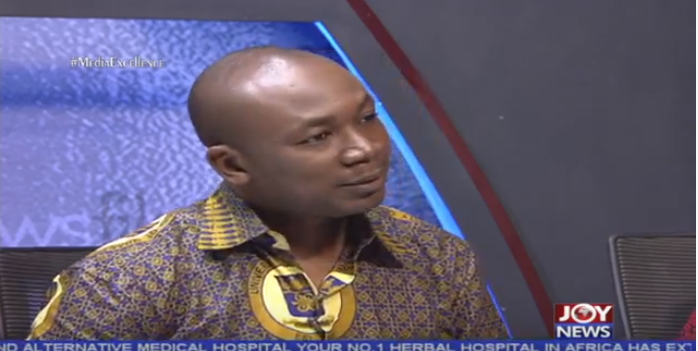
Finance and Economics lecturer, Professor Godfred Bokpin, has expressed worry about the passage of the Electronic Transaction Levy (E-Levy), saying, it will increase the cost of doing business and undermine the private sector ability to create jobs.
According to him, the E-Levy is a lazy way of collecting taxes, adding, there are too many indirect taxes already overburdening businesses and consumers.
Speaking at a roundtable forum organised by the Institute of Economic Affairs on the topic “Ghana’s Current Economic Crisis: Is it Time to go to the IMF or is There an alternative Way Out?, Professor Bokpin said “given the effect of COVID-19 pandemic on the country post COVID-19, the economic reform must embrace a tax structure that is more equitable and progressive. And the reason, the e-levy cannot be supported and should not be supported is because it’s a bit more regressive and doesn’t help and very soon”.
“The litany of indirect taxes contribute to the high productive course-base of doing business in this country and undermines private sector leadership in creating jobs and wealth for Ghanaians. There are more realistic ‘low hanging fruit’ that we can do to close the leakages in our revenue envelope. And studies exist including some done by the IEA that Ghana lose as much as we are able to collect by way of tax revenue; we cannot allow those leakage to continue”, he explained.
“Of course, we have to talk about the exemption bill that needed to be passed, and I’ve been wondering that if we had applied the same energy with which we had passed this E-Levy, we could have made some gains. because in 2019 during the State of the Nation Address, our President [Akufo-Addo} told us that the number one threat to Ghana’s revenue base is not E-Levy, but rather exemptions”, he added.
Professor Bokpin also expressed worry that the country loses about 15 billion annually to tax exemptions. He therefore wants the nation to improve compliance and efficiency in tax collection in order to improve the tax to Gross Domestic Product (GDP) ratio from 13.5 percent to about 16%.
“If you look at the mathematics, even with the current GDP numbers, we are losing between 15 billion and 25 billion. Why would you buy pass all of these and tax peoples savings through E-Levy. I mean the state cannot be hiding somewhere and when it sees that money has passed somewhere, the state will go after it”.
“I mean, the state cannot set up the citizens to fail. If we continue like this there is no way the average Ghanaian can accumulate savings to take advantage of the limited economic opportunities…we can’t continue to do that.
Latest Stories
-
Strong Day 1 turnout sets tone for Day 2 of Republic Bank-JoyNews Habitat Fair Clinic
19 minutes -
Ghana Army warns new soldiers against social media misuse, uniform abuse
25 minutes -
AMA calls for science-led action to tackle environmental health risks in Accra
38 minutes -
He entered at eight. He is now 16: Ghana’s children growing up in prayer camps
5 hours -
‘Development must not always begin from Accra’ — Anwelle Foundation launched in Jirapa
5 hours -
PKO trio eye victories at Odwira Festival
7 hours -
346 Ghana Navy recruits pass out after 26 weeks of intensive training
7 hours -
Newsfile to discuss EOCO-MP arrest, drug trafficking, speech arrests and $235m water debt
8 hours -
JoyNews gets results as listeners raise GH¢40,000 to help 17-year-old student with cerebral palsy attend SHS
8 hours -
Vice President calls for stronger local pharmaceutical production to reduce medicine imports
8 hours -
The brewing tension at KNUST; Beware the Ides of October….
9 hours -
Health Ministry moves to integrate traditional medicine into mainstream healthcare
9 hours -
550 pupils in Kintampo South get educational lifeline as ‘Seeds of Hope’ reaches farming communities
10 hours -
Opoku Mensah urges Christian Council, House of Chiefs to speak up on democratic freedoms
10 hours -
Teacher unions’ strike: Minority demands immediate payment of teacher arrears, 20% deprived area allowance
10 hours