

Audio By Carbonatix
In 2017, the new government based on campaign promises reduced or abolished 18 taxes that were bringing in revenue.
It was dubbed the nuisance tax. This brought a massive reduction in government revenue.
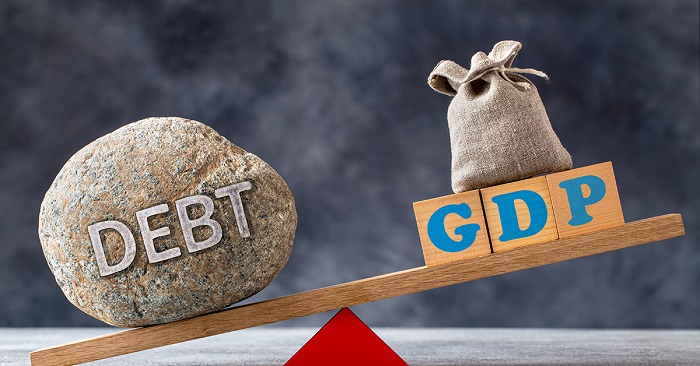
To make up for the revenue shortfall, the government adopted borrowing. This increased Ghana’s bond market activities domestically and externally and as a result a high debt-to-Gross Domestic Product exposure, leading to the current debt unsustainability levels.
The financial sector clean-up also cost the country more than anticipated in attaining a robust financial sector before 2022.
The discovery of two more oil fields led to the anticipation of more revenues, therefore, the government raised more local and external bonds.
The government increased expenditures mainly on emoluments, interest payments, social programmes, and employment. Revenue generation, however, failed.
An example is the e-levy; revenue mobilization was not encouraging. The Auditor General of Ghana reported very high non-compliance activities leading to the state losing more money than ever.
Amidst all these, the government set out to digitise economic activities and worked on national ID Cards, digital addressing systems, and electronic payment platforms to enhance efficiency and revenue mobilization.
As the government further increased capital expenditure, investors noticed that the economy has become fragile due to the impending liquidity challenges. They started to repatriate their money from the economy as shown by the Bank of Ghana’s report.
The government was warned by the rating agencies with their downgrades; academicians and experts advised the government to seek the help of the IMF, but Government failed to heed the advice on time.
The covid-19 pandemic sets in and government get funding from multilateral agencies. This created a situation for the government to present to Ghanaians that all was well as the balance of payment improved and inflation reduced. However, the government failed to sign unto the debt service suspension initiative by the World Bank.
Then comes the war between Russia and Ukraine. This war affected global economies and exposed fundamental weaknesses. Within a short period, prices in Ghana had increased leading to hyper-inflation, and currency devaluation affecting both macro and micro levels of the economy.
The Bank of Ghana did not have the needed dollars to pay for the country’s commitments. The balance of payment had deteriorated leading Ghana to insolvency. The government of Ghana has now adopted debt monetarization to finance the operations with the help of the Bank of Ghana and it increased inflation.
In order to get to the debt sustainability level before the IMF can lend to Ghana to improve the balance of payment, Ghana has adopted a debt restructuring programme which will lead to investors losing some money (haircut) because of the sovereign risk.
The solution to the current problem is for government to reduce expenditure and increase revenue. Furthermore, ensure efficient and effective allocation of resources backed by accountability.
The author, Williams Kwasi Peprah, PhD, is an Associate Professor of Finance at the Andrews University, Michigan, USA. Email: peprah@andrews.edu
Latest Stories
-
Man City suffer as PSG masterclass sets up Champions League win
57 minutes -
Customer Service Africa CEO urges business leaders to observe staff and customer interactions
1 hour -
On night of mayhem for Liverpool, Barcola arrives in style
1 hour -
Muzic Mensah finds healing and renewed love in new single ‘WayƐ Late’
1 hour -
FIFA to offer extra £2.6bn for football development
1 hour -
Government backing is no EPA permit – Authority warns GoldBod, ministries
2 hours -
Real Madrid produce stunning late fightback to down Roma
2 hours -
EPA orders immediate halt to unpermitted reclamation and dredging nationwide
2 hours -
Afenyo-Markin’s lawsuit against Sammy Gyamfi takes focus away from development – Kpebu
2 hours -
FWSC urges media to guard against misinformation in proposed IPEC transition
2 hours -
MoMo Fest 2026: Shatta Wale to Rock Accra Stadium on October 17
2 hours -
GTEC’s letter directing public universities to reopen by October 16 is unprofessional – GAUA
2 hours -
Suspect in viral video assaulting wife jailed for 3 months
2 hours -
GAUA insists strike will end only after Fair Wages addresses market premium issue
2 hours -
Kpemka seeks compensation as he sues BOST over alleged unlawful termination
3 hours