

Audio By Carbonatix
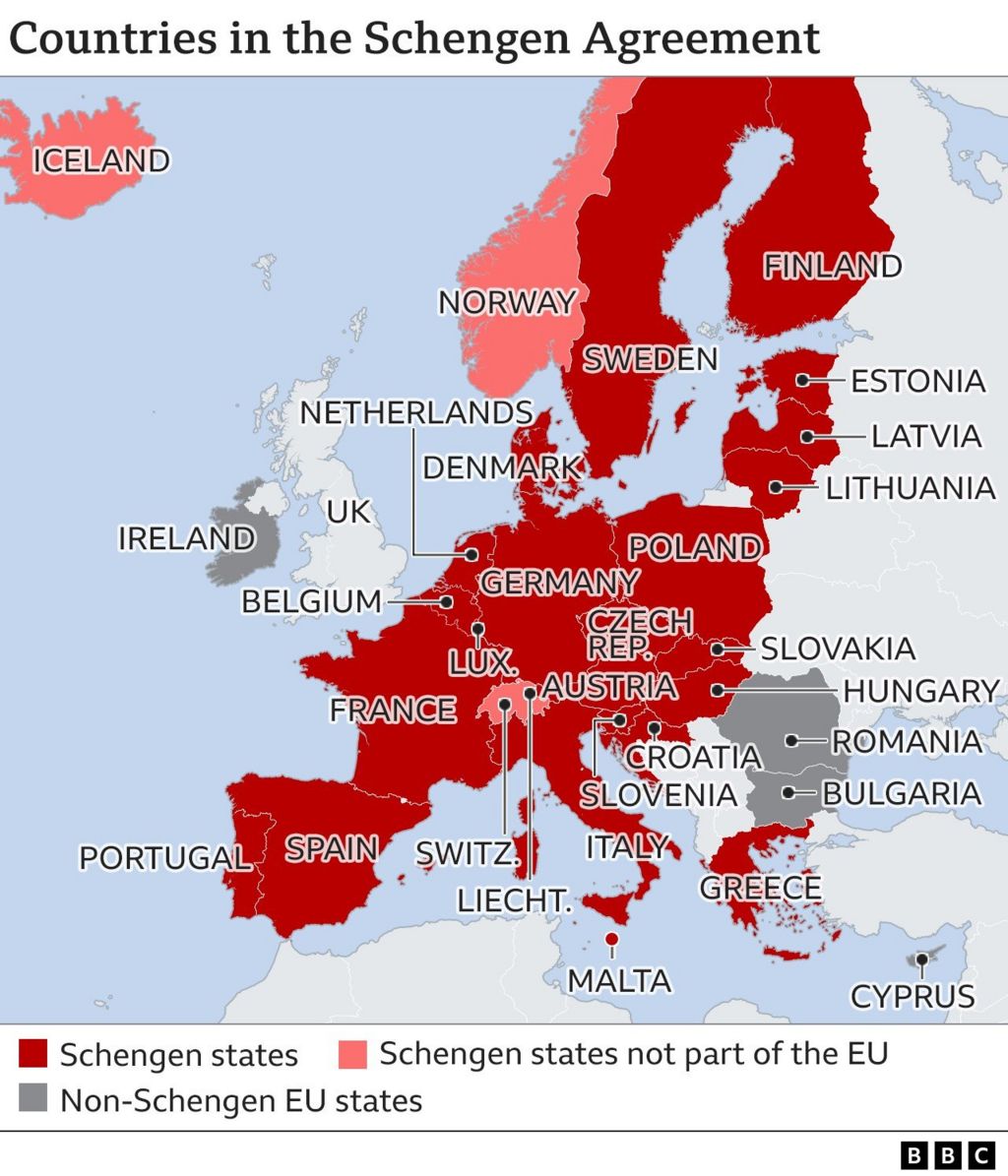
Croatia is embarking on a historic year as it joins the EU's border-free Schengen zone and it ditches its own currency, the kuna, adopting the euro.
The country committed to joining the eurozone when it became the EU's newest member in 2013.
Nationalist parties wanted to keep the kuna, but were overruled by the constitutional court.
It is the twenty-seventh country in the Schengen area, which allows 400 million to move freely between countries.
European Commission President Ursula von der Leyen hailed the changes as "two immense achievements" for the youngest member state of the EU.
She said 1 January - when the changes officially happened - would be a day "for the history books".
Above all, this would be a moment of "joy and pride for the Croatian people", she said.
"It is testimony of your amazing journey, your hard work and your determination."
Croatia's Prime Minister, Andrej Plenkovic, said on Sunday the country - a former Yugoslav republic that fought a war of independence in the 1990s - had "achieved its strategic, state and political goals" by the two historic changes.
He was speaking at a ceremony at the Bregana border crossing with neighbouring Slovenia, where passports will no longer be routinely checked.
Mr Plenkovic said that Schengen membership would "mean a lot for Croatia as a tourist country, which is to a large extent a destination where tourists travel by car".
He added that "the fact that we will also be in the eurozone gives another signal to all those visiting Croatia".
Croatia's entry into the Schengen zone is expected to boost its tourism industry, which accounts for 20% of its GDP and welcomes millions of visitors each year.
Previously long queues at border crossings with Hungary and Slovenia should become a thing of the past.
The use of the euro is already widespread in the country, with key assets such as homes valued in the currency and a large percentage of bank deposits also denominated in euros.
Experts say moving to the European currency should help shield Croatia's economy at a time of inflation across the globe.
The euro was launched on 1 January 1999 as an electronic currency and became legal tender for about 300 million people in 12 member states on 1 January 2002. With the addition of Croatia, there are now 20 countries in the eurozone.
Latest Stories
-
Ghana ranked joint 6th in 2026 Absa Africa Financial Markets Index
9 minutes -
Demand and savings deposits decreased in August 2026, but currency outside banks increased by 4%
37 minutes -
Fiscal policy implementation poses downside risk to inflation – BoG
1 hour -
Organised Labour should seek fair adjustment, not excessive pay rise – Labour consultant
1 hour -
BoG maintains medium-term inflation target of 8 ± 2%
1 hour -
Sammi Awuku urges NPP Germany to unite ahead of 2028 elections
2 hours -
The Inconvenient Truth: We cannot pray for the cure while protecting the disease
3 hours -
MTN Ghana trains civil society organisations on artificial intelligence
3 hours -
GoldBod FX framework aims to make dollar supply predictable – Acheampong
4 hours -
How does a Ghanaian team make it to the BAL?
4 hours -
Ghana’s investment climate presents opportunities for industrial growth and job creation.
4 hours -
‘I paid thousands to a company for jobs that never came’
4 hours -
SSNIT intensifies informal sector enrolment drive with Techiman float
5 hours -
Ghana seeks long-term mining investments that benefit local communities – Armah-Kofi Buah
5 hours -
GHATOF demands compensation for 85 businesses affected by La Pleasure Beach demolition
5 hours