

Audio By Carbonatix
CEO of Western Group Limited, Alfred Amofa says that Ghana experienced a farming debacle in 2022.
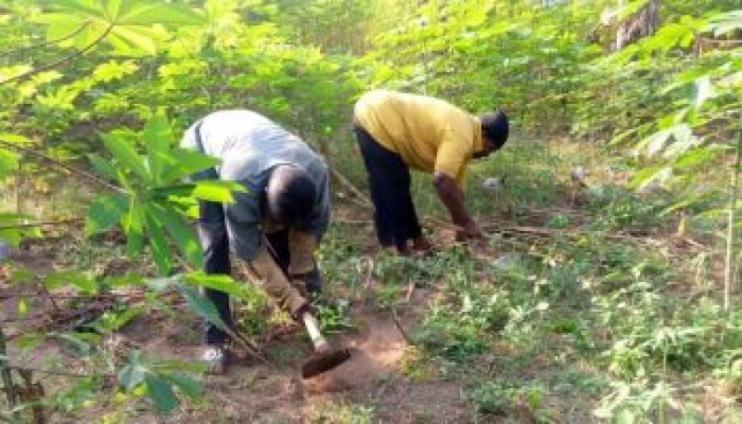
He said the 2022 farming season was the worst compared to previous years.
Speaking on JoyNews’ AM Show, Wednesday, Mr. Amofa expressed dissatisfaction with the way farming activities were handled by government in the just-ended year.
“They talk of 1983 but I was just 1 year old so I couldn’t have witnessed it, but since I became an adult, I’ve never seen such a difficult year in terms of farming like that of 2022.
Sometimes I get confused when someone suggests that 2022 was better that the previous year. It can never be possible; the realities on the field do not suggest that. I don’t think anyone can actually make any allusion to that fact because those facts would be rejected--- because you just need to go there and see the land empty, people are not farming on it.
For me, 2022 was a very difficult year and it was a catastrophic disaster,” he said.
Mr. Amofa said the One District One Factory policy which was executed to support the export of raw materials and import of finished goods, did not have any significant positive effect on agriculture.
According to him, the support government gives is just “a one-time-off thing.”
“When you do import anything, government pays a percentage of the import duties. That is what government gives to the beneficiaries of 1D1F, so it’s not like every year, government is going to give you some cash or something to support; it is a one time off thing,” he added.
According to him, about 70% of “our growers could not plant” in the 2022 farming season due to high cost of production.
Earlier on the show, Dr. Lawrence Acheampong, a lecturer at University of Cape Coast, Department of Agricultural Economics and Extension also lamented the ineffectiveness of the Planting for Food and Job policy initiated by the government. According to him, farmers are not getting the needed support.
He has recommended a review of the policy.
In 2022, Ghana experienced high increase in food prices which was largely attributed to the Russia-Ukraine war. The country also faced fertilizer supply problems. These problems alongside inflation caused high increases in food prices.
Meanwhile, government is exploring options to cut down on or totally end the importation of some food stuff especially rice.
Latest Stories
-
NADMO mobilises over 1,000 mattresses as relief efforts continue for Hohoe flood victims
10 seconds -
President Mahama courts diaspora investment, highlights Ghana’s economic and energy gains at UNGA – Town Hall
46 seconds -
Hohoe floods: Volta Regional Minister assures affected residents of government support
7 minutes -
Ablakwa assures Ghanaians in New York of stronger consular support and recognition of diaspora contributions
11 minutes -
Gender Ministry prepares officers to monitor LEAP payments nationwide
15 minutes -
AMA reminds drivers of yellow-plated vehicles to obtain commercial driver’s licences from Assembly
16 minutes -
My focus is victory in 2028, those with Agenda 2032 can wait — John Boadu
38 minutes -
AK24 Entertainment wins Event Promoter of the Year at Ghana Entertainment Awards USA 2026
41 minutes -
KNUST, UNCDF host EU Ambassador to advance EU Pact for skills development initiative agenda
41 minutes -
Teachers’ strike: School in Wa turns ghost town; pupils forced onto ‘virtual holiday’
44 minutes -
Gov’t should not see bipartisan probe into 3.9-tonne cocaine haul as attack – Akuapem North MP
56 minutes -
The foundation of every boy’s upbringing is important – Kobby Kyei
58 minutes -
Middle East conflict pushed Ghana fuel prices higher in first half of 2026 – COMAC
1 hour -
President Mahama puts mining firms on notice over 2030 raw mineral ore export ban
1 hour -
Ghana’s fuel consumption rises 12.24% to 4.06 billion litres in first half of 2026
1 hour