

Audio By Carbonatix
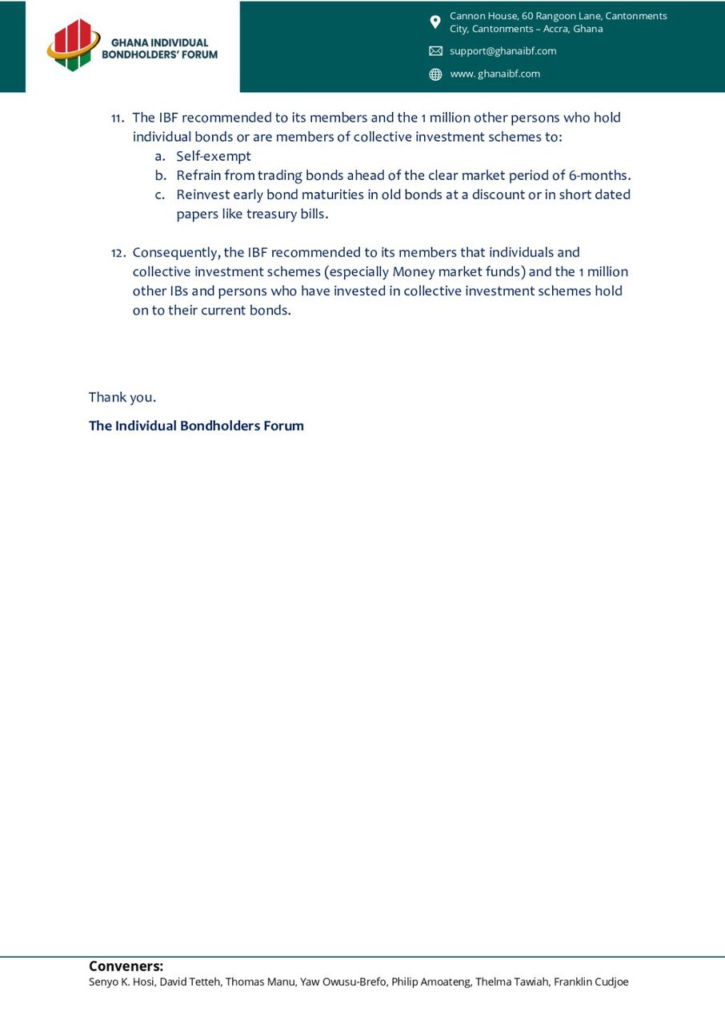
The Individual Bondholders Forum is urging its members and members of collective investment schemes to self-exempt, refrain from trading bonds ahead of their clear-market period of six months and reinvest early bond maturities in old bonds at a discount in short-dated papers like treasury bills.
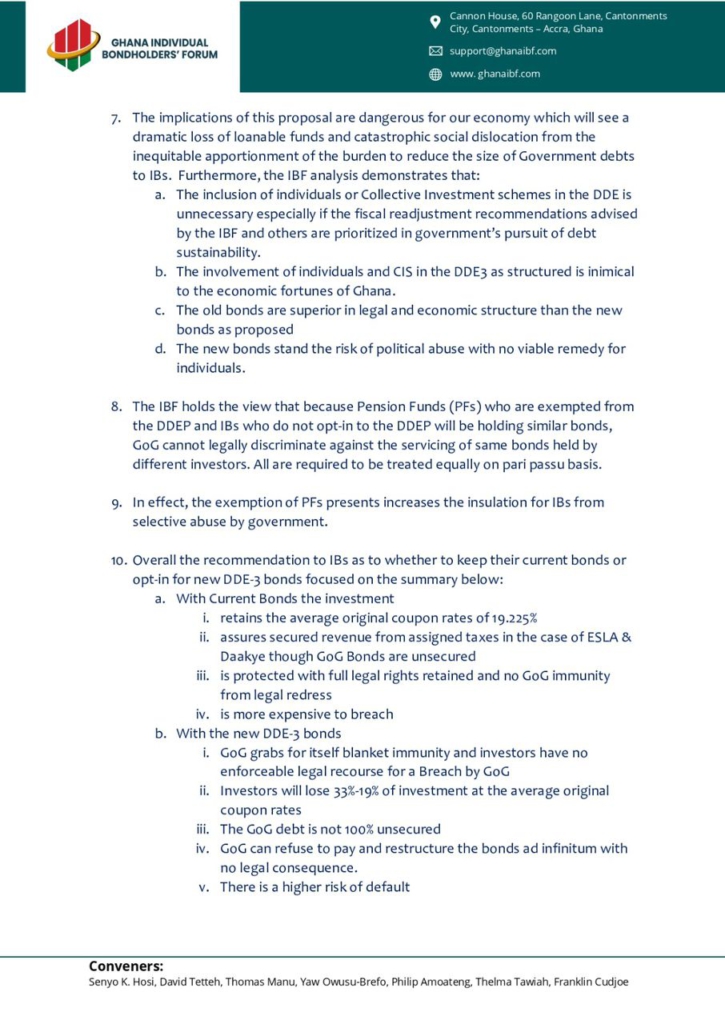
“Consequently, the IBF recommended to its members that individuals and collective investment schemes (especially money market funds) and the one million other IBs and persons who have invested in collective investment schemes hold on to their current bonds”, it said in a statement.
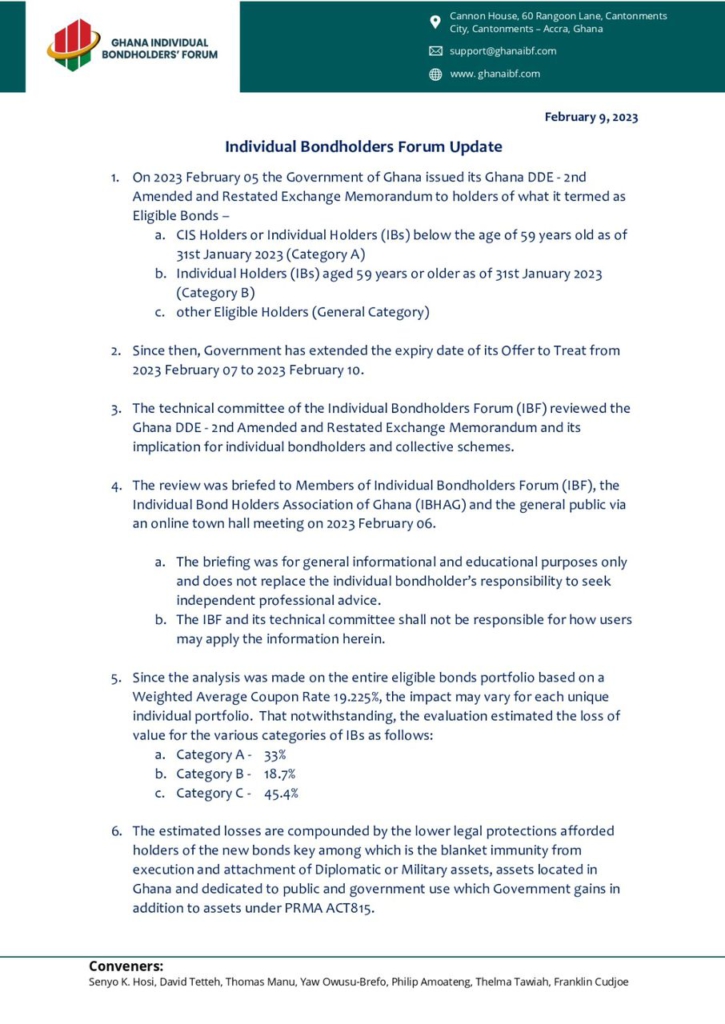
On February 5, 2023, the Government of Ghana issued its Ghana Domestic Debt Exchange - 2nd Amended and Restated Exchange Memorandum to holders of what it termed as Eligible Bonds.
They included CIS Holders or Individual Holders (IBs) below the age of 59 years old as of January 31, 2023 (Category A), Individual Holders aged 59 years or older as of January 31, 2023 (Category B) and other Eligible Holders (General Category).
Since then, the government has extended the expiry date of its Offer to Treat from February 07 to February 10, 2023.
The IBF said its technical committee reviewed the Ghana DDE - 2nd Amended and Restated Exchange Memorandum and its implication for individual bondholders and collective schemes.
Since the analysis was made on the entire eligible bonds portfolio based on a Weighted Average Coupon Rate of 19.225%, the IBF said the impact may vary for each unique individual portfolio.
That notwithstanding, the evaluation estimated the loss of value for the various categories of IBs as Category A - 33%, Category B - 18.7% and Category C - 45.4%.
“The estimated losses are compounded by the lower legal protections afforded holders of the new bonds key among which is the blanket immunity from execution and attachment of Diplomatic or Military assets, assets located in Ghana and dedicated to public and government use which Government gains in addition to assets under PRMA ACT815”.
It warned that the implications of this proposal are dangerous for the Ghanaian economy which will see a dramatic loss of loanable funds and catastrophic social dislocation from the inequitable apportionment of the burden to reduce the size of Government debts to IBs.
Find below the statement:
Latest Stories
-
GPRTU wants full TRAFFITECH-GH implementation to start in 2027
2 seconds -
Mahama announces plans to import electric wheelchairs for PWDs
4 minutes -
KGL U17 Colts 2026: Western beat Prempeh Elite Academy to set up final final with Greater Accra Region
23 minutes -
Late Solanke strike salvages 10-man Spurs draw at Man United
33 minutes -
Gender Ministry to monitor welfare of Nana Akua Addo’s children amid domestic violence case
39 minutes -
Benedict Okyere Yeboah: Ghana’s football problem goes beyond sacking a coach
49 minutes -
GPL 2026/27: Darkwah Wiafe’s winner sees All Blacks beat Kotoko
54 minutes -
ITF World Tour : Patel Wins Boys’ Singles Final at J100 Accra
1 hour -
Ghana must pursue BRICS partnership if it brings economic benefits – Kpebu
1 hour -
Success and Wright Claims J100 Accra Girls’ Doubles Championship
1 hour -
ITF J100: America’s Wright wins J100 Accra Girls’ Singles Title
1 hour -
Expedition hopes to find aviator Amelia Earhart’s plane on remote island
1 hour -
US seeks changes to rejected $109m health compact with Ghana – Mahama
2 hours -
Nine dead in mass shooting at Pennsylvania home
2 hours -
‘Time for Ukraine to get new president,’ says Trump after Zelensky condemns diesel deal
2 hours