

Audio By Carbonatix
Pollutants from wastewater treatment plants in Ghana are released into water bodies and the environment due to poor knowledge about recycling treatment technologies.
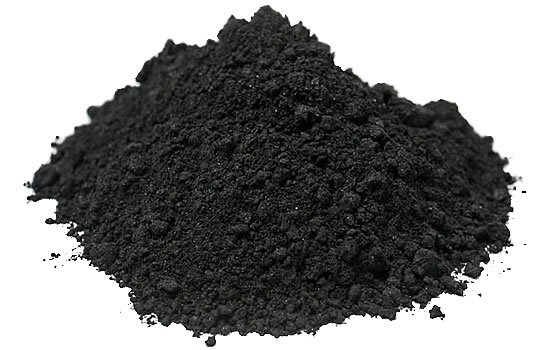
In a bid to curb this, the Regional Water and Environmental Sanitation Centre, Kumasi (RWESCK) at the Kwame Nkrumah University of Science and Technology and Sewerage Systems Ghana Limited are using activated charcoal from faeces to purify waste water.
The results of their research is contained in the journal, Advances in Materials Science and Engineering.
The study sought to evaluate the performance of a novel material; faecal sludge-derived activated charcoal for wastewater pollutant removal.
For the study, the dewatered faecal sludge was dried on a sand drying bed for three months.
The dried faecal sludge was used to produce activated charcoal, which was then used to purify the waste water.
The results showed high removal efficiency of pollutants and a decrease in the muddiness, the smell, colour among others of the wastewater.
The filtered water was even clearer than the lab tap water used as a comparison.
“Dry faecal sludge-derived activated carbon (DFSAC) produces effluent that is substantially pure due to the high toxicity removal efficiency, making the effluent water free from impurities, dissolved solids, and turbidity.
“The obtained result is an affirmation of the potential of the dry faecal sludge-derived activated carbon from effectiveness in the removal of waste water pollutants on a large-scale level,” lead researcher, Issahaku Ahmed explained.
The water obtained from the system can be used for purposes such as cleaning, irrigation, chemical dissolution in wastewater treatment, washing of cars, and flushing of the water closet when disinfected.
“This method of treatment using DFS-activated charcoal may require replacement after several treatments are done, but dry faecal sludge is always readily available from the wastewater treatment plant (WWTP); hence, DFS-activated charcoal can easily be available, it's cheap, and has a high degree of purification potential, The study recommends that WWTP operators should consider closing the resource loop by ensuring effluent water from treatment facilities undergoes a cheap but more effective means of purification for reuse,” Mr. Issahaku said.
Latest Stories
-
Ato Forson thanks constituents for 18 years of support
3 minutes -
T-bills auction: Government exceeds target by 51%, interest rates fall again
6 minutes -
Avoid comparing governments, Catholic Bishops tell Chief Justice
45 minutes -
140 migrants in single dinghy rescued in English Channel
1 hour -
FIFA president Infantino will stand for re-election
1 hour -
Catholic Bishops reject calls for Chief Justice’s resignation over political remarks
1 hour -
Germany’s far-right AfD set for big win in eastern state, just short of majority
2 hours -
Catholic Bishops urge Chief Justice to avoid remarks that could raise doubts about impartiality
2 hours -
Mrs Doris Emma Doryumu (Nee Dove)
2 hours -
Illegal mining concessions easier to obtain than lawful ones in Ghana – Prof Frimpong-Boateng
2 hours -
At least 5 dead after Amazon cargo plane barreled off runway at Miami airport
2 hours -
Frimpong-Boateng proposes Environmental Restoration Fund funded by mineral royalties
2 hours -
Corrupt individuals are worse than pathogens; their actions cause premature deaths – Prof Frimpong-Boateng
3 hours -
No illegal mining operation will find refuge on Akyem Essase lands — Chief declares
3 hours -
Flight price rises due to ‘foolish leaders’ starting wars, Virgin’s Branson says
3 hours