

Audio By Carbonatix
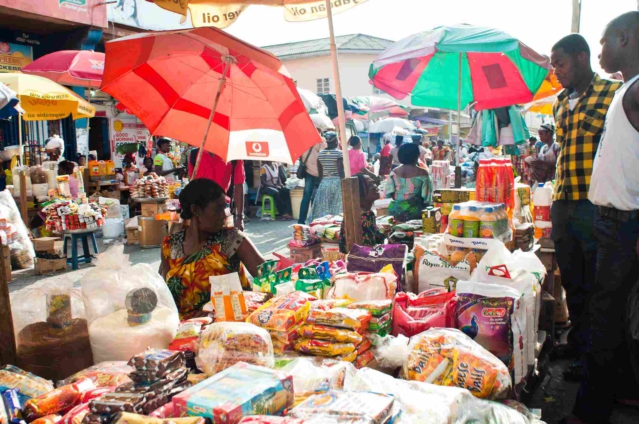
In most markets in Accra, 5:00 am is often bustling with a flurry of buying and selling of groceries.
Vendors behind the fresh supply of foodstuffs and other products to homes, restaurants, and schools are largely women.
These traders are usually under the hot sun with scanty or no covering, mostly on sideways, pedestrian walks, and street corners, all in an attempt to eke a living.
The sector is considered as the engine of the country’s economy since Small and Medium Enterprises contribute about 70% of Ghana's gross domestic product. Women in the service sub-sector in wholesale or retail trade contribute 55% of this figure.
However, this group's myriad problems include access to credit due to a lack of collateral, inadequate savings needed for equity payments required for loans, and cumbersome bureaucratic procedures for accessing formal credit facilities.
This, many of the women say is negatively impacting their businesses and further making life difficult.
Adoley, a petty trader at the Makola market, said her trading activities put food on her table and help cater for her three children, thus, their only means of survival.
“When I wake up, I prepare my kids for school, prepare food for the house and set off to do my petty trading. It has not even been easy since my husband died 10 years ago. I pay all the bills including light and water. I also pay the rent, it really difficult,” she said.
Speaking to the Labour series on JoyNews, although, Adoley is money-oriented and finds fulfillment in waking up early to sell groceries for her customers. She thinks life could be better if there was any help from somewhere.
“We beg government to help us at least reduce the fuel prices so that it can reflect in our trade,” she decried.
A fishmonger, Kwaale, who has been doing the business for over three decades after her mother introduced her to it, said it has been of immense support to her family but is not all rosy.
“Things are very expensive so the profit has reduced,” she told JoyNews’ Ayisha Ibrahim.
Another trader mentioned that although her husband supports the family it is not easy as they both do not make enough to maintain the home and are somethings required to take loans adding that “if you don’t work hard to settle the loans, you end up being arrested by the police.”
But the women are not daunted by these challenges. They hope government would do something to lessen their burden and make waking up at dawn worth their while.
Latest Stories
-
Total revenue & grants stood at GH¢144.5bn in July 2026, lower than targeted amount – BoG
10 minutes -
Ghana Sports Fund urges sports federations to submit credible proposals and measurable targets
14 minutes -
Musk says US government may be behind slowdown of Ukraine drone speeds
31 minutes -
Picking Chief Justices nearing retirement could give Mahama immense power – Bentil
41 minutes -
Netflix to shed 1,000 jobs in steepest cuts since 2022
1 hour -
Burnham had two hospitality dinners with Man City chairman, deleted records show
1 hour -
Semenyo ‘froze’ after alleged racist abuse, court told
1 hour -
‘Shameless’ – Mourinho critical of Vinicius Jr ban timing
2 hours -
Loyalty can outweigh competence in Chief Justice selection – Bentil
2 hours -
Man City suffer as PSG masterclass sets up Champions League win
2 hours -
Customer Service Africa CEO urges business leaders to observe staff and customer interactions
2 hours -
On night of mayhem for Liverpool, Barcola arrives in style
2 hours -
Muzic Mensah finds healing and renewed love in new single ‘WayƐ Late’
2 hours -
FIFA to offer extra £2.6bn for football development
2 hours -
Government backing is no EPA permit – Authority warns GoldBod, ministries
3 hours