

Audio By Carbonatix
The heads of banking institutions in the Bono Region have called on the Government to be proactive enough and flush out money exchangers in the ‘black market’ for the Ghana cedi to regain its strength.
They observed that the illegal money exchange business was flourishing in Sunyani, the regional capital, and thereby putting undue pressure on the cedi, saying, because their exchange rates were high, they had high patronage from the public.
“I think the Government must do more to restrict the activities of the black marketers because their illegal businesses have a huge devastating toll on the banking business,” Mrs. Gloria Mensah Atakora, the Bono Regional Manager, GCB Bank PLC stated.
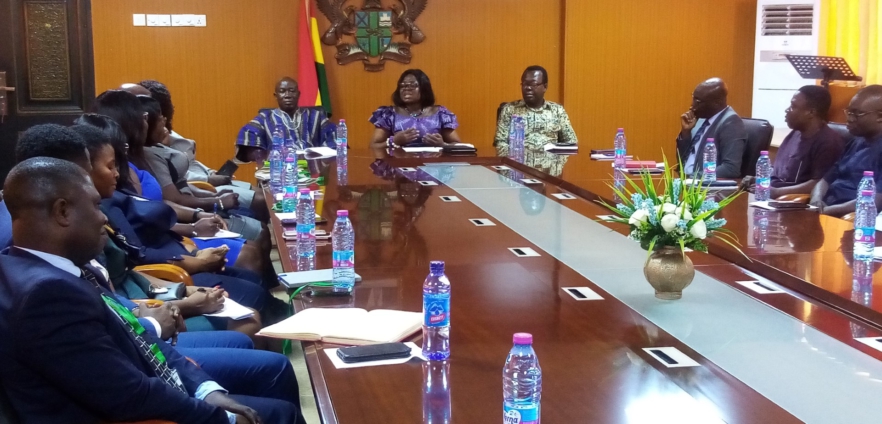
The Bank Managers made the call when they interacted with Madam Justina Owusu-Banahene, the Bono Regional Minister in a meeting in Sunyani.
Mr Charles Eshun, the Bono Regional Manager of the Agriculture Development Bank (ADB), also advised the public to desist from exchanging foreign currencies in the black market to support government efforts to strengthen the Ghana cedi.
The Bank Managers also called on the National Identification Authority (NIA) to be expeditious in the issuance of the Ghana cards to the public, particularly Ghanaian residents abroad.
“Because they find it difficult to access the Ghana card, many Ghanaians who returned home from abroad are unable to open bank accounts and most of them also patronise the activities of the black marketers,” Mr Foster Frimpong, the Bono Regional Manager of the Zenith Bank stated.
They also appealed to the Regional Security Council to intervene and help increase Police presence at the Sunyani central business district (CBD) where most of the major banks were situated to enhance security in the enclave.
On her part, Madam Owusu-Banahene commended the managers for their frank discussions and assured that the Bono Regional Coordinating Council would also work hard in tackling some of the challenges impeding their operations in the region.
The Regional Minister called on the banks to open cash outlets in some of the major rural communities in the region to serve the rural population.
Madam Owusu-Banahene indicated that about 60 per cent of the regional population were farmers spread in the local communities, hence the need for the banks to extend their services to them too.
Meanwhile, activities of the illegal money exchangers are very common and rife, as several ‘black marketers,’ mostly nationals from Niger and Burkina Faso are dotted around corners of the CBD.
They transact their illegal businesses in the open as they approached visitors in the enclave for foreign currency exchange, with emphasis on the Euro and US dollar.
Latest Stories
-
Let The Constitution direct Chieftaincy to deliver “All Development Is Local”
25 minutes -
Ghana explores centre of excellence for hearing, communication and cochlear implant care
2 hours -
Schizophrenia-related disorders lead mental health cases recorded in Ghana
2 hours -
Dutch authorities enlist Ghana in hunt for fugitive drug lord Bolle Jos
3 hours -
Ghana housing finance conference adopts communiqué to improve affordable housing access
7 hours -
Special Initiatives Minister urges Wa Technical Institute to enrol more girls as EU-backed solar training lab opens
7 hours -
In the matter of my first year at the Bar
8 hours -
ActionAid Ghana calls for an end to child marriage, greater investment in girls’ rights
8 hours -
Newsfile to tackle World Cup visa scandal, beach demolitions, education strikes, BRICS bid
8 hours -
UK-Ghana Trade & Investment Summit: Trade Resource Centre to help businesses maximise UK-Ghana trade opportunities
8 hours -
Embassy of Denmark celebrates World Maritime Day
8 hours -
Linking LEAP to productive inclusion could cut extreme poverty by 2030 – UNICEF
10 hours -
Trade Ministry backs use of creative arts to rehabilitate prison inmates
10 hours -
Negotiations with government to continue despite strike suspension – GNAT
10 hours -
‘Ghana cannot afford to waste public resources; every cedi has a job’ – Ato Forson
10 hours