

Audio By Carbonatix
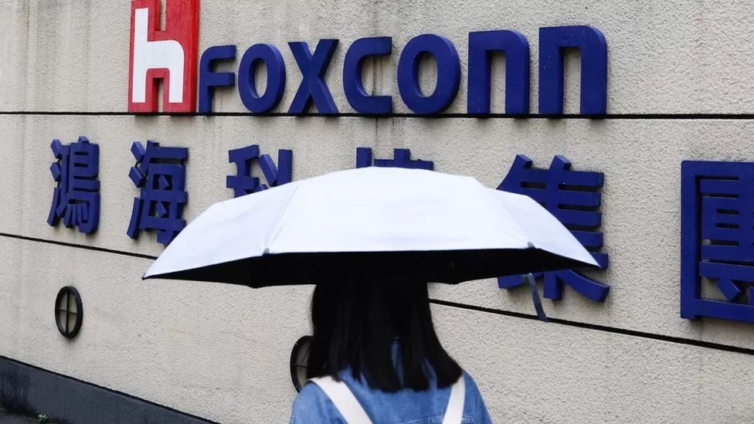
Apple supplier Foxconn has pulled out of a $19.5bn (£15.2bn) deal with Indian mining giant Vedanta to build a chip-making plant in the country.
The move comes less than a year after the companies announced plans to set up the facility in Prime Minister Narendra Modi's home state of Gujarat.
Some analysts say it marks a setback to the nation's technology industry goals.
However, a government minister says it will have no impact on the country's chip-making ambitions.
"There was recognition from both sides that the project was not moving fast enough," Taiwan-headquartered Foxconn said in a statement.
"There were challenging gaps we were not able to smoothly overcome, as well as external issues unrelated to the project," the firm added.
Earlier on Tuesday, Foxconn told the BBC that the decision was made in "mutual agreement" with Vedanta, which has assumed full ownership of the venture.
It added that it would "continue to strongly support the government's 'Make in India' ambitions".
New Delhi-based Vedanta said it had "lined up other partners to set up India's first [chip] foundry".
"The surprise pull-out of Foxconn is a considerable blow to India's semiconductor ambitions," Paul Triolo from global advisory firm Albright Stonebridge Group told the BBC.
"The apparent cause of the pull-out is the lack of a clear technology partner and path for the joint venture," he added. "Neither party had significant experience with developing and managing a large-scale semiconductor manufacturing operation."
However, Rajeev Chandrasekhar, India's Minister of State for Electronics and Information Technology, said on Twitter that Foxconn's decision had "no impact on India's semiconductor fab[rication] goals. None."
Mr Chandrasekhar added that Foxconn and Vedanta were "valued investors" in the country and "will now pursue their strategies in India independently".
The Indian government has been working on strategies to support the chipmaking industry.
Last year, it created a $10bn fund to attract more investors to the sector, in a bid to become less reliant on foreign chipmakers.
Prime Minister Modi's flagship 'Make in India' scheme, which launched in 2014, is aimed at transforming the country into a global manufacturing hub to rival China.
In recent years, several other firms have announced plans to build semiconductor factories in India.
Last month, US memory chip giant Micron said it would invest up to $825m to build a semiconductor assembly and test facility in India.
Micron said that the construction of the new facility in Gujarat will begin this year. The project is expected to directly create up to 5,000 roles, and another 15,000 jobs in the area.
Latest Stories
-
Brighton humbling ‘a big lesson’ for Arsenal – Arteta
4 minutes -
Arsenal handed first loss by brilliant Brighton
11 minutes -
Video: Akwatia MP clashes with Kofi Bentil over 3.9-tonne cocaine seizure
13 minutes -
Ratcliffe ‘must go’ says Man Utd Muslim fan group
17 minutes -
Ignite Social Enterprise targets global market for Ghanaian shea butter
32 minutes -
Eviction notice leaves retired, serving railway workers in Kumasi in limbo
59 minutes -
Asiedu Nketia: Why I remain an unrepentant Nkrumahist
1 hour -
Kudus, Djiku return a boost to Black Stars – Agyemang-Badu
2 hours -
‘If the world, Africa honoured Nkrumah as the Millennium Man, why are we not doing same?’ – Asiedu Nketia
2 hours -
Yaw Preko backs renewed push to revive Colts football
2 hours -
UMB Speed Stars defeat Black Stars Legends 6-2 in friendly
2 hours -
Dafeamekpor hails Kwasi Pratt Jnr as ‘scholar of formidable proportions’
2 hours -
The BECE exam and placement conundrum: Necessary evil or failing system?
2 hours -
‘Who did this to you and what was your crime?’ – Father grives over late Ivan Baidoo
2 hours -
Israeli strikes kill three people in Gaza, medics say
2 hours