

Audio By Carbonatix
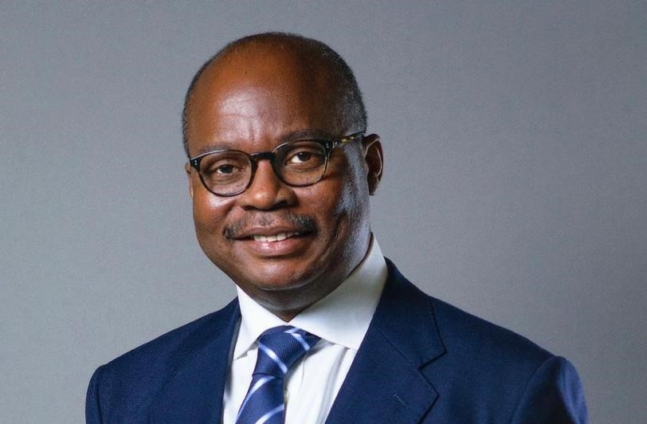
The Governor of the Bank of Ghana, Dr. Ernest Addison has assured that the second round of Domestic Debt Exchange Programme (DDEP) will have little impact on the fortunes of banks.
Government is currently undertaking the programme to restructure the domestic dollar bonds and the cocoa bills.
There are fears that the exercise may affect the recovery posted by banks with half year profits, reaching over ¢5 billion.
However, addressing journalists after the Monetary Policy Committee Meeting of the Bank of Ghana, Dr. Addison maintained that the performance of the banks will be sustained.
“We don’t expect any negative impact on the books of the bank with this next exercise. The data submitted by banks for the first half of 2023 reflected the lingering effects of the DDEP, notwithstanding the strong rebound in profitability following significant losses incurred at year end 2022 on account of impairments of holdings in GoG bonds”, he said.
He added that the banking industry’s total assets as at June 2023 was ¢242.4 billion, showed a moderation in growth of 21.2 percent from 22.8 percent in June 2022.
“Total deposits grew significantly by 42.8 percent to ¢187.6 billion in June 2023, relative to ¢131.3 billion, representing 19.1 percent growth in June 2022. Total borrowings however contracted by 39.1 percent to GH¢16.0 billion compared with ¢26.4 billion a year earlier”.
He announced that the banking industry’s investments increased sharply, supported by significant growth in deposits, while total investments rose to ¢89.9 billion in June 2023 from ¢ 81.0 billion in June 2022, made up of short-term investments which grew by 149.6 percent to ¢39.9 billion, from ¢15.9 billion last year, while medium-to-long term investments declined to GH¢50.1 billion from ¢65.0 billion, as a result of portfolio rebalancing following the DDEP.
He added that the banking sector’s profitability improved in the first half of 2023.
Net interest income increased by 41.4 percent to ¢9.9 billion, relative to the increase of 12.4 percent recorded a year ago. Net fees and commissions also grew by 30.6 percent to ¢2.2 billion, compared with 27.0 percent over the same period last year. Operating income, as a result, rose sharply by 46.1 percent, higher than the 22.6 percent recorded in
Latest Stories
-
This could be year I win Ballon d’Or, says Mbappe
9 seconds -
GEA and UNIDO celebrate enterprise excellence and productivity at 3rd National Kaizen Awards
5 minutes -
Over 300,000 candidates chose Category A schools despite 76,417 vacancies – Education Ministry
7 minutes -
Sarkodie urges SarkNation to reject toxic fan wars
7 minutes -
Ghana Jazz Orchestra cooks tasty fare at launch
27 minutes -
Jerry Aye: The life & times of Robert Mugabe
36 minutes -
Asiedu Nketiah says better government begins before Election Day
45 minutes -
Colleges of Education call for National AI Policy and digital resources for teachers
46 minutes -
AngloGold Ashanti empowers 22 Sanso women through apprenticeship to entrepreneurship programme
55 minutes -
Gov’t advances National Data Exchange Hub under US$50m digital project – Sam George
1 hour -
Alex Asmah Foundation launched in Kumasi to support youth development across Ghana
1 hour -
School placement is absolutely free – Education Ministry
1 hour -
Burkina Faso FA Prez Oumarou Sawadogo takes over as WAFU B President
1 hour -
CSSPS self-placement portal opens for candidates unable to secure choices
1 hour -
James Korsah-Brown calls for Tourism Minister to be changed
1 hour