

Audio By Carbonatix
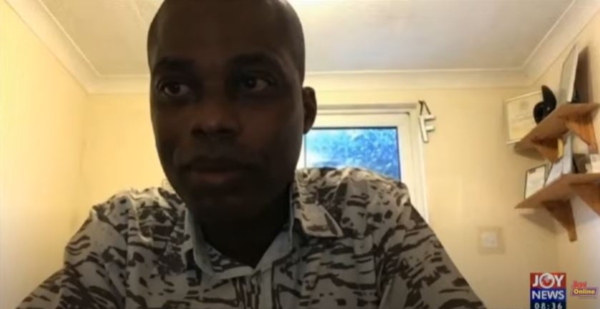
Pharmacist Kwame Sarpong Asiedu has charged government to promote further research into herbal medicine and at the same time enforce stricter regulation of the sector based on existing laws.
Speaking at a lecture delivered at the British Council Hall on the theme "Down Memory Lane: From 1993 to the Present," where the focus was on Ghana's democracy and its consequential impact on public health, he stated that the lax regulation of the herbal industry was a matter of grave concern.
According to him, while there have been major discoveries in herbal medicine and some groundbreaking research into the efficacy of some herbs in ailment treatment, he said the recent proliferation of herbal medicine adverts touting their ability to cure even incurable illnesses must be checked to protect the population.
“There is the forgotten populace who rely on traditional medicine, priests, fetishes, juju men and outright quacks. Their percentage is not clearly defined but is known to be significant.
"They are forgotten because though there are merits in herbal medicines, we see many of these products being touted as cures for all sorts of ailments some of which can only be managed and not cured.
“How in a democracy, we allow such reckless commentary about healthcare in clear violation of our laws whilst these concoctions damage the liver, kidneys and other organs is just disgraceful.
"Unfortunately, when these organs are damaged, many who fall into this cohort lack the financial clout to access services such as kidney dialysis. Can this be said to be a positive health dividend emanating from our democracy?” he said.
He stressed that while he is calling for stricter regulation of the herbal medicine industry, his call is not a frown on herbal medicine as the sector has great potential to address the health needs of Ghanaians.
“As a pharmacist, I am the first to acknowledge that the origins of many orthodox medicines are from plants.
"I am also aware of research done by leading light such as Professors Kwame Sarpong, AnsaAsamoah, Dwuma-Badu and Ayim into the efficacy of many plant extracts in Ghana.
“My call therefore is not a frown on herbal medicine but a charge for further research and stricter regulation of the sector based on existing laws.
"After all, I am inclined to believe we live in a democracy and not a banana republic,” he said.
Latest Stories
-
Explained: Ghana’s water plant deal that produced a $235m judgment debt instead of water for 500,000 people
17 minutes -
Lawyer denies Salomey Baffoe received money from ‘Ghana Jollof’ account operator
49 minutes -
Beyond politics: Why Kwame Nkrumah’s ideals still matter for today’s leaders
57 minutes -
Top South African policeman charged with sexual offences
1 hour -
More than 170,000 respiratory cases recorded in haze-choked Indonesia
1 hour -
Narrowed space, intolerance – Sammy Crabbe says NPP is driving talented members away
1 hour -
We’re not analytical enough – Sammy Crabbe calls for data-driven decision-making
2 hours -
Tonto Dikeh celebrates Bobrisky as birthday tribute sparks online reactions
2 hours -
Peter Okoye tells court he received over $800,000 in P-Square royalties
2 hours -
I’ve never had problems with artistes – Rema addresses alleged fight with Davido
2 hours -
I was mocked for getting pregnant out of wedlock as pastor’s daughter – Davido’s baby mama
2 hours -
Young John rejects collaboration request from Blaqbonez over old tweet
3 hours -
Trump administration to admit primarily Afrikaners under new refugee proposal
3 hours -
They should have Ghana first – Ntim Fordjour warns MPs against politicising drug crisis
3 hours -
We got more than 15% – Ntim Fordjour confirms support for Parliament recall over cocaine scandal
3 hours