

Audio By Carbonatix
The Ghana Association of Banks has expressed worry about the long duration it takes for the court to give judgment over a case between a bad borrower and the banks.
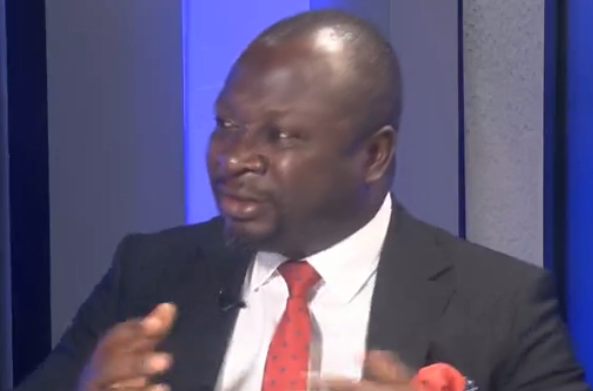
According to its Chief Executive Officer, John Awuah, this is hampering the banks’ ability to recover it loans and have adequate liquidity to on lend to the real sector of the economy, particularly, the Medium and Smaller Businesses (MSMEs).
His comment is coming at a time that Non Performing Loans (NPLs) have reached 20%, the highest since the last five years.
Speaking at a webinar organised by the Chartered Institute of Banking titled “Banking The Real Economy”, Mr. Awuah said some of the country’s institutional organisations have contributed to the high default rate in the country.
“When there is default, the problem the banking system goes through to ensure recovery so that they have liquidity to give to the next SMEs is where the challenge is. So as a bank, when you are operating and you have these SMEs you gave a loan to 18 months ago, all of a sudden due to issues the loan is distressed”.
“You want to ensure recovery so that you can make that fund available to the next good SMEs. But you go to the court system and it takes you four to five years to ensure a common recovery”, he explained.
Mr. Awuah added that “while you are holding mortgage documentation, you go to land commission and that mortgage has been re-mortgage to somebody else or has been sold”.
He lamented about how state institutions have not helped the banks course in bringing down NPLs.
“All kinds of things happening in these big national institutions baffles us. The manner in which some of these big institutions, talking about lands commission a trusted institution just like the banking system. The judicial system and you go to the law court and the way lawyers are playing the banks, it provides a layer of difficulty for the banks to recover their loans".
The Bank of Ghana in its September 2023 Monetary Policy Report said the industry’s NPL ratio increased to 20.0% in August 2023, from 14.3% in August 2022, attributable to elevated credit risk associated with the lagged effect of the macroeconomic crisis in 2022
Latest Stories
-
Sentuo offers fuel supply reassurance as NPA sees steady output through December
27 minutes -
Ghanaian smock showcased at Lesotho Tourism Summit
53 minutes -
Four pupils to one desk: The painful plight of schools in New Juaben North
1 hour -
Ipswich launch investigation into racist abuse of Abdul Fatawu
1 hour -
Arrest of Techiman nurse is purely political persecution – ‘Ghana Jollof’
2 hours -
Isak nets winner as Liverpool edge Bournemouth
2 hours -
I dare gov’t of Ghana to extradite me; they can never do it – ‘Ghana Jollof’ speaks
2 hours -
Semenyo scores twice as Manchester City beat Sunderland 5-3 in eight-goal thriller
2 hours -
Parliament calls for government-private sector collaboration to improve waste management
3 hours -
Volta Region described as cleanest so far in Parliament’s nationwide sanitation monitoring
3 hours -
Parliament urges MMDAs to enforce sanitation bylaws to curb indiscriminate waste disposal
3 hours -
Mohammed Kudus drops out of Ghana squad for AFCON 2027 qualifiers against Côte d’Ivoire and Gambia
3 hours -
Africa World Airlines unveils first Embraer E190 as part of 10-aircraft fleet expansion
5 hours -
Civilian hospitalised after alleged machete attack by prison officers, inmates
5 hours -
Toobu rejects calls to recall Parliament over 3.9-tonne cocaine shipment
5 hours