


Audio By Carbonatix
An economist, Prof Ebo Turkson, has expressed strong reservations about the Trade and Industry Ministry's proposed Legislative Instrument (LI) on Export and Import, particularly emphasizing concerns regarding the restriction of selected strategic products.
Speaking on JoyNews’ PM Express, the economist questioned the rationale behind the policy, drawing a historical parallel, where during the era of Ghana’s first President, Dr. Kwame Nkrumah's import substitution industrialisation, where import restrictions were implemented and failed.
According to Prof Turkson such policies should be accompanied by robust support for domestic firms to enhance their capacity.
“It is totally unnecessary. It should not be a policy that should be supported at all. As for import restrictions, it's okay. We need to make sure that we domesticate our consumption. But this has to be data-driven,” he said.
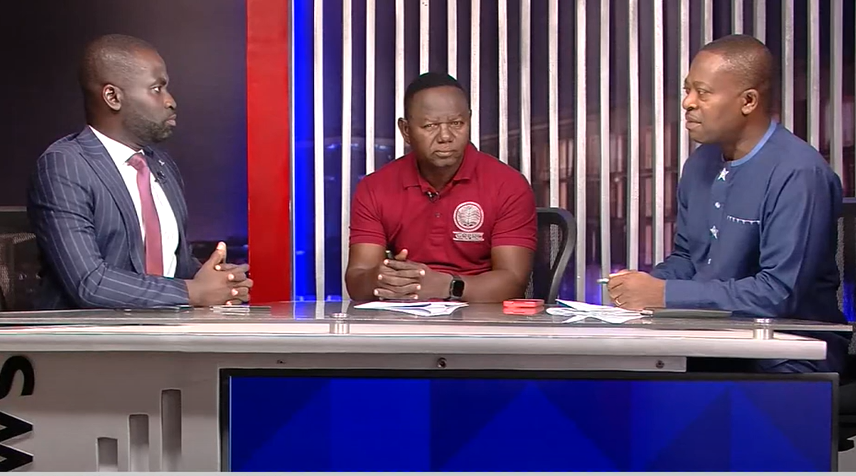
He pointed out a crucial aspect of the issue by stating that Ghana currently faces a situation where local poultry farmers produce only 5 percent of the demand.
Despite the efforts to support local producers, he noted it would take time for production to improve significantly.
In light of this, Prof Turkson questioned the wisdom of imposing restrictions when both locally produced and imported goods are insufficient to meet the demand.
The economist stressed the importance of a comprehensive, data-driven approach to guide policy decisions.
He suggested that any move towards import restrictions should be thoroughly informed by an understanding of the current production capacity and the ability of domestic industries to meet consumer demand.
On Monday, the Trade and Industry Minister, K.T. Hammond, laid before Parliament an improved version of the LI after it was blocked last week over the lack of quorum and consultation.
The LI will compel importers of 22 restricted items, including poultry, rice, sugar, diapers and animal intestines (Yemuadie) to seek licenses from a committee to be set up by the minister.
The Minority in Parliament has, on three occasions, resisted the laying of the LI on the ground that it was not only dangerous but violated international trade practices and could give too much power to the minister, a situation that has the propensity to breed corruption.
Latest Stories
-
NDC threatens sanctions over oversized campaign posters, gives aspirants 5 days to comply
52 minutes -
Star Oil paid GH¢2.7bn in taxes, levies in nine months of 2026
1 hour -
Samson’s Take: The rule of law is cheaper before the bulldozer
1 hour -
GRA blames system failure for delay in issuing receipt over passenger’s customs duty
1 hour -
Livestream: Newsfile discusses World Cup visa scandal, beach demolitions, education strikes, BRICS bid
2 hours -
NC-PTAs welcomes end of teachers’ strike, urges parents to prepare children for Monday
2 hours -
Government procures over 2,000 transformers as Ghana’s electricity access hits 89.13% – Energy Minister
2 hours -
UTAG-UG threatens strike on October 19 over unpaid allowance
2 hours -
Let The Constitution direct Chieftaincy to deliver “All Development Is Local”
3 hours -
John Jinapor outlines renewable energy, nuclear power priorities for 2027
4 hours -
Ghana explores centre of excellence for hearing, communication and cochlear implant care
5 hours -
Schizophrenia-related disorders lead mental health cases recorded in Ghana
5 hours -
Dutch authorities enlist Ghana in hunt for fugitive drug lord Bolle Jos
6 hours -
Ghana housing finance conference adopts communiqué to improve affordable housing access
10 hours -
Special Initiatives Minister urges Wa Technical Institute to enrol more girls as EU-backed solar training lab opens
10 hours