

Audio By Carbonatix
The Bank of Ghana (BoG) has warned exporters who fail to repatriate a fraction of their proceeds to help maintain the stability of Ghana’s foreign exchange regime would face sanctions.
The Central Bank also warned that the 60-day grace period given to exporters will always be enforced to check abuse.
The regulator of the banking industry entreated these exporters to embrace the Bank's Letter of Commitment Documents to facilitate their export businesses.
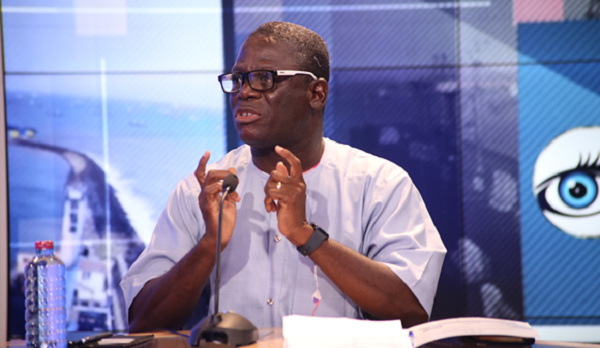
Deputy Director in charge of Foreign Global Transfer and Remittance at the Bank of Ghana, Eric Hammond, said the bank is in collaboration with the security agencies to ensure exporters comply with the rules and regulations.
Speaking at a sensitisation workshop on the Bank of Ghana Letter of Commitment Requirement for the repatriation of export proceeds, Mr. Hammond said the Central Bank is open to engaging these exporters on the compliance of the regulations.
"The objective is not to stifle your operations but to save it rather. We need you as you need us and that's exactly what we are doing here.”
“After the 60 days and you are not complying, the system will block you and that means you would have to come to the Bank of Ghana which adds up to your cost".
He added “We are not blocking you but the system does that. So let's do well to do it so. It doesn't prevent you guys from doing further exportation. We don't have the power to prosecute you but we are engaging the security services on that".
He highlighted that exporters found guilty could face a fine of 5,000 penalty units equivalent to ¢60,000 or imprisonment for a term not exceeding 10 years, or both.
He emphasised the importance of repatriating export proceeds.
This, he stated, contributes to building reserves and strengthening the local currency, ultimately boosting trading activities and facilitating Ghana’s transformation agenda.
Participants at the forum raised various concerns including rising freight charges; challenges with the LOC system; application of exchange rates above the BoG rate at ports; bureaucratic hurdles; and lack of financial and technical support from government and regulators.
Latest Stories
-
NACOC needs more personnel to tackle drug trafficking – Toobu
40 seconds -
Railway workers resist KMA eviction order, demand consultation
2 minutes -
Legacy Leadership Africa Institute to host boardroom women’s leadership programme
15 minutes -
Ghana needs a law to sustain constitutional reforms – CDD-Ghana
3 hours -
COVID fumigation audit: Auditor-General has a lot of questions to answer – Akwatia MP
3 hours -
Stranded Ghanaian medical graduates in Cuba appeal to Mahama for immediate return
4 hours -
GNFS contains fire outbreak at Teshie Lekma Road near Lekma Hospital
10 hours -
Samia Nkrumah rejects the narrative that Ghanaians were happy after Nkrumah’s overthrow
11 hours -
A Mother’s pain: Tribute by Ivan Baidoo’s mother
11 hours -
‘Forgive us for staying away’ — Samia Nkrumah leads family back to Nkroful, pledges to preserve Nkrumah’s legacy
11 hours -
Ernest Nuamah scores twice as Lyon beat Rennes
11 hours -
‘My dear Ivan’ – A father’s tribute to a son tragically killed
12 hours -
GNPC Explorco advances Voltaian Basin drilling preparations with 13.5km access road
12 hours -
Cabinet approves facility manager for Borteyman Sports Complex – Kofi Adams
12 hours -
Sanitation is improving; critics may be ‘living in another world’ – Salaga South MP replies Bekwai MP
13 hours