

Audio By Carbonatix
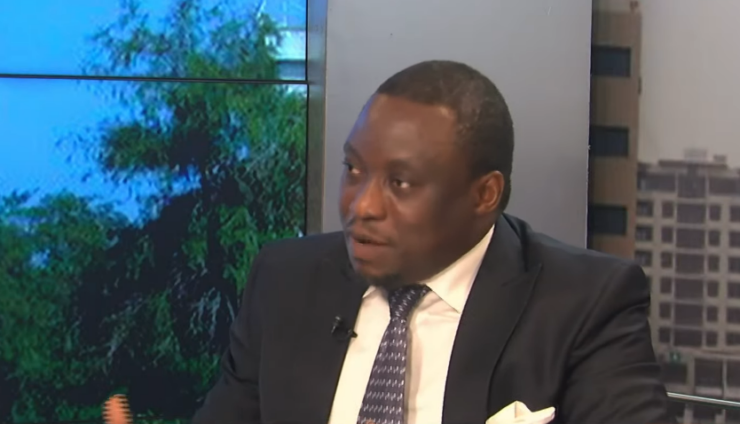
Independent presidential aspirant, Dr Sam Ankrah has voiced concerns about the concentration of power in Ghana's executive branch, attributing it to the high levels of corruption in the country.
Dr. Ankrah argued that the excessive power has enabled individuals to amass wealth without putting in the necessary hard work, contributing to the decline in Ghana's economy.
He told JoyNews about the need for a system of checks and balances and a clear separation of powers to enhance both democracy and economic conditions in the country.
"We need to have a celebration of powers and checks and balances, and that was a natural one in the bidding. Clearly, if our votes had secured the NDC's majority," he said on the AM Show on Monday, January 15.
"NDC to the legislature and NPP to be executive. I think that was a very good idea. That was a very good plan as to why people thought that was not good and had to give the power back to the NPP. The NDC was wrong. We need to separate powers. We need to have checks and balances. This is very good for building our democracy and our economy. We need to check on each other."
In the interview, the Chairman of the Trade and Investment International Chamber of Commerce also indicated that a hung Parliament has been one of the best experiences in Ghana's history.
Dr Sam Ankrah argued that the executive branch cannot merely present a budget expecting a rubber stamp.
"If we bring policies, if we bring programs that would change the destinies of our people, and somebody sits in parliament and frustrates it because he is a member of a sitting party and does not want the government to succeed, we are coming back right to your yard, calling for town hall meetings in your community, and telling your locals exactly how this policy is going to affect their lives, and if you are not careful, they are voting against you the next time because they know you are not helping”.
Challenging the conventional notion that a sitting government must possess a majority in parliament, he stressed that the key factor is to have transformative leadership capable of bringing about change and improving the country's future.
Latest Stories
-
Tarkwa court jails labourer for three years over GH¢123,000 theft
28 minutes -
GAEC must retain nuclear scientists for Ghana’s nuclear ambitions – Minister
1 hour -
Man reportedly mistaken for game and shot by hunter dead in forest
1 hour -
19-year-old mason jailed 15 years for defiling seven-year-old pupil
1 hour -
Ghana’s banking sector assets rise 20.47% to GH¢500.2bn – BoG Governor
1 hour -
22 injured as Sprinter bus overturns at Sege after tyre burst
1 hour -
UN housing expert urges Ghana to strengthen Rent Control Department amid housing affordability concerns
1 hour -
Delta-BCI partnership reaches 166,000 people with breast cancer education
2 hours -
Power restoration fault suspected in Kumasi Central Market fire
7 hours -
The 7-foot giant of Ngleshie Amanfro: Seven-foot Ghanaian Ephraim Saawa dreams of joining the national basketball team
7 hours -
Government promises support for Kumasi Central Market fire victims
7 hours -
Vibes The Movie: Big Ghun’s Ghanaian film earns five nominations at 2026 REFFA
8 hours -
‘I’m a fulfilled man’—Justice Korbieh on missing out on Supreme Court despite two nominations
8 hours -
MamaCare CEO warns unresolved conflicts among health workers could undermine maternal and neonatal care
8 hours -
Health professionals urged to translate medical knowledge into practice to save mothers
8 hours